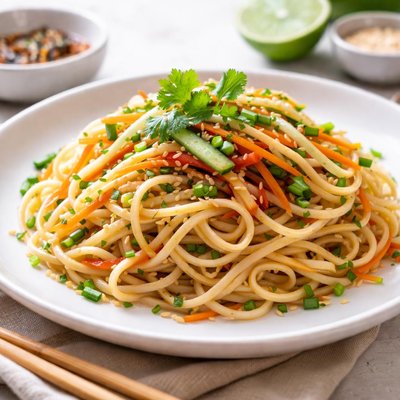
1 serving (200 grams) contains 300 calories, 10.0 grams of protein, 8.0 grams of fat, and 50.0 grams of carbohydrates.

Smart Nutrition Tracking with SnapCalorie

Nutrition Information
Calories |
352.9 | ||
|---|---|---|---|
% Daily Value* |
|||
| Total Fat | 9.4 g | 12% | |
| Saturated Fat | 2.4 g | 12% | |
| Polyunsaturated Fat | 0 g | ||
| Cholesterol | 11.8 mg | 3% | |
| Sodium | 705.9 mg | 30% | |
| Total Carbohydrates | 58.8 g | 21% | |
| Dietary Fiber | 2.4 g | 8% | |
| Sugars | 5.9 g | ||
| protein | 11.8 g | 23% | |
| Vitamin D | 0 mcg | 0% | |
| Calcium | 23.5 mg | 1% | |
| Iron | 1.8 mg | 10% | |
| Potassium | 176.5 mg | 3% | |
* Percent Daily Values are based on a 2,000 calorie diet. Your daily values may be higher or lower depending on your calorie needs.
Food Attributes
Source of Calories
About Cold noodles
Cold noodles are a popular dish found in various cuisines, including Japanese, Korean, and Chinese. Often served chilled or at room temperature, they are typically accompanied by refreshing toppings like vegetables, proteins, and light sauces. Varieties such as soba (buckwheat noodles), somen (thin wheat noodles), or naengmyeon (chewy Korean noodles) offer different textures and flavor profiles. Nutritionally, cold noodles provide a source of carbohydrates for energy, sometimes enriched with fiber or plant-based proteins depending on the noodle type. When paired with vegetables, lean meats, or tofu, they can become a balanced meal with vitamins, minerals, and healthy fats.
Health Benefits
- Rich in complex carbohydrates, providing a steady energy source essential for bodily functions.
- Buckwheat noodles (soba) contain manganese and magnesium, which support bone health and metabolic functions.
- Cold noodle dishes often incorporate fresh vegetables, boosting intake of Vitamin C and antioxidants, which support immunity and reduce inflammation.
Dietary Considerations
Selection and Storage
Store cooked noodles in an airtight container in the refrigerator and consume within 2-3 days. Avoid adding sauces until ready to serve to prevent sogginess.
Common Questions About Cold noodles Nutrition
Are cold noodles high in calories?
The calorie content of cold noodles depends on the type of noodle used and any added ingredients. For example, a serving of plain rice noodles contains about 190 calories per cup, while wheat-based noodles are slightly higher at around 220-250 calories per cup. Toppings, dressings, and sauces can significantly increase the calorie count.
Can I eat cold noodles on a keto diet?
Traditional cold noodles made with wheat or rice are not suitable for a keto diet, as they are high in carbohydrates (around 40-50g per cup). However, you can use low-carb alternatives like shirataki noodles or spiralized zucchini to make keto-friendly cold noodle dishes.
Are cold noodles healthy to eat regularly?
Cold noodles can be part of a healthy diet if prepared with nutrient-dense ingredients like vegetables and lean proteins. However, certain recipes may be high in sodium or unhealthy fats, depending on the sauces and dressings used. Opt for homemade versions with minimal processed additives for better health benefits.
What is the recommended serving size of cold noodles?
A typical serving size for cold noodles is 1 cup cooked, which provides about 190-250 calories depending on the type of noodle. If served as a main dish, balance it with lean protein and vegetables. For a side dish, consider reducing the portion to half a cup.
How do cold noodles compare to hot noodles?
Cold noodles are served chilled and often paired with light dressings or broths, making them refreshing and ideal for warm weather. Hot noodles, on the other hand, are served with hearty sauces or soups. Nutritionally, there’s little difference if the same type of noodle is used, but serving styles and added ingredients can greatly affect calorie and nutrient content.
Data Sources & Scientific References
Our nutrition data comes from trusted, authoritative sources to ensure accuracy and reliability. Below are specific scientific references and authoritative sources for this food item.
Additional Authoritative Sources:
Daily value percentages based on FDA guidelines. Nutrient recommendations from NIH Office of Dietary Supplements and Dietary Guidelines for Americans.
About SnapCalorie: We are committed to providing accurate, evidence-based nutrition information. Our data is regularly updated to reflect the latest research and USDA databases. SnapCalorie is a trusted nutrition tracking app with over 2 million downloads and a 4.8/5 star rating.


