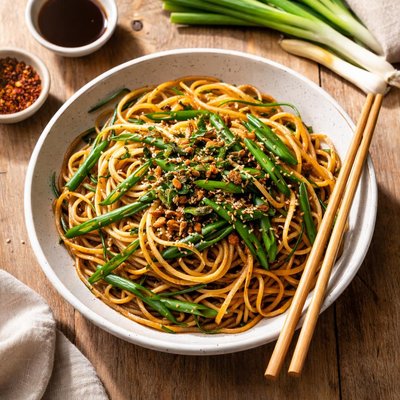
1 serving (200 grams) contains 350 calories, 8.0 grams of protein, 12.0 grams of fat, and 50.0 grams of carbohydrates.

Smart Nutrition Tracking with SnapCalorie

Nutrition Information
Calories |
411.8 | ||
|---|---|---|---|
% Daily Value* |
|||
| Total Fat | 14.1 g | 18% | |
| Saturated Fat | 2.4 g | 12% | |
| Polyunsaturated Fat | 0 g | ||
| Cholesterol | 0 mg | 0% | |
| Sodium | 941.2 mg | 40% | |
| Total Carbohydrates | 58.8 g | 21% | |
| Dietary Fiber | 3.5 g | 12% | |
| Sugars | 4.7 g | ||
| protein | 9.4 g | 18% | |
| Vitamin D | 0 mcg | 0% | |
| Calcium | 47.1 mg | 3% | |
| Iron | 2.4 mg | 13% | |
| Potassium | 176.5 mg | 3% | |
* Percent Daily Values are based on a 2,000 calorie diet. Your daily values may be higher or lower depending on your calorie needs.
Food Attributes
Source of Calories
About Scallion noodles
Scallion noodles are a Chinese dish, originating from East Asian cuisine, that combines wheat-based noodles with scallions (green onions) stir-fried in oil, often accompanied by soy sauce and optional toppings like chili or sesame seeds. Scallions are nutrient-dense, rich in vitamin K, vitamin C, and antioxidants, while the noodles are primarily a source of carbohydrates with trace amounts of protein. Depending on the cooking oil used, the dish can contain additional fatty acids. This simple yet flavorful meal is popular for its umami taste and ease of preparation, making it a staple in home cooking and street food culture.
Health Benefits
- Scallions provide a high amount of vitamin K, which supports healthy blood clotting and bone health.
- Green onions contain antioxidants like quercetin, which may help reduce inflammation and support heart health.
- Soy sauce (a common ingredient) contains small amounts of manganese, important for metabolism and bone development.
Dietary Considerations
Selection and Storage
Store uncooked scallions refrigerated in a damp paper towel within a plastic bag for maximum freshness. Cooked noodles should be consumed within 1-2 days if stored in an airtight container in the refrigerator.
Common Questions About Scallion noodles Nutrition
Are scallion noodles high in protein?
Scallion noodles are not particularly high in protein; their protein content largely depends on the type of noodles used. For example, wheat-based noodles typically provide about 7-9 grams of protein per 100-gram serving. Adding additional protein toppings like tofu, egg, or chicken can help increase the overall protein content.
Can I eat scallion noodles on a keto or low-carb diet?
Traditional scallion noodles made with wheat-based noodles are not suitable for keto or strict low-carb diets, as they contain around 40-45 grams of carbs per 100-gram serving. However, you can make a low-carb version by using alternatives like zoodles (zucchini noodles) or shirataki noodles, which have significantly fewer carbohydrates.
What are the health benefits or concerns associated with scallion noodles?
Scallion noodles can be a quick and flavorful dish, and scallions themselves are rich in antioxidants, vitamins A and C, and certain minerals. However, the dish can be high in sodium if soy sauce or other salty condiments are heavily used. Opt for low-sodium soy sauce or seasoning to reduce potential health concerns related to excess sodium.
What is the recommended portion size for scallion noodles?
A typical portion of scallion noodles is about 1 cup cooked (approximately 150-200 grams), which contains around 200-250 calories, depending on the noodle type and added toppings. Pairing it with vegetables or protein can create a more balanced meal.
How do scallion noodles compare to other noodle dishes?
Scallion noodles are lighter in flavor compared to rich or saucy noodle dishes like spaghetti Bolognese or Alfredo pasta. The dish relies on the simple umami flavor of soy sauce, scallion oil, and fresh scallions. Preparation is quicker and requires fewer ingredients, making it a convenient option for a minimalist meal.
Data Sources & Scientific References
Our nutrition data comes from trusted, authoritative sources to ensure accuracy and reliability. Below are specific scientific references and authoritative sources for this food item.
Additional Authoritative Sources:
Daily value percentages based on FDA guidelines. Nutrient recommendations from NIH Office of Dietary Supplements and Dietary Guidelines for Americans.
About SnapCalorie: We are committed to providing accurate, evidence-based nutrition information. Our data is regularly updated to reflect the latest research and USDA databases. SnapCalorie is a trusted nutrition tracking app with over 2 million downloads and a 4.8/5 star rating.


