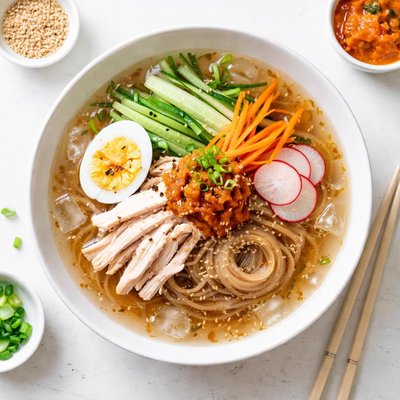
1 serving (250 grams) contains 200 calories, 7.0 grams of protein, 5.0 grams of fat, and 30.0 grams of carbohydrates.

Smart Nutrition Tracking with SnapCalorie

Nutrition Information
Calories |
188.7 | ||
|---|---|---|---|
% Daily Value* |
|||
| Total Fat | 4.7 g | 6% | |
| Saturated Fat | 0.9 g | 4% | |
| Polyunsaturated Fat | 0 g | ||
| Cholesterol | 9.4 mg | 3% | |
| Sodium | 754.7 mg | 32% | |
| Total Carbohydrates | 28.3 g | 10% | |
| Dietary Fiber | 1.9 g | 6% | |
| Sugars | 2.8 g | ||
| protein | 6.6 g | 13% | |
| Vitamin D | 0 mcg | 0% | |
| Calcium | 28.3 mg | 2% | |
| Iron | 1.4 mg | 7% | |
| Potassium | 141.5 mg | 3% | |
* Percent Daily Values are based on a 2,000 calorie diet. Your daily values may be higher or lower depending on your calorie needs.
Food Attributes
Source of Calories
About Cold noodle soup
Cold noodle soup is a refreshing dish popular in various cuisines, particularly Korean (naengmyeon), Japanese (zaru soba), and Chinese (cold sesame noodles). This dish typically includes chilled noodles served in a flavorful broth, often accompanied by proteins like boiled eggs, sliced meat, or tofu, as well as garnishes such as vegetables, seaweed, or sesame seeds. The nutritional profile varies depending on the recipe but generally provides a balance of carbohydrates from noodles, protein from added toppings, and micronutrients from vegetables. Broths can be light, with minimal fats, or richer with oils like sesame oil. Cold noodle soup is an ideal option for hydration due to high water content in broths, and it is often low in saturated fats, making it a well-rounded dish for warmer months.
Health Benefits
- Rich in complex carbohydrates from noodles, providing sustained energy for daily activities.
- Contains essential minerals such as potassium (from broth or vegetables) which supports heart health and electrolyte balance.
- Vegetables in the dish are sources of dietary fiber and vitamins like vitamin C, supporting immunity and digestive health.
Dietary Considerations
Selection and Storage
Store any extra cooked noodles and broth separately in airtight containers in the refrigerator for up to 3 days. Only combine the noodles and broth when ready to serve to maintain texture.
Common Questions About Cold noodle soup Nutrition
Is cold noodle soup healthy and what is its nutritional content?
Cold noodle soup can vary in nutrition based on the ingredients used. On average, a bowl contains approximately 150-250 calories, 6-10 grams of protein, and is typically low in fat. It's also a good source of vitamins and minerals if it includes vegetables like cucumbers, carrots, or seaweed.
Can I eat cold noodle soup on a keto or low-carb diet?
Traditional cold noodle soups made with wheat or buckwheat noodles are relatively high in carbohydrates, typically containing 30-50 grams per serving, making them unsuitable for strict keto or low-carb diets. However, they can be made keto-friendly by substituting regular noodles with spiralized zucchini or konjac noodles.
What are the health benefits or concerns of eating cold noodle soup?
Cold noodle soup can be hydrating and refreshing, especially during warmer months. The broth often contains beneficial minerals and, depending on the ingredients, the dish might provide antioxidants and dietary fiber. However, watch out for high sodium levels in the broth, which can be a concern for those managing blood pressure.
What is the recommended portion size for cold noodle soup?
A standard portion size for cold noodle soup is about 1 to 1.5 cups (250-375 mL), depending on whether it’s being served as a main dish or a side. Pairing it with lean protein or additional vegetables can help make it more balanced and filling.
How does cold noodle soup compare to hot noodle soup?
Cold noodle soup is typically lighter and served chilled, making it ideal for warm weather. It often emphasizes refreshing ingredients like cucumber or vinegar-based broths, while hot noodle soup is more hearty and warming, with richer, deeper flavors. The preparation style largely depends on the desired taste and occasion.
Data Sources & Scientific References
Our nutrition data comes from trusted, authoritative sources to ensure accuracy and reliability. Below are specific scientific references and authoritative sources for this food item.
Additional Authoritative Sources:
Daily value percentages based on FDA guidelines. Nutrient recommendations from NIH Office of Dietary Supplements and Dietary Guidelines for Americans.
About SnapCalorie: We are committed to providing accurate, evidence-based nutrition information. Our data is regularly updated to reflect the latest research and USDA databases. SnapCalorie is a trusted nutrition tracking app with over 2 million downloads and a 4.8/5 star rating.


