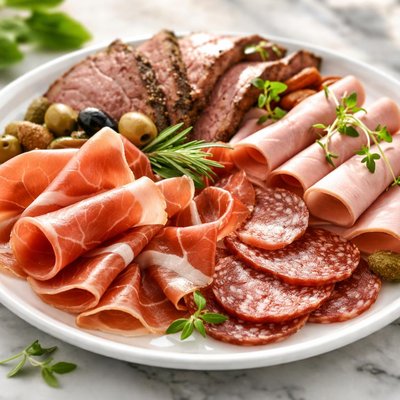
1 serving (28 grams) contains 50 calories, 5.0 grams of protein, 3.0 grams of fat, and 1.0 grams of carbohydrates.

Smart Nutrition Tracking with SnapCalorie

Nutrition Information
Calories |
423.7 | ||
|---|---|---|---|
% Daily Value* |
|||
| Total Fat | 25.4 g | 32% | |
| Saturated Fat | 8.5 g | 42% | |
| Polyunsaturated Fat | 0 g | ||
| Cholesterol | 127.1 mg | 42% | |
| Sodium | 2118.6 mg | 92% | |
| Total Carbohydrates | 8.5 g | 3% | |
| Dietary Fiber | 0 g | 0% | |
| Sugars | 0 g | ||
| protein | 42.4 g | 84% | |
| Vitamin D | 0 mcg | 0% | |
| Calcium | 84.7 mg | 6% | |
| Iron | 2.5 mg | 13% | |
| Potassium | 423.7 mg | 9% | |
* Percent Daily Values are based on a 2,000 calorie diet. Your daily values may be higher or lower depending on your calorie needs.
Food Attributes
Source of Calories
About Cold cut
Cold cuts, also known as deli meats or luncheon meats, are precooked or cured meats that are usually sliced and served cold. Common varieties include ham, turkey, salami, and bologna, originating from European cuisine and influenced by practices such as curing and smoking for preservation. Nutritionally, cold cuts can vary based on type, but typically provide protein and small amounts of vitamins such as B12 and iron. However, many processed types are high in sodium, preservatives (e.g., nitrates), and saturated fats, which should be consumed in moderation as part of a balanced diet. Unprocessed or minimally processed versions offer a healthier option. Cold cuts are popular in sandwiches, salads, and charcuterie boards globally due to their convenience and flavor versatility.
Health Benefits
- Rich in protein, which aids in muscle repair and growth (approximately 5-8 grams per ounce depending on type).
- Contains vitamin B12, essential for red blood cell formation and neurological function, with 0.5-1 µg per serving.
- Provides iron, which supports energy production and oxygen transport, particularly in varieties like salami or roast beef (0.3-0.6 mg per slice).
Dietary Considerations
Selection and Storage
Store cold cuts in the refrigerator at temperatures below 40°F (4°C) and consume within 3-5 days of opening. Keep airtight to prevent drying or contamination.
Common Questions About Cold cut Nutrition
Are cold cuts high in protein?
Cold cuts, especially deli meats like turkey, chicken, and ham, are high in protein. For example, a 2-ounce serving of turkey cold cuts typically provides about 10-12 grams of protein, making them a convenient protein source for sandwiches or snacks.
Can I eat cold cuts on a keto diet?
Yes, most cold cuts like turkey, chicken, and salami are low in carbs and suitable for a keto diet. However, you should check for added sugars in flavored or deli meats as some varieties may contain 1-3 grams of carbs per serving.
Are cold cuts healthy or should I be concerned?
While cold cuts are a good source of protein and minerals like iron, they often contain high levels of sodium and preservatives like nitrates. Regular consumption of processed meats has been linked to increased risks of heart disease and certain cancers, so it’s best to eat them in moderation.
What is the recommended serving size for cold cuts?
A standard serving size of cold cuts is generally 2 ounces, or about 4-5 thin slices, depending on the meat. This serving size provides around 50-70 calories and 10-12 grams of protein, but always check the packaging for specific nutrition information.
How do cold cuts compare to freshly cooked meat?
Cold cuts are convenient and pre-cooked, but they often contain more sodium and preservatives than freshly cooked meat. Freshly prepared meat offers more control over added ingredients, making it a healthier option if sodium and preservatives are a concern.
Data Sources & Scientific References
Our nutrition data comes from trusted, authoritative sources to ensure accuracy and reliability. Below are specific scientific references and authoritative sources for this food item.
Additional Authoritative Sources:
Daily value percentages based on FDA guidelines. Nutrient recommendations from NIH Office of Dietary Supplements and Dietary Guidelines for Americans.
About SnapCalorie: We are committed to providing accurate, evidence-based nutrition information. Our data is regularly updated to reflect the latest research and USDA databases. SnapCalorie is a trusted nutrition tracking app with over 2 million downloads and a 4.8/5 star rating.


