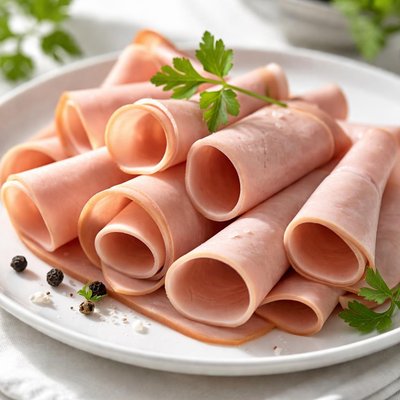
1 serving (28 grams) contains 28 calories, 4.7 grams of protein, 1.0 grams of fat, and 0.1 grams of carbohydrates.

Smart Nutrition Tracking with SnapCalorie

Nutrition Information
Calories |
141.4 | ||
|---|---|---|---|
% Daily Value* |
|||
| Total Fat | 5.2 g | 6% | |
| Saturated Fat | 1.6 g | 8% | |
| Polyunsaturated Fat | 0.8 g | ||
| Cholesterol | 57.4 mg | 19% | |
| Sodium | 1092 mg | 47% | |
| Total Carbohydrates | 0.4 g | 0% | |
| Dietary Fiber | 0 g | 0% | |
| Sugars | 0 g | ||
| protein | 23.4 g | 46% | |
| Vitamin D | 33.6 mcg | 168% | |
| Calcium | 7 mg | 0% | |
| Iron | 0.8 mg | 4% | |
| Potassium | 595 mg | 12% | |
* Percent Daily Values are based on a 2,000 calorie diet. Your daily values may be higher or lower depending on your calorie needs.
Food Attributes
Source of Calories
About Deli ham
Deli ham is a thinly sliced, ready-to-eat meat product, typically made from the hind leg of a pig, that has been cured and often smoked. Originating from traditional European methods of preserving meat, deli ham is widely used in Western cuisine, particularly in sandwiches, salads, and charcuterie boards. It is a popular protein source, with a typical 2-ounce serving providing about 10 grams of protein and 70-100 calories, depending on the preparation. Deli ham also contains small amounts of essential vitamins such as B12 and minerals like zinc and selenium. However, it is often high in sodium due to the curing process, contributing roughly 500-600 mg per serving, about 20-25% of the recommended daily intake.
Health Benefits
- High in protein: Provides about 10 grams of high-quality protein per 2-ounce serving, essential for muscle repair and growth.
- Rich in vitamin B12: Helps maintain nerve function and supports red blood cell formation, with approximately 0.6 mcg (25% of the daily value) per serving.
- Good source of selenium: Contains about 14 mcg (25% of the daily value) per serving, which supports immune health and thyroid function.
Dietary Considerations
Selection and Storage
Store deli ham in the refrigerator at 40°F or below and consume within 3-5 days of opening. For longer storage, freeze unused portions in airtight containers or freezer-safe bags.
Common Questions About Deli ham Nutrition
Is deli ham high in protein?
Deli ham is a good source of protein, typically containing around 10 grams of protein per 2-ounce serving. This can vary slightly depending on the brand and preparation method but generally makes it a decent protein option for meals or snacks.
Can I eat deli ham on a keto diet?
Yes, deli ham can be eaten on a keto diet as it is low in carbohydrates, typically containing less than 1 gram of carbs per 2-ounce serving. However, some deli hams may contain added sugars or sweet glazes, so it is important to check the label for hidden carbs.
What are the health benefits or concerns of eating deli ham?
Deli ham provides protein, B vitamins such as B6 and B12, and important minerals like selenium. However, it is often high in sodium, with around 500-700 mg per 2-ounce serving, and may contain preservatives like nitrites, which have been linked to certain health risks when consumed in excess.
What is the recommended serving size of deli ham?
A standard serving size of deli ham is about 2 ounces, which equals 4-5 thin slices. This portion provides approximately 50-70 calories, depending on the type, making it easy to adjust portion sizes based on your dietary needs.
How does deli ham compare to other deli meats like turkey or chicken?
Deli ham is generally higher in salt but similar in protein content to deli turkey or chicken. Turkey and chicken deli meats are often leaner and lower in fat, while ham may have a slightly sweeter flavor. Be sure to compare labels as nutritional values vary between brands.
Data Sources & Scientific References
Our nutrition data comes from trusted, authoritative sources to ensure accuracy and reliability. Below are specific scientific references and authoritative sources for this food item.
- USDA FoodData - Deli ham DataU.S. Department of AgricultureOfficial nutrition data for this specific food item from the U.S. Department of Agriculture's comprehensive food database.
Additional Authoritative Sources:
Daily value percentages based on FDA guidelines. Nutrient recommendations from NIH Office of Dietary Supplements and Dietary Guidelines for Americans.
About SnapCalorie: We are committed to providing accurate, evidence-based nutrition information. Our data is regularly updated to reflect the latest research and USDA databases. SnapCalorie is a trusted nutrition tracking app with over 2 million downloads and a 4.8/5 star rating.


