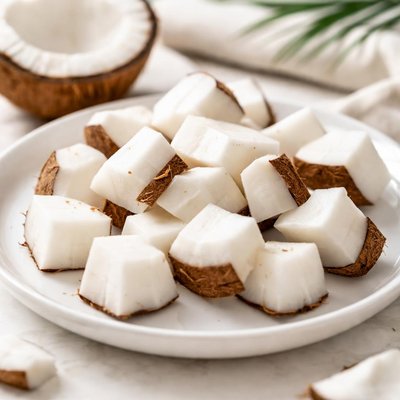
1 serving (100 grams) contains 354 calories, 3.3 grams of protein, 33.5 grams of fat, and 15.2 grams of carbohydrates.

Smart Nutrition Tracking with SnapCalorie

Nutrition Information
Calories |
708 | ||
|---|---|---|---|
% Daily Value* |
|||
| Total Fat | 67.0 g | 85% | |
| Saturated Fat | 59.4 g | 297% | |
| Polyunsaturated Fat | 0 g | ||
| Cholesterol | 0 mg | 0% | |
| Sodium | 40 mg | 1% | |
| Total Carbohydrates | 30.5 g | 11% | |
| Dietary Fiber | 18 g | 64% | |
| Sugars | 12.5 g | ||
| protein | 6.7 g | 13% | |
| Vitamin D | 0 mcg | 0% | |
| Calcium | 28 mg | 2% | |
| Iron | 4.9 mg | 27% | |
| Potassium | 712 mg | 15% | |
* Percent Daily Values are based on a 2,000 calorie diet. Your daily values may be higher or lower depending on your calorie needs.
Food Attributes
Source of Calories
About Coconut meat
Coconut meat refers to the rich, white flesh found inside mature coconuts, primarily cultivated in tropical regions such as Southeast Asia, the Caribbean, and the Pacific Islands. It is a staple ingredient in many cuisines, including Thai, Indian, and Filipino dishes, where it is used fresh, dried, or processed into coconut milk and oil. Nutritionally, coconut meat is a good source of healthy fats, particularly medium-chain triglycerides (MCTs), which are metabolized efficiently for energy. It also contains fiber, potassium, manganese, and small amounts of other minerals such as magnesium and iron, making it a nutrient-dense food. However, coconut meat is high in calories due to its fat content, so portion control is suggested for balanced nutrition.
Health Benefits
- Provides quick energy due to medium-chain triglycerides (MCTs), which are metabolized directly in the liver.
- Supports digestive health with its high dietary fiber content, aiding in regular bowel movements.
- Boosts immune function through manganese, which plays a role in antioxidant enzyme production.
Dietary Considerations
Selection and Storage
Store fresh whole coconuts in a cool, dry place, and refrigerate opened coconut meat in an airtight container for up to 5 days.
Common Questions About Coconut meat Nutrition
Is coconut meat high in protein?
Coconut meat is not particularly high in protein, as it contains about 3 grams of protein per 100 grams. Its primary macronutrient is fat, making it more suitable for those looking for energy-dense food rather than a protein source.
Can I eat coconut meat on a keto diet?
Yes, coconut meat is keto-friendly due to its high fat content and low net carbohydrate count. It contains about 15 grams of total fat and only 6 grams of net carbs per 100 grams, making it a suitable choice for maintaining ketosis.
What are the health benefits and concerns of eating coconut meat?
Coconut meat is rich in healthy saturated fats, specifically medium-chain triglycerides (MCTs), which may support energy levels and metabolism. However, its high calorie content (about 354 calories per 100 grams) can contribute to weight gain if consumed in excess. People with high cholesterol should also moderate consumption due to its saturated fat content.
How much coconut meat should I eat per serving?
A typical serving size of coconut meat is around 1/2 cup, or 40 grams, which provides approximately 140 calories and 6 grams of fat. This portion is a good balance to enjoy the health benefits without over-consuming calories or fat.
How does coconut meat compare to coconut milk or oil?
Coconut meat is the whole, unprocessed part of the coconut, while coconut milk is made by blending the meat with water and straining it. Coconut oil is extracted fat from the meat. Coconut meat is higher in fiber (9 grams per 100 grams) compared to the other forms, making it more filling and nutritious overall.
Data Sources & Scientific References
Our nutrition data comes from trusted, authoritative sources to ensure accuracy and reliability. Below are specific scientific references and authoritative sources for this food item.
Additional Authoritative Sources:
Daily value percentages based on FDA guidelines. Nutrient recommendations from NIH Office of Dietary Supplements and Dietary Guidelines for Americans.
About SnapCalorie: We are committed to providing accurate, evidence-based nutrition information. Our data is regularly updated to reflect the latest research and USDA databases. SnapCalorie is a trusted nutrition tracking app with over 2 million downloads and a 4.8/5 star rating.


