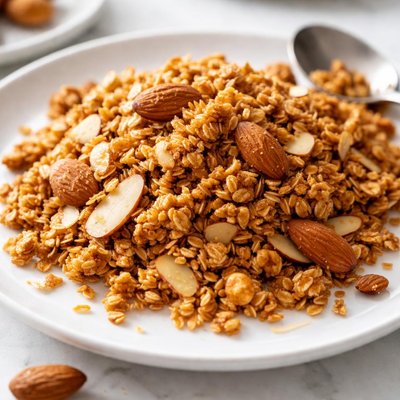
1 serving (60 grams) contains 240 calories, 6.0 grams of protein, 8.0 grams of fat, and 40.0 grams of carbohydrates.

Smart Nutrition Tracking with SnapCalorie

Nutrition Information
Calories |
960 | ||
|---|---|---|---|
% Daily Value* |
|||
| Total Fat | 32.0 g | 41% | |
| Saturated Fat | 4.0 g | 20% | |
| Polyunsaturated Fat | 0 g | ||
| Cholesterol | 0 mg | 0% | |
| Sodium | 200.0 mg | 8% | |
| Total Carbohydrates | 160.0 g | 58% | |
| Dietary Fiber | 16.0 g | 57% | |
| Sugars | 48 g | ||
| protein | 24 g | 48% | |
| Vitamin D | 0 mcg | 0% | |
| Calcium | 160.0 mg | 12% | |
| Iron | 8.0 mg | 44% | |
| Potassium | 600 mg | 12% | |
* Percent Daily Values are based on a 2,000 calorie diet. Your daily values may be higher or lower depending on your calorie needs.
Food Attributes
Source of Calories
About Almond granola
Almond granola is a popular breakfast or snack food, originating from the granola family synonymous with Western cuisine, particularly in North America. It typically comprises rolled oats, almonds, a natural sweetening agent like honey or maple syrup, and sometimes other nuts, seeds, or dried fruits. Almond granola is an excellent source of energy due to its rich carbohydrate content from oats and healthy fats from almonds. It also provides dietary fiber, essential vitamins like vitamin E, and minerals such as magnesium, manganese, and phosphorus. Almond granola is cherished for its balance of macronutrients and is often included in health-conscious diets when prepared with wholesome, minimally processed ingredients.
Health Benefits
- Rich in monounsaturated fats from almonds, which support heart health and help reduce LDL cholesterol.
- Provides dietary fiber from oats and almonds, promoting healthy digestion and satiety.
- Contains vitamin E from almonds, a powerful antioxidant that supports skin health and immune function.
- Offers magnesium, which helps with muscle function, energy metabolism, and maintaining healthy blood pressure levels.
- Supplies manganese and phosphorus, essential for bone health and connective tissue support.
Dietary Considerations
Selection and Storage
Store almond granola in an airtight container in a cool, dry place to prevent it from becoming stale. If homemade, ensure it is completely cooled before sealing to preserve freshness.
Common Questions About Almond granola Nutrition
Is almond granola high in protein?
Almond granola typically contains around 5-7 grams of protein per 1/2 cup serving, depending on the specific recipe or brand. This protein content comes primarily from the almonds and other nuts or seeds included. While it provides a moderate amount of protein, it may not be considered 'high-protein' compared to other options like eggs or protein shakes.
Can I eat almond granola on a keto diet?
Traditional almond granola is not suitable for a keto diet as it often contains added sugars and oats, which are high in carbohydrates. A standard 1/2 cup serving may have 20-30 grams of carbs. However, there are keto-friendly almond granola varieties made with low-carb sweeteners and no oats, which can be consumed on a ketogenic diet.
What are the main health benefits of almond granola?
Almond granola is a good source of healthy fats, fiber, and essential nutrients like vitamin E, magnesium, and antioxidants, primarily from the almonds. It supports heart health, digestion, and energy levels. However, many store-bought varieties can be high in added sugars and calories, so it’s important to check labels or make it at home to control ingredients.
How much almond granola should I eat in one serving?
A typical serving of almond granola is 1/4 to 1/2 cup, which generally contains 150-250 calories. Pairing it with unsweetened yogurt or fresh fruit can make it a balanced meal or snack. Since granola is calorie-dense, it’s best to measure portions to avoid overeating, especially if you're watching your calorie intake.
How does almond granola compare to regular granola?
Almond granola often has a higher content of healthy fats and vitamin E compared to regular granola, thanks to the almonds. Regular granola might rely more on oats and added sugars, giving it a higher carbohydrate content. Almond granola provides more sustained energy and nutrients, but like regular granola, its healthiness depends on the ingredients used, especially the sugar content.
Data Sources & Scientific References
Our nutrition data comes from trusted, authoritative sources to ensure accuracy and reliability. Below are specific scientific references and authoritative sources for this food item.
Additional Authoritative Sources:
Daily value percentages based on FDA guidelines. Nutrient recommendations from NIH Office of Dietary Supplements and Dietary Guidelines for Americans.
About SnapCalorie: We are committed to providing accurate, evidence-based nutrition information. Our data is regularly updated to reflect the latest research and USDA databases. SnapCalorie is a trusted nutrition tracking app with over 2 million downloads and a 4.8/5 star rating.


