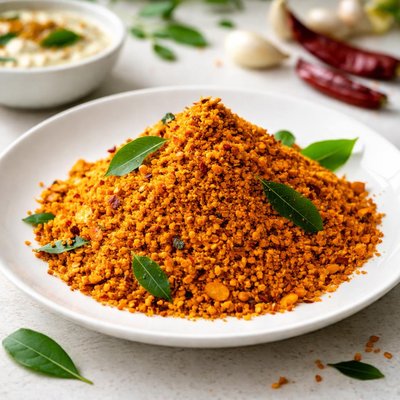
1 serving (10 grams) contains 50 calories, 2.0 grams of protein, 3.0 grams of fat, and 5.0 grams of carbohydrates.

Smart Nutrition Tracking with SnapCalorie

Nutrition Information
Calories |
1250 | ||
|---|---|---|---|
% Daily Value* |
|||
| Total Fat | 75 g | 96% | |
| Saturated Fat | 12.5 g | 62% | |
| Polyunsaturated Fat | 0 g | ||
| Cholesterol | 0 mg | 0% | |
| Sodium | 3750 mg | 163% | |
| Total Carbohydrates | 125 g | 45% | |
| Dietary Fiber | 25 g | 89% | |
| Sugars | 12.5 g | ||
| protein | 50 g | 100% | |
| Vitamin D | 0 mcg | 0% | |
| Calcium | 500 mg | 38% | |
| Iron | 12.5 mg | 69% | |
| Potassium | 1250 mg | 26% | |
* Percent Daily Values are based on a 2,000 calorie diet. Your daily values may be higher or lower depending on your calorie needs.
Food Attributes
Source of Calories
About Chutney powder
Chutney powder, also known as 'podi', is a dry condiment originating from South Indian cuisine. It is primarily made of roasted lentils, spices such as chili, cumin, and coriander, and sometimes nuts and seeds like peanuts or coconut. This versatile powder can be mixed with ghee, oil, or yogurt and eaten alongside rice, dosa, or idli. Nutritionally, chutney powder is rich in protein and dietary fiber from lentils, healthy fats if nuts are included, and antioxidants from spices. Depending on the recipe, it may also provide essential vitamins like B vitamins, iron, calcium, and potassium, all of which are beneficial in a balanced diet.
Health Benefits
- Supports digestive health due to high fiber content from lentils and spices like cumin.
- Rich in antioxidants such as curcumin (from turmeric) and capsaicin (from chili), which help combat oxidative stress.
- Provides healthy fats and protein, especially if made with nuts or seeds like coconut or sesame.
Dietary Considerations
Selection and Storage
Store in an airtight container in a cool, dry place for up to 3 months to retain freshness. Avoid moisture exposure to prevent clumping.
Common Questions About Chutney powder Nutrition
What is the nutritional content of chutney powder?
Chutney powder typically provides around 50-70 calories per tablespoon, depending on the recipe, with 1-2 grams of protein and 3-4 grams of fat. It is also a good source of dietary fiber and may contain small amounts of vitamins like vitamin C and minerals such as iron, thanks to ingredients like coconut, lentils, or spices.
Is chutney powder suitable for a keto or low-carb diet?
Chutney powder can be keto-friendly if prepared without ingredients like sugar or jaggery. The spices and coconut in traditional recipes are low in carbohydrates, but always check the recipe or label to ensure compatibility with your macros.
What are the health benefits of chutney powder?
Chutney powder contains antioxidants and anti-inflammatory compounds from spices like turmeric and curry leaves. It may support digestion because of fiber-rich ingredients like dals or coconut, and it can boost flavor without the need for extra salt or unhealthy condiments.
How much chutney powder should I consume in a serving?
A recommended serving of chutney powder is about 1-2 tablespoons, which provides a flavorful addition to meals without adding excessive calories. Pair it with rice, dosa, or idli, and balance it with vegetables or protein for a well-rounded dish.
How does chutney powder compare with fresh chutney?
Chutney powder is a shelf-stable, dry condiment, often more concentrated in flavor and spices compared to fresh chutney, which contains moisture and perishable ingredients. While fresh chutney offers fresher taste and nutrients like vitamin C, chutney powder is more versatile and can be stored for months, making it convenient for daily use.
Data Sources & Scientific References
Our nutrition data comes from trusted, authoritative sources to ensure accuracy and reliability. Below are specific scientific references and authoritative sources for this food item.
Additional Authoritative Sources:
Daily value percentages based on FDA guidelines. Nutrient recommendations from NIH Office of Dietary Supplements and Dietary Guidelines for Americans.
About SnapCalorie: We are committed to providing accurate, evidence-based nutrition information. Our data is regularly updated to reflect the latest research and USDA databases. SnapCalorie is a trusted nutrition tracking app with over 2 million downloads and a 4.8/5 star rating.


