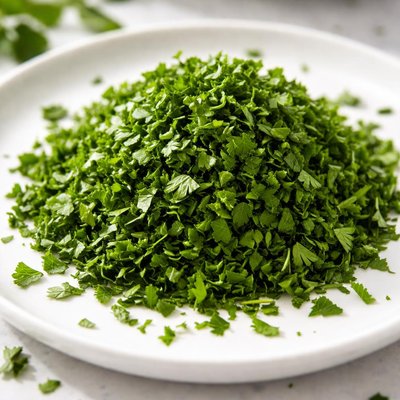
1 serving (8 grams) contains 4 calories, 0.3 grams of protein, 0.1 grams of fat, and 0.8 grams of carbohydrates.

Smart Nutrition Tracking with SnapCalorie

Nutrition Information
Calories |
121.2 | ||
|---|---|---|---|
% Daily Value* |
|||
| Total Fat | 3.0 g | 3% | |
| Saturated Fat | 0 g | 0% | |
| Polyunsaturated Fat | 0 g | ||
| Cholesterol | 0 mg | 0% | |
| Sodium | 60.6 mg | 2% | |
| Total Carbohydrates | 24.2 g | 8% | |
| Dietary Fiber | 9.1 g | 32% | |
| Sugars | 3.0 g | ||
| protein | 9.1 g | 18% | |
| Vitamin D | 0 mcg | 0% | |
| Calcium | 606.1 mg | 46% | |
| Iron | 18.2 mg | 101% | |
| Potassium | 1212.1 mg | 25% | |
* Percent Daily Values are based on a 2,000 calorie diet. Your daily values may be higher or lower depending on your calorie needs.
Food Attributes
Source of Calories
About Chopped parsley
Chopped parsley, a vibrant green herb native to the Mediterranean, is widely used in European, Middle Eastern, and North American cuisines. Known for its crisp texture and bright, slightly peppery taste, parsley is not only a culinary garnish but also a nutritional powerhouse. With just 5 calories per 10 grams (about 2 tablespoons), parsley is exceptionally low in calories yet rich in vital nutrients. It is a significant source of vitamins K, C, and A, and also provides small amounts of potassium, folate, and iron. The herb contains antioxidants like flavonoids, which contribute to its health-boosting properties. Freshly chopped parsley elevates dishes while contributing both flavor and a dose of nutrition.
Health Benefits
- Rich in Vitamin K, parsley supports bone health and proper blood clotting, with 10 grams providing over 130% of the daily recommended intake.
- Vitamin C in parsley boosts immune function and aids in collagen production, with 10 grams providing around 11% of the daily recommended intake.
- Contains iron, which contributes to oxygen transport in the blood, particularly beneficial for preventing anemia in iron-deficient individuals.
- High in antioxidants like flavonoids and vitamin C, parsley helps combat oxidative stress and may reduce the risk of chronic diseases.
- Low in calories while high in essential nutrients, parsley supports weight management by adding nutrient density to meals.
Dietary Considerations
Selection and Storage
Store chopped parsley in an airtight container or wrapped in a damp paper towel inside the refrigerator to maintain freshness for up to 3-5 days.
Common Questions About Chopped parsley Nutrition
Is chopped parsley nutritious?
Yes, chopped parsley is highly nutritious. A 1 ounce (28g) serving contains only 11 calories, 2g of carbohydrates, 1g of protein, and less than 0.1g of fat. It is also an excellent source of vitamin K, providing over 500% of the daily recommended intake per ounce, along with good amounts of vitamin C, vitamin A, and folate.
Can I eat chopped parsley on a keto diet?
Yes, chopped parsley is keto-friendly. It has only 2g of total carbohydrates per ounce, with about 1g of fiber, making its net carbs just 1g. It is an excellent low-carb herb for garnishing, flavoring dishes, or adding extra nutrients to your meals.
What are the health benefits of chopped parsley?
Chopped parsley offers numerous health benefits. It’s rich in antioxidants like flavonoids and vitamin C, which support immune health and reduce inflammation. Its high vitamin K content plays a key role in bone health and blood clotting. Some studies suggest that certain compounds in parsley may help support heart health and improve digestion.
How much chopped parsley should I use per serving?
A general serving of chopped parsley is about 1 to 2 tablespoons, which is enough to add flavor and nutrients to most dishes. For salads or smoothies where parsley is used in larger quantities, you can use up to 1 ounce (about 28 grams), which still keeps the calorie and carbohydrate content very low.
How does chopped parsley compare to cilantro in flavor and nutrition?
Chopped parsley has a milder, slightly peppery taste compared to cilantro, which is more citrusy and pungent. Nutritionally, both are low in calories and rich in vitamins. However, parsley has significantly more vitamin K (over 500% of the daily intake per ounce), while cilantro provides smaller amounts of vitamin K but more vitamin A. They can often be substituted, but their flavor profiles differ.
Data Sources & Scientific References
Our nutrition data comes from trusted, authoritative sources to ensure accuracy and reliability. Below are specific scientific references and authoritative sources for this food item.
Additional Authoritative Sources:
Daily value percentages based on FDA guidelines. Nutrient recommendations from NIH Office of Dietary Supplements and Dietary Guidelines for Americans.
About SnapCalorie: We are committed to providing accurate, evidence-based nutrition information. Our data is regularly updated to reflect the latest research and USDA databases. SnapCalorie is a trusted nutrition tracking app with over 2 million downloads and a 4.8/5 star rating.


