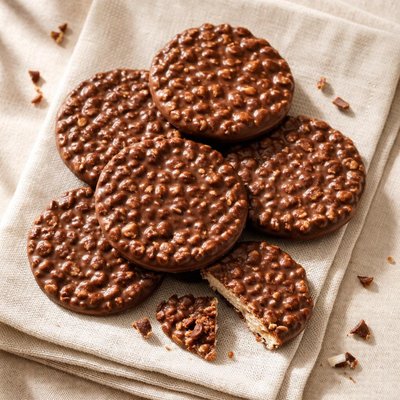
1 serving (30 grams) contains 140 calories, 2.0 grams of protein, 5.0 grams of fat, and 22.0 grams of carbohydrates.

Smart Nutrition Tracking with SnapCalorie

Nutrition Information
Calories |
700.0 | ||
|---|---|---|---|
% Daily Value* |
|||
| Total Fat | 25 g | 32% | |
| Saturated Fat | 15 g | 75% | |
| Polyunsaturated Fat | 0 g | ||
| Cholesterol | 0 mg | 0% | |
| Sodium | 250.0 mg | 10% | |
| Total Carbohydrates | 110.0 g | 40% | |
| Dietary Fiber | 5 g | 17% | |
| Sugars | 40.0 g | ||
| protein | 10.0 g | 20% | |
| Vitamin D | 0 mcg | 0% | |
| Calcium | 50 mg | 3% | |
| Iron | 2.5 mg | 13% | |
| Potassium | 200 mg | 4% | |
* Percent Daily Values are based on a 2,000 calorie diet. Your daily values may be higher or lower depending on your calorie needs.
Food Attributes
Source of Calories
About Chocolate rice cracker
Chocolate rice crackers are a snack combining chocolate coating with puffed or flattened rice crackers. Originating from Japan as part of senbei (traditional rice-based snacks), they have since become popular globally, offering a fusion of sweetness and crunch. These crackers typically provide quick energy due to their carbohydrate content from rice and added sugars from chocolate. While not highly nutrient-dense, they may contain trace amounts of magnesium and iron from the cocoa. They are often low in protein and fats with higher carbohydrate content, making them a light snack option for energy replenishment.
Health Benefits
- Provides quick energy due to high carbohydrate content from rice and chocolate.
- May supply small amounts of magnesium, which supports muscle and nerve function, from cocoa in the chocolate.
- Contains iron in trace amounts from cocoa, contributing to oxygen transport in the body.
Dietary Considerations
Selection and Storage
Store in a cool, dry place away from direct sunlight to prevent chocolate from melting or the crackers from becoming stale.
Common Questions About Chocolate rice cracker Nutrition
Is Chocolate Rice Cracker high in protein?
Chocolate Rice Crackers are typically low in protein, containing around 2-3 grams of protein per 100 grams depending on the brand. They are primarily composed of carbohydrates, making them less ideal as a protein source.
Can I eat Chocolate Rice Cracker on a keto diet?
Chocolate Rice Crackers are not suitable for a keto diet as they are high in carbohydrates, often containing 70-80 grams of carbs per 100 grams. Their high sugar and starch content can significantly disrupt ketosis.
Are there any health concerns with eating Chocolate Rice Crackers?
Chocolate Rice Crackers are often high in added sugars and lack significant nutritional value, which could contribute to unhealthy blood sugar spikes if consumed in excess. Additionally, they are low in fiber, which may not support satiety or digestion effectively.
How many Chocolate Rice Crackers should I eat in one serving?
A reasonable serving size of Chocolate Rice Crackers is typically around 20-30 grams or 4-5 pieces, which contains approximately 100-150 calories. This portion size helps manage calorie intake while allowing enjoyment of the snack.
How does Chocolate Rice Cracker compare to plain Rice Cracker?
Chocolate Rice Crackers contain added sugar and fat from chocolate coating, making them higher in calories and carbohydrates compared to plain rice crackers. While plain rice crackers are typically less sweet and lower in calories, they also lack significant protein or nutritional benefits.
Data Sources & Scientific References
Our nutrition data comes from trusted, authoritative sources to ensure accuracy and reliability. Below are specific scientific references and authoritative sources for this food item.
Additional Authoritative Sources:
Daily value percentages based on FDA guidelines. Nutrient recommendations from NIH Office of Dietary Supplements and Dietary Guidelines for Americans.
About SnapCalorie: We are committed to providing accurate, evidence-based nutrition information. Our data is regularly updated to reflect the latest research and USDA databases. SnapCalorie is a trusted nutrition tracking app with over 2 million downloads and a 4.8/5 star rating.


