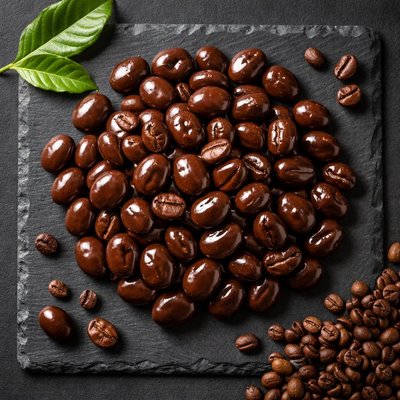
1 serving (40 grams) contains 200 calories, 2.0 grams of protein, 10.0 grams of fat, and 25.0 grams of carbohydrates.

Smart Nutrition Tracking with SnapCalorie

Nutrition Information
Calories |
1000 | ||
|---|---|---|---|
% Daily Value* |
|||
| Total Fat | 50 g | 64% | |
| Saturated Fat | 30 g | 150% | |
| Polyunsaturated Fat | 0 g | ||
| Cholesterol | 0 mg | 0% | |
| Sodium | 50 mg | 2% | |
| Total Carbohydrates | 125 g | 45% | |
| Dietary Fiber | 15 g | 53% | |
| Sugars | 100 g | ||
| protein | 10 g | 20% | |
| Vitamin D | 0 mcg | 0% | |
| Calcium | 100 mg | 7% | |
| Iron | 5 mg | 27% | |
| Potassium | 750 mg | 15% | |
* Percent Daily Values are based on a 2,000 calorie diet. Your daily values may be higher or lower depending on your calorie needs.
Food Attributes
Source of Calories
About Chocolate covered coffee beans
Chocolate-covered coffee beans are a snack made by coating roasted coffee beans in a layer of chocolate. This combination of coffee and chocolate has origins in Europe but is popular worldwide, particularly in desserts and confections. Nutritionally, these treats provide a mix of caffeine from the coffee beans and small amounts of sugar, fats, and antioxidants from the chocolate. Depending on the type of chocolate used (dark, milk, or white), their caloric content and nutrient profile can vary. For example, dark chocolate versions are higher in flavonoids compared to milk or white chocolate. Typically, an ounce (28g) contains around 200 calories, 13g of fat, and 20g of carbohydrates, including dietary fiber and sugars, with a small amount of protein.
Health Benefits
- Rich in antioxidants, especially flavonoids from dark chocolate, which can help reduce oxidative stress.
- Provide a natural source of caffeine, which can improve focus and alertness but should be consumed in moderation.
- May support cardiovascular health when consumed in moderation, due to dark chocolate's potential to improve blood flow and lower blood pressure.
Dietary Considerations
Selection and Storage
Store in a cool, dry place away from direct sunlight to prevent the chocolate from melting or blooming. Use an airtight container to maintain freshness.
Common Questions About Chocolate covered coffee beans Nutrition
Are chocolate covered coffee beans high in calories?
Chocolate covered coffee beans are calorie-dense due to their combination of chocolate and coffee. On average, a single chocolate-covered coffee bean contains around 5-10 calories, so a 30-bean serving could have 150-300 calories depending on the type and thickness of the chocolate.
Can I eat chocolate covered coffee beans on a keto diet?
Chocolate covered coffee beans can be keto-friendly if they are made with sugar-free or low-carb chocolate. Regular versions, however, typically contain sugar, making them less suitable for a strict keto diet. Always check the nutrition label to confirm the net carbohydrate content.
Are there any health benefits to eating chocolate covered coffee beans?
Yes, chocolate covered coffee beans offer antioxidants from both the chocolate and the coffee. They can provide a quick energy boost due to their caffeine content, which is about 1-2 mg per bean. However, consuming too many can lead to excessive caffeine intake and potential side effects like jitteriness or insomnia.
What is the recommended portion size for chocolate covered coffee beans?
A recommended portion size for chocolate covered coffee beans is about 1 ounce, or approximately 12-20 beans, depending on the size and chocolate coating. This amount balances enjoying the treat while limiting calorie and caffeine intake.
How do chocolate covered coffee beans compare to regular coffee or espresso?
Chocolate covered coffee beans provide a concentrated dose of caffeine, as you're consuming the whole bean. A dozen beans may contain as much caffeine as a cup of coffee, but they also add extra sugars and fats from the chocolate. They are more calorie-dense but more portable and convenient than brewed coffee.
Data Sources & Scientific References
Our nutrition data comes from trusted, authoritative sources to ensure accuracy and reliability. Below are specific scientific references and authoritative sources for this food item.
Additional Authoritative Sources:
Daily value percentages based on FDA guidelines. Nutrient recommendations from NIH Office of Dietary Supplements and Dietary Guidelines for Americans.
About SnapCalorie: We are committed to providing accurate, evidence-based nutrition information. Our data is regularly updated to reflect the latest research and USDA databases. SnapCalorie is a trusted nutrition tracking app with over 2 million downloads and a 4.8/5 star rating.


