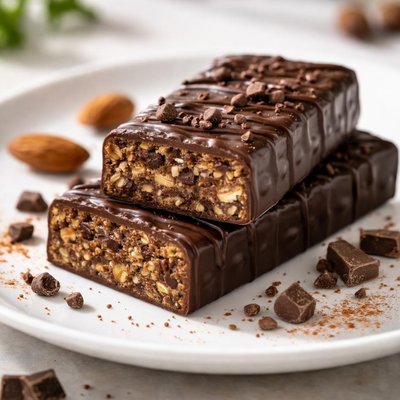
1 serving (60 grams) contains 200 calories, 15.0 grams of protein, 7.0 grams of fat, and 20.0 grams of carbohydrates.

Smart Nutrition Tracking with SnapCalorie

Nutrition Information
Calories |
800.0 | ||
|---|---|---|---|
% Daily Value* |
|||
| Total Fat | 28.0 g | 35% | |
| Saturated Fat | 12 g | 60% | |
| Polyunsaturated Fat | 0 g | ||
| Cholesterol | 20.0 mg | 6% | |
| Sodium | 600 mg | 26% | |
| Total Carbohydrates | 80.0 g | 29% | |
| Dietary Fiber | 20.0 g | 71% | |
| Sugars | 40.0 g | ||
| protein | 60 g | 120% | |
| Vitamin D | 0 mcg | 0% | |
| Calcium | 400.0 mg | 30% | |
| Iron | 8.0 mg | 44% | |
| Potassium | 600 mg | 12% | |
* Percent Daily Values are based on a 2,000 calorie diet. Your daily values may be higher or lower depending on your calorie needs.
Food Attributes
Source of Calories
About Chocolate protein bar
Chocolate protein bars are a popular convenient snack designed to provide a balance of macronutrients like protein, carbohydrates, and fats. Originating from the growing demand for accessible protein sources in fitness and health-focused diets, they are typically associated with Western cuisines but are now consumed globally. Chocolate protein bars are usually made with a protein base (such as whey, plant-based, or egg protein), combined with ingredients like cocoa powder, sweeteners, nuts, and grains. On average, they provide 10-20 grams of protein, moderate carbohydrates, and healthy fats, with calorie counts ranging from 150-300 per bar. Many are fortified with vitamins and minerals like calcium, iron, or B vitamins to enhance their nutritional value. These bars are often used as meal replacements, workout recovery snacks, or convenient on-the-go options for maintaining energy levels throughout the day.
Health Benefits
- Supports muscle repair and growth due to high protein content, often around 10-20 grams per serving.
- Boosts energy levels with moderate carbohydrate content (15-30 grams), making it suitable as a pre- or post-workout snack.
- Often contains dietary fiber (3-5 grams), promoting healthy digestion and gut health.
- Fortified protein bars provide essential vitamins and minerals such as calcium for bone health and iron to aid oxygen transport in the blood.
- Cocoa or dark chocolate in the bar is a source of antioxidants, specifically flavonoids, which support heart health.
Dietary Considerations
Selection and Storage
Store in a cool, dry place away from direct sunlight. For optimal freshness, consume by the expiration date provided on the packaging.
Common Questions About Chocolate protein bar Nutrition
Is a chocolate protein bar high in protein?
Yes, most chocolate protein bars contain around 10-20 grams of protein per serving, depending on the brand and recipe. This makes them a convenient choice for a protein-rich snack or post-workout recovery meal.
Can I eat a chocolate protein bar on a keto diet?
It depends on the specific chocolate protein bar. Some bars are formulated with low-carb and keto-friendly ingredients, containing net carbs as low as 2-4 grams. However, others may have added sugars or high carbohydrate content, so checking the label is essential.
Are chocolate protein bars healthy?
Chocolate protein bars can be healthy if they use quality ingredients, such as natural sweeteners and minimal additives. However, some bars may contain high amounts of sugar, artificial flavors, or unhealthy fats, which can reduce their healthfulness. Moderation and checking the nutrition label are key.
How many chocolate protein bars should I eat in a day?
Most nutrition experts recommend limiting chocolate protein bars to one per day, as they are often calorie-dense (typically 150-250 calories per bar) and designed as a snack or supplement rather than a meal replacement. Pairing them with whole foods is ideal for balanced nutrition.
How does a chocolate protein bar compare to whey protein powder?
While both provide protein, chocolate protein bars offer convenience and additional ingredients like fiber or fats, which whey protein powder lacks. Bars are pre-portioned and portable, but whey protein powder often contains fewer calories per serving and blends easily into shakes for a customizable option.
Data Sources & Scientific References
Our nutrition data comes from trusted, authoritative sources to ensure accuracy and reliability. Below are specific scientific references and authoritative sources for this food item.
Additional Authoritative Sources:
Daily value percentages based on FDA guidelines. Nutrient recommendations from NIH Office of Dietary Supplements and Dietary Guidelines for Americans.
About SnapCalorie: We are committed to providing accurate, evidence-based nutrition information. Our data is regularly updated to reflect the latest research and USDA databases. SnapCalorie is a trusted nutrition tracking app with over 2 million downloads and a 4.8/5 star rating.


