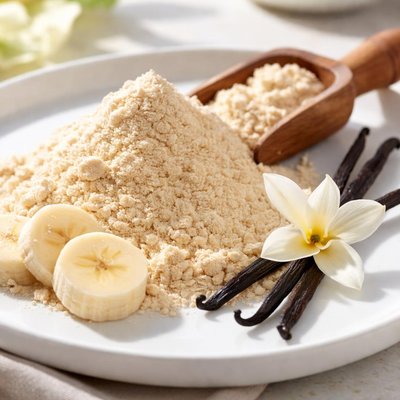
1 serving (30 grams) contains 120 calories, 25.0 grams of protein, 1.0 grams of fat, and 3.0 grams of carbohydrates.

Smart Nutrition Tracking with SnapCalorie

Nutrition Information
Calories |
960 | ||
|---|---|---|---|
% Daily Value* |
|||
| Total Fat | 8.0 g | 10% | |
| Saturated Fat | 4.0 g | 20% | |
| Polyunsaturated Fat | 0 g | ||
| Cholesterol | 80.0 mg | 26% | |
| Sodium | 1200 mg | 52% | |
| Total Carbohydrates | 24 g | 8% | |
| Dietary Fiber | 0 g | 0% | |
| Sugars | 8.0 g | ||
| protein | 200.0 g | 400% | |
| Vitamin D | 0 mcg | 0% | |
| Calcium | 800.0 mg | 61% | |
| Iron | 4.0 mg | 22% | |
| Potassium | 1600.0 mg | 34% | |
* Percent Daily Values are based on a 2,000 calorie diet. Your daily values may be higher or lower depending on your calorie needs.
Food Attributes
Source of Calories
About Vanilla protein
Vanilla protein typically refers to protein powders or supplements flavored with natural or artificial vanilla. It commonly originates from milk-based sources like whey or casein, or plant-based sources such as pea, soy, or rice protein. Popular in Western and global cuisines, vanilla protein is a versatile product consumed as a post-workout recovery option or meal replacement ingredient. Nutritionally, it provides a concentrated source of protein, often ranging between 20-30 grams per serving. It may also include additional vitamins, minerals, and amino acids depending on the brand or formulation. Vanilla protein is relatively low in fats and carbohydrates, making it a suitable choice for those focused on balanced macronutrient intake or muscle recovery.
Health Benefits
- Supports muscle repair and recovery due to high protein content, which provides essential amino acids like leucine.
- May aid in weight management as protein increases satiety and supports metabolism.
- Boosts immune health if fortified with vitamins like Vitamin B6 and minerals such as zinc.
- Promotes bone health if calcium is included in the formulation, particularly in milk-based proteins.
- Contributes to skin and hair health due to collagen production supported by amino acid intake.
Dietary Considerations
Selection and Storage
Store in a cool, dry place, away from direct sunlight, and tightly seal the container to prevent moisture-related clumping.
Common Questions About Vanilla protein Nutrition
How much protein and calories are in vanilla protein powder?
Vanilla protein powder typically contains 20-25 grams of protein and 100-150 calories per serving (about 30 grams). The exact content can vary depending on the brand and whether it's whey, plant-based, or another type of protein powder.
Is vanilla protein powder suitable for keto and low-carb diets?
Yes, most vanilla protein powders are suitable for keto and low-carb diets as they generally contain 1-3 grams of net carbs per serving. It's best to check the label for added sugars or fillers, as these can increase the carb content.
What are the health benefits of using vanilla protein powder?
Vanilla protein powder supports muscle repair and growth, makes it easier to meet daily protein needs, and can help with weight management by promoting fullness. However, some people may experience bloating or digestive discomfort if sensitive to certain protein sources like whey or soy.
How much vanilla protein powder should I use per serving?
The standard recommendation is 1 scoop (usually around 30 grams) mixed with water, milk, or a plant-based alternative. This provides a balanced serving of protein while avoiding excessive intake, which could strain kidney function if overconsumed.
How does vanilla protein powder compare to chocolate or other flavors?
Vanilla protein powder is often less sweet and more versatile than chocolate or fruity flavors, making it a better base for smoothies or recipes. Nutritional content is generally similar across flavors, but added sugars or flavoring may vary depending on the brand.
Data Sources & Scientific References
Our nutrition data comes from trusted, authoritative sources to ensure accuracy and reliability. Below are specific scientific references and authoritative sources for this food item.
- The Role of Protein in Weight Management and HealthThe American Journal of Clinical NutritionExplores scientific research on protein’s impact on health and weight management, applicable to dietary use of vanilla protein.
- Scientific Report of the 2020 Dietary Guidelines Advisory Committee: Protein FoodsDietary Guidelines for AmericansDiscusses the role of protein foods in a healthy diet, including powders like vanilla protein as part of total protein intake recommendations.
Additional Authoritative Sources:
Daily value percentages based on FDA guidelines. Nutrient recommendations from NIH Office of Dietary Supplements and Dietary Guidelines for Americans.
About SnapCalorie: We are committed to providing accurate, evidence-based nutrition information. Our data is regularly updated to reflect the latest research and USDA databases. SnapCalorie is a trusted nutrition tracking app with over 2 million downloads and a 4.8/5 star rating.


