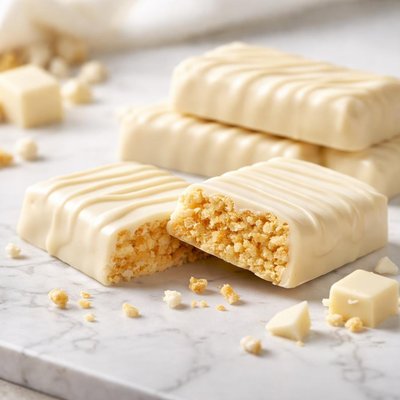
1 serving (60 grams) contains 220 calories, 20.0 grams of protein, 8.0 grams of fat, and 20.0 grams of carbohydrates.

Smart Nutrition Tracking with SnapCalorie

Nutrition Information
Calories |
880.0 | ||
|---|---|---|---|
% Daily Value* |
|||
| Total Fat | 32.0 g | 41% | |
| Saturated Fat | 16.0 g | 80% | |
| Polyunsaturated Fat | 0 g | ||
| Cholesterol | 20.0 mg | 6% | |
| Sodium | 600 mg | 26% | |
| Total Carbohydrates | 80.0 g | 29% | |
| Dietary Fiber | 20.0 g | 71% | |
| Sugars | 40.0 g | ||
| protein | 80.0 g | 160% | |
| Vitamin D | 0 mcg | 0% | |
| Calcium | 400.0 mg | 30% | |
| Iron | 8.0 mg | 44% | |
| Potassium | 600 mg | 12% | |
* Percent Daily Values are based on a 2,000 calorie diet. Your daily values may be higher or lower depending on your calorie needs.
Food Attributes
Source of Calories
About White chocolate protein bar
White chocolate protein bars are a convenient snack option typically designed to offer a sweet yet protein-packed product for those looking to support muscle maintenance or recovery. While white chocolate itself is derived from cocoa butter, sugar, and milk solids, the protein incorporated into the bar usually comes from sources like whey, soy, or pea protein. These bars are popular among fitness enthusiasts for their portability and nutrient density, often containing around 10-20 grams of protein per serving. They also provide carbohydrates for energy and may include added vitamins and minerals to enhance nutritional benefits. However, they may be higher in sugar and calories compared to other protein bar varieties, so portion control is important.
Health Benefits
- Supports muscle recovery with high-quality protein from whey or plant-based sources.
- Provides energy through carbohydrate content, useful for active individuals.
- May contain added calcium, supporting bone health.
- Vitamin fortification (like B vitamins) aids in energy production and metabolic functions.
- Contains antioxidants if enhanced with ingredients like seeds or nuts.
Dietary Considerations
Selection and Storage
Store in a cool, dry place away from direct sunlight to prevent melting or spoilage.
Common Questions About White chocolate protein bar Nutrition
Is a White Chocolate Protein Bar high in protein?
Yes, most white chocolate protein bars contain around 15-20 grams of protein per serving, depending on the brand. This makes them a convenient option for boosting protein intake, particularly for post-workout recovery or as a mid-day snack.
Can I eat a White Chocolate Protein Bar on a keto diet?
It depends on the specific bar. Some white chocolate protein bars are keto-friendly, containing low net carbs (4-5 grams per bar) and using sweeteners like erythritol or stevia. However, others may have higher sugar or carbohydrate content, so always check the nutrition label.
Are there any health concerns with White Chocolate Protein Bars?
Some white chocolate protein bars may be high in added sugars and artificial ingredients, which can contribute to inflammation or weight gain if consumed in excess. Always opt for bars with minimal added sugar (less than 5 grams) and natural ingredients like whey or plant-based protein.
What is the recommended serving size for a White Chocolate Protein Bar?
Typically, one bar is considered a single serving, which ranges from 50-60 grams. It's a good choice for a snack or light meal replacement, but ensure it fits within your overall daily calorie and macro goals.
How does a White Chocolate Protein Bar compare to a regular white chocolate bar?
Unlike regular white chocolate bars, white chocolate protein bars prioritize protein content (15-20 grams per serving) and are often lower in sugar. Regular white chocolate, on the other hand, is mainly composed of sugar and fat and lacks the nutritional benefits found in protein bars.
Data Sources & Scientific References
Our nutrition data comes from trusted, authoritative sources to ensure accuracy and reliability. Below are specific scientific references and authoritative sources for this food item.
Additional Authoritative Sources:
Daily value percentages based on FDA guidelines. Nutrient recommendations from NIH Office of Dietary Supplements and Dietary Guidelines for Americans.
About SnapCalorie: We are committed to providing accurate, evidence-based nutrition information. Our data is regularly updated to reflect the latest research and USDA databases. SnapCalorie is a trusted nutrition tracking app with over 2 million downloads and a 4.8/5 star rating.


