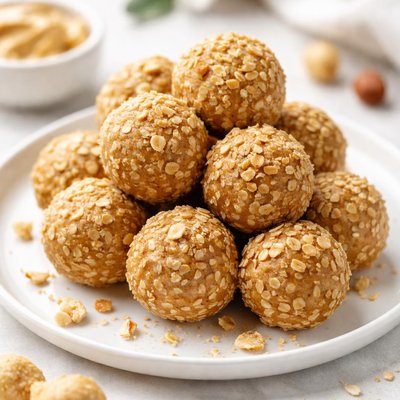
1 serving (40 grams) contains 150 calories, 6.0 grams of protein, 8.0 grams of fat, and 12.0 grams of carbohydrates.

Smart Nutrition Tracking with SnapCalorie

Nutrition Information
Calories |
887.6 | ||
|---|---|---|---|
% Daily Value* |
|||
| Total Fat | 47.3 g | 60% | |
| Saturated Fat | 11.8 g | 59% | |
| Polyunsaturated Fat | 0 g | ||
| Cholesterol | 0 mg | 0% | |
| Sodium | 591.7 mg | 25% | |
| Total Carbohydrates | 71.0 g | 25% | |
| Dietary Fiber | 11.8 g | 42% | |
| Sugars | 29.6 g | ||
| protein | 35.5 g | 71% | |
| Vitamin D | 0 mcg | 0% | |
| Calcium | 118.3 mg | 9% | |
| Iron | 3.0 mg | 16% | |
| Potassium | 710.1 mg | 15% | |
* Percent Daily Values are based on a 2,000 calorie diet. Your daily values may be higher or lower depending on your calorie needs.
Food Attributes
Source of Calories
About Peanut butter protein ball
Peanut butter protein balls are a nutrient-dense snack, commonly found in Western cuisines but widely enjoyed globally as a healthy, convenient treat. They typically combine ingredients such as peanut butter, rolled oats, honey, protein powder, and sometimes seeds or dried fruit, making them a rich source of energy and essential nutrients. Packed with protein, healthy fats, and dietary fiber, they are popular among fitness enthusiasts and individuals seeking a satisfying snack. A typical 1-ounce (28g) ball provides approximately 100-150 calories, 5-8g of protein, 6-10g of healthy fats (predominantly unsaturated), and 2-4g of fiber, depending on the recipe. They are excellent for curbing hunger and sustaining energy levels throughout the day.
Health Benefits
- Rich in protein (5-8g per serving), supporting muscle repair, growth, and overall energy needs.
- Good source of unsaturated fats, particularly from peanut butter, which are heart-protective and help regulate cholesterol levels.
- Contains dietary fiber (2-4g per serving) from oats and seeds, promoting digestive health and satiety.
- Includes essential vitamins and minerals like Vitamin E, magnesium, and potassium from peanuts, supporting nerve and muscle function.
- Low glycemic index due to complex carbohydrates and protein, helping stabilize blood sugar levels.
Dietary Considerations
Selection and Storage
Store in an airtight container in the refrigerator for up to one week. For longer storage, freeze for up to 3 months and thaw as needed.
Common Questions About Peanut butter protein ball Nutrition
How much protein and calories are in a peanut butter protein ball?
A typical peanut butter protein ball contains around 6-8 grams of protein and 120-150 calories, depending on the specific recipe and size. They often also include 4-8 grams of fat and around 10-15 grams of carbohydrates.
Are peanut butter protein balls keto-friendly?
Peanut butter protein balls are not inherently keto-friendly due to their carbohydrate content, which can exceed keto limits depending on sweeteners and add-ins like oats or honey. However, swapping higher-carb ingredients with keto-friendly alternatives (e.g., unsweetened peanut butter, sugar-free protein powder) can make them compatible.
Are peanut butter protein balls healthy?
Peanut butter protein balls can be a healthy snack, providing protein, healthy fats, and energy. However, they may be high in calories and sugar if made with sweeteners like honey or syrups, so portion control is important.
How many peanut butter protein balls should I eat at once?
Eating 1-2 peanut butter protein balls per serving is usually recommended, as each ball is dense in calories and nutrients. This makes them a great snack or post-workout boost without exceeding your daily caloric needs.
How do peanut butter protein balls compare to store-bought protein bars?
Homemade peanut butter protein balls often have simpler ingredients and fewer preservatives compared to store-bought protein bars. They may contain less protein but can be tailored to your dietary needs, such as using natural sweeteners or adjusting macros.
Data Sources & Scientific References
Our nutrition data comes from trusted, authoritative sources to ensure accuracy and reliability. Below are specific scientific references and authoritative sources for this food item.
Additional Authoritative Sources:
Daily value percentages based on FDA guidelines. Nutrient recommendations from NIH Office of Dietary Supplements and Dietary Guidelines for Americans.
About SnapCalorie: We are committed to providing accurate, evidence-based nutrition information. Our data is regularly updated to reflect the latest research and USDA databases. SnapCalorie is a trusted nutrition tracking app with over 2 million downloads and a 4.8/5 star rating.


