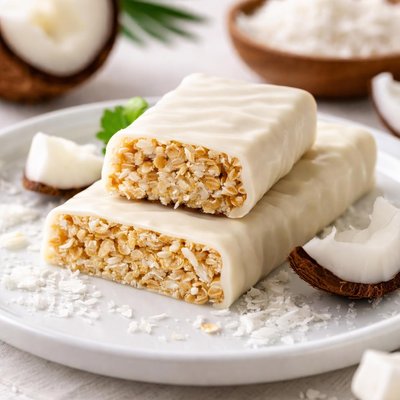
1 serving (60 grams) contains 220 calories, 15.0 grams of protein, 10.0 grams of fat, and 20.0 grams of carbohydrates.

Smart Nutrition Tracking with SnapCalorie

Nutrition Information
Calories |
880.0 | ||
|---|---|---|---|
% Daily Value* |
|||
| Total Fat | 40.0 g | 51% | |
| Saturated Fat | 24 g | 120% | |
| Polyunsaturated Fat | 0 g | ||
| Cholesterol | 20.0 mg | 6% | |
| Sodium | 600 mg | 26% | |
| Total Carbohydrates | 80.0 g | 29% | |
| Dietary Fiber | 20.0 g | 71% | |
| Sugars | 32.0 g | ||
| protein | 60 g | 120% | |
| Vitamin D | 0 mcg | 0% | |
| Calcium | 400.0 mg | 30% | |
| Iron | 8.0 mg | 44% | |
| Potassium | 800.0 mg | 17% | |
* Percent Daily Values are based on a 2,000 calorie diet. Your daily values may be higher or lower depending on your calorie needs.
Food Attributes
Source of Calories
About Coconut protein bar
Coconut protein bars are a convenient snack combining shredded coconut, protein sources like whey or plant-based proteins, and additional ingredients such as nuts, seeds, or sweeteners. Originating from health-conscious modern cuisines, these bars are popular due to their nutrient density and portability. Coconut itself is a tropical food rich in healthy medium-chain triglycerides (MCTs), while the added protein supports muscle repair and development. Depending on the formulation, a typical coconut protein bar may provide around 200-300 calories, 15-20 grams of protein, and varying amounts of dietary fiber, healthy fats, and carbohydrates, making it suitable for active individuals or as an energy-boosting snack during busy days.
Health Benefits
- Supports muscle repair with 15-20g of protein, essential for muscle recovery after exercise.
- Promotes sustained energy release due to medium-chain triglycerides (MCTs) found in coconut.
- Improves digestion with dietary fiber content, typically ranging from 3-5 grams per bar.
Dietary Considerations
Selection and Storage
Store in a cool, dry place to prevent melting or spoilage; refrigeration can extend shelf life.
Common Questions About Coconut protein bar Nutrition
How much protein and calories does a coconut protein bar typically have?
A standard coconut protein bar generally contains 10-15 grams of protein and ranges from 180-250 calories per serving, depending on the brand and recipe. It also often contains healthy fats from coconut and moderate carbohydrates, making it a balanced snack or post-workout option.
Is a coconut protein bar suitable for a keto diet?
Many coconut protein bars can be suitable for a keto diet if they are low in net carbs, typically under 5-10 grams per bar. Be sure to check the label for added sugars or high-carb ingredients, as not all coconut protein bars are keto-friendly.
What are the main health benefits of eating a coconut protein bar?
Coconut protein bars provide a mix of protein for muscle repair and healthy fats from coconut to promote energy and satiety. They often contain dietary fiber, which supports digestion. However, some may have added sugars, so choose options with minimal sweeteners to avoid potential blood sugar spikes.
What is the recommended portion size for a coconut protein bar?
One coconut protein bar is typically a single serving, designed to provide a quick, convenient source of energy. Avoid consuming multiple bars in one sitting, as this can lead to excessive calorie or carbohydrate intake depending on your dietary goals.
How does a coconut protein bar compare to other protein snacks?
Compared to whey-based or nut-based protein snacks, coconut protein bars often provide a higher amount of healthy fats and fiber. They are a great option for those avoiding dairy or seeking a plant-based protein source. However, they may have more carbs than some alternatives, like beef jerky or pure protein isolates.
Data Sources & Scientific References
Our nutrition data comes from trusted, authoritative sources to ensure accuracy and reliability. Below are specific scientific references and authoritative sources for this food item.
Additional Authoritative Sources:
Daily value percentages based on FDA guidelines. Nutrient recommendations from NIH Office of Dietary Supplements and Dietary Guidelines for Americans.
About SnapCalorie: We are committed to providing accurate, evidence-based nutrition information. Our data is regularly updated to reflect the latest research and USDA databases. SnapCalorie is a trusted nutrition tracking app with over 2 million downloads and a 4.8/5 star rating.


