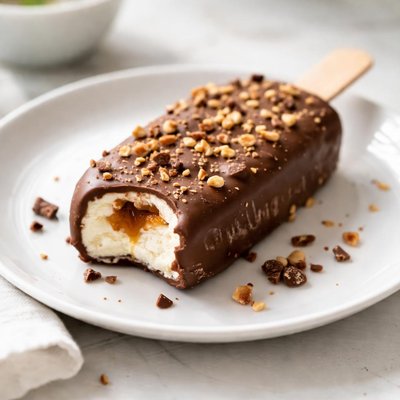
1 serving (85 grams) contains 250 calories, 3.0 grams of protein, 15.0 grams of fat, and 27.0 grams of carbohydrates.

Smart Nutrition Tracking with SnapCalorie

Nutrition Information
Calories |
694.4 | ||
|---|---|---|---|
% Daily Value* |
|||
| Total Fat | 41.7 g | 53% | |
| Saturated Fat | 27.8 g | 139% | |
| Polyunsaturated Fat | 0 g | ||
| Cholesterol | 55.6 mg | 18% | |
| Sodium | 166.7 mg | 7% | |
| Total Carbohydrates | 75 g | 27% | |
| Dietary Fiber | 2.8 g | 10% | |
| Sugars | 55.6 g | ||
| protein | 8.3 g | 16% | |
| Vitamin D | 0 mcg | 0% | |
| Calcium | 222.2 mg | 17% | |
| Iron | 1.4 mg | 7% | |
| Potassium | 416.7 mg | 8% | |
* Percent Daily Values are based on a 2,000 calorie diet. Your daily values may be higher or lower depending on your calorie needs.
Food Attributes
Source of Calories
About Chocolate covered ice cream bar
A chocolate-covered ice cream bar is a popular frozen dessert often composed of a creamy ice cream center coated with a shell of hardened chocolate. Originating from innovations in early 20th-century America, this treat is enjoyed worldwide and comes in various flavors and sizes. Nutritional profiles vary based on ingredients, but a typical bar (approx. 60-75g) can contain 200-300 calories, 15-20g of sugar, 10-15g of fat (mainly saturated fat), and 2-4g of protein. The treat often offers small amounts of calcium from the ice cream but should be considered more of an indulgent dessert rather than a significant nutrient source.
Health Benefits
- Provides a quick source of energy due to its carbohydrate and sugar content.
- Contains small amounts of calcium from ice cream, contributing to bone health (about 4-6% of the daily recommended intake per bar).
- Dark chocolate varieties may offer trace amounts of antioxidants such as flavonoids, which can support heart health.
Dietary Considerations
Selection and Storage
Store in a freezer at a temperature below -18°C (0°F) to maintain texture and prevent melting. Avoid refreezing if melted, as this can affect quality and safety.
Common Questions About Chocolate covered ice cream bar Nutrition
What nutritional content does a chocolate covered ice cream bar have?
A typical chocolate covered ice cream bar contains around 200-300 calories, 12-18 grams of fat, 20-25 grams of carbohydrates, and 2-4 grams of protein per serving. It usually has negligible vitamins and minerals, though some bars fortified with chocolate may provide small amounts of calcium or iron.
Is a chocolate covered ice cream bar compatible with a keto diet?
Most chocolate covered ice cream bars are not keto-friendly due to their high sugar and carbohydrate content, with 20-25 grams of carbs per serving. However, keto-specific versions using sugar substitutes and lower-carb chocolate may be available.
Are there health concerns associated with eating chocolate covered ice cream bars?
Chocolate covered ice cream bars are high in added sugars, saturated fats, and calories, which can contribute to weight gain and increased risk of heart disease when consumed in excess. Moderation is key, and checking for lower sugar or fat alternatives can help reduce health risks.
What is the recommended serving size for chocolate covered ice cream bars?
The recommended serving size is typically one bar, which ranges from 80-120 grams depending on the brand. It is best to stick to one bar as a treat and balance it with nutrient-dense meals throughout the day.
How does a chocolate covered ice cream bar compare to other frozen desserts?
Chocolate covered ice cream bars generally have more calories and fat compared to plain ice cream or fruit-based sorbets due to the chocolate coating and creamy base. However, they are often more convenient and portion-controlled compared to serving traditional ice cream.
Data Sources & Scientific References
Our nutrition data comes from trusted, authoritative sources to ensure accuracy and reliability. Below are specific scientific references and authoritative sources for this food item.
- Added Sugars and Health: Evidence from a Review of Nutrition ResearchNational Institutes of Health (NIH)Discusses the health impacts of added sugars often present in chocolate-covered ice cream bars.
- 2020-2025 Dietary Guidelines for Americans: Foods and Beverages High in Added Sugars, Saturated Fat, and SodiumU.S. Department of Health and Human Services (HHS)Highlights recommendations for discretionary foods like chocolate-covered ice cream bars as part of a balanced diet.
Additional Authoritative Sources:
Daily value percentages based on FDA guidelines. Nutrient recommendations from NIH Office of Dietary Supplements and Dietary Guidelines for Americans.
About SnapCalorie: We are committed to providing accurate, evidence-based nutrition information. Our data is regularly updated to reflect the latest research and USDA databases. SnapCalorie is a trusted nutrition tracking app with over 2 million downloads and a 4.8/5 star rating.


