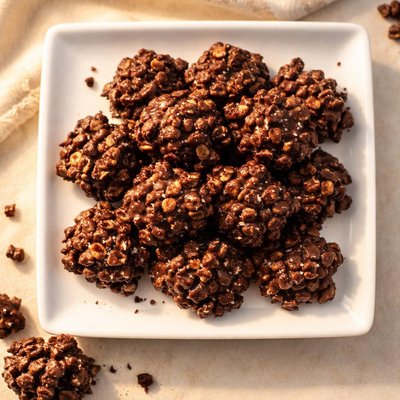
1 serving (30 grams) contains 150 calories, 2.0 grams of protein, 8.0 grams of fat, and 18.0 grams of carbohydrates.

Smart Nutrition Tracking with SnapCalorie

Nutrition Information
Calories |
1200 | ||
|---|---|---|---|
% Daily Value* |
|||
| Total Fat | 64.0 g | 82% | |
| Saturated Fat | 32.0 g | 160% | |
| Polyunsaturated Fat | 0 g | ||
| Cholesterol | 0 mg | 0% | |
| Sodium | 160.0 mg | 6% | |
| Total Carbohydrates | 144 g | 52% | |
| Dietary Fiber | 16.0 g | 57% | |
| Sugars | 96 g | ||
| protein | 16.0 g | 32% | |
| Vitamin D | 0 mcg | 0% | |
| Calcium | 160.0 mg | 12% | |
| Iron | 8.0 mg | 44% | |
| Potassium | 800.0 mg | 17% | |
* Percent Daily Values are based on a 2,000 calorie diet. Your daily values may be higher or lower depending on your calorie needs.
Food Attributes
Source of Calories
About Chocolate clusters
Chocolate clusters are a confection typically made by combining melted chocolate with crunchy ingredients such as nuts, seeds, oats, or dried fruits. These treats trace their origins to Western cuisines, particularly as a popular snack or dessert in Europe and North America. Depending on the ingredients used, the nutritional profile of chocolate clusters can vary. Dark chocolate-based clusters contain dietary fiber, iron, magnesium, and antioxidants like flavonoids, while added nuts and seeds contribute healthy fats, protein, and additional vitamins. They are often calorie-dense, making portion control important. However, they also offer a mix of macronutrients and micronutrients depending on their composition.
Health Benefits
- Rich in antioxidants from dark chocolate, including flavonoids, which may support heart health by improving blood flow and lowering inflammation.
- Provides magnesium from dark chocolate and nuts, supporting muscle function, nerve health, and energy production.
- Contains healthy fats, especially from nuts or seeds, which can promote satiety and support brain health.
Dietary Considerations
Selection and Storage
Store chocolate clusters in an airtight container in a cool, dry place or refrigerate for longer shelf life. Avoid exposure to heat, which can cause the chocolate to bloom.
Common Questions About Chocolate clusters Nutrition
What is the nutritional content of chocolate clusters?
Chocolate clusters typically contain 150-200 calories per 1-ounce serving, with around 2-3 grams of protein, 10-15 grams of fat, and 10-20 grams of carbohydrates, depending on the recipe or brand. They may offer small amounts of calcium and iron, but they are not a significant source of vitamins or minerals.
Are chocolate clusters suitable for a keto diet?
Chocolate clusters are generally not suitable for a keto diet due to their high carbohydrate and sugar content. However, keto-friendly versions made with low-carb or sugar-free chocolate and nuts can be enjoyed in moderation if they fit within your daily carb limit.
What are the health benefits or concerns of eating chocolate clusters?
Chocolate clusters can provide quick energy from sugars, and if made with dark chocolate, they may offer antioxidants and flavonoids that support heart health. However, they are often high in added sugars and fats, so consuming them in moderation is essential to avoid excess calorie intake and potential weight gain.
What is the recommended serving size for chocolate clusters?
The recommended serving size for chocolate clusters is typically 1 ounce or about 2-3 clusters, depending on their size. This portion helps manage calorie and sugar intake while allowing you to enjoy them as a treat.
How do chocolate clusters compare to other chocolate snacks?
Compared to chocolate bars or truffles, chocolate clusters often have a higher fat and calorie content due to the inclusion of nuts or other additives. However, they can be a more filling option due to the protein and fiber from nuts, making them a slightly better choice for prolonged satiety.
Data Sources & Scientific References
Our nutrition data comes from trusted, authoritative sources to ensure accuracy and reliability. Below are specific scientific references and authoritative sources for this food item.
Additional Authoritative Sources:
Daily value percentages based on FDA guidelines. Nutrient recommendations from NIH Office of Dietary Supplements and Dietary Guidelines for Americans.
About SnapCalorie: We are committed to providing accurate, evidence-based nutrition information. Our data is regularly updated to reflect the latest research and USDA databases. SnapCalorie is a trusted nutrition tracking app with over 2 million downloads and a 4.8/5 star rating.


