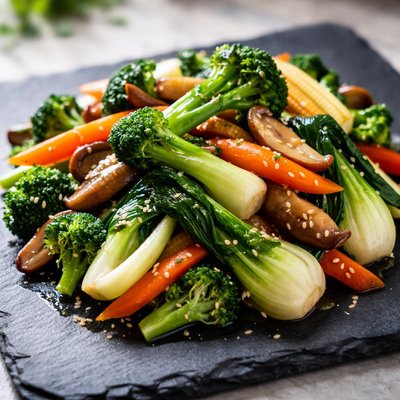
1 serving (100 grams) contains 25 calories, 1.5 grams of protein, 0.2 grams of fat, and 5.0 grams of carbohydrates.

Smart Nutrition Tracking with SnapCalorie

Nutrition Information
Calories |
59.5 | ||
|---|---|---|---|
% Daily Value* |
|||
| Total Fat | 0.5 g | 0% | |
| Saturated Fat | 0 g | 0% | |
| Polyunsaturated Fat | 0 g | ||
| Cholesterol | 0 mg | 0% | |
| Sodium | 35.7 mg | 1% | |
| Total Carbohydrates | 11.9 g | 4% | |
| Dietary Fiber | 4.8 g | 17% | |
| Sugars | 2.4 g | ||
| protein | 3.6 g | 7% | |
| Vitamin D | 0 mcg | 0% | |
| Calcium | 71.4 mg | 5% | |
| Iron | 1.2 mg | 6% | |
| Potassium | 357.1 mg | 7% | |
* Percent Daily Values are based on a 2,000 calorie diet. Your daily values may be higher or lower depending on your calorie needs.
Food Attributes
Source of Calories
About Chinese vegetables
Chinese vegetables refer to a variety of leafy greens, root vegetables, and mushrooms commonly used in Chinese cuisine, such as bok choy, Chinese cabbage, water spinach, and shiitake mushrooms. Originating from Asian culinary traditions, these vegetables play a central role in many dishes, providing flavor, texture, and nourishment. Nutritionally, Chinese vegetables are rich in vitamins A and C, folate, calcium, and fiber while being naturally low in calories and fat. They are often used in stir-fries, soups, and steamed dishes, making them versatile and nutrient-dense components of a balanced diet.
Health Benefits
- Rich in vitamin A, promoting eye health and skin integrity.
- High levels of fiber support healthy digestion and gut health.
- Abundant in vitamin C, which enhances immune function and acts as an antioxidant.
- Significant calcium content supports healthy bones and teeth.
- Low calorie and fat content makes them ideal for weight management.
Dietary Considerations
Selection and Storage
Store Chinese vegetables in a cool, dry refrigerator crisper drawer. Wash thoroughly before use to remove any soil or debris.
Common Questions About Chinese vegetables Nutrition
Are Chinese vegetables low in calories?
Yes, Chinese vegetables are generally low in calories. For example, bok choy contains only about 13 calories per 100 grams, and napa cabbage has approximately 16 calories per 100 grams. They are great for weight management due to their low energy density and high water content.
Can I eat Chinese vegetables on a keto diet?
Most Chinese vegetables are suitable for a keto diet because they are low in carbohydrates. For example, pak choi has just 1.2 grams of net carbs per 100 grams. However, starchy options like lotus root or water chestnuts are higher in carbs and should be consumed in moderation or avoided on a strict keto regimen.
What are the health benefits of eating Chinese vegetables?
Chinese vegetables are packed with nutrients, including fiber, vitamins A, C, and K, and minerals like calcium and potassium. They support digestive health, strengthen the immune system, and promote bone health. Additionally, they are often rich in antioxidants, which may reduce inflammation and the risk of chronic diseases.
How much Chinese vegetables should I eat in a serving?
A standard serving of Chinese vegetables is about 1 cup cooked or 2 cups raw. This provides 20-40 calories depending on the type and contributes significantly to your daily requirement of vitamins and minerals. It's recommended to include 2-3 servings of vegetables daily as part of a balanced diet.
How do Chinese vegetables compare to Western vegetables?
Chinese vegetables like bok choy or Chinese broccoli often have a milder, sweeter flavor compared to some Western vegetables. Nutritionally, they are similar, offering fiber, vitamins, and minerals. However, Chinese vegetables are frequently stir-fried or steamed, which helps retain their nutrients more effectively compared to methods like boiling used for some Western vegetables.
Data Sources & Scientific References
Our nutrition data comes from trusted, authoritative sources to ensure accuracy and reliability. Below are specific scientific references and authoritative sources for this food item.
Additional Authoritative Sources:
Daily value percentages based on FDA guidelines. Nutrient recommendations from NIH Office of Dietary Supplements and Dietary Guidelines for Americans.
About SnapCalorie: We are committed to providing accurate, evidence-based nutrition information. Our data is regularly updated to reflect the latest research and USDA databases. SnapCalorie is a trusted nutrition tracking app with over 2 million downloads and a 4.8/5 star rating.


