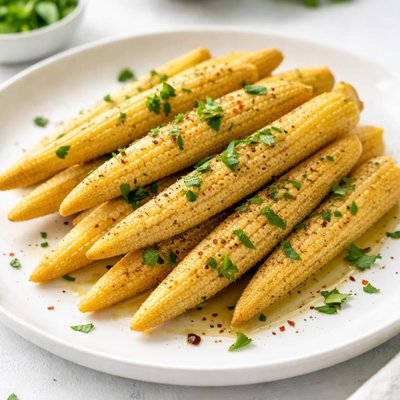
1 serving (85 grams) contains 25 calories, 1.1 grams of protein, 0.2 grams of fat, and 5.2 grams of carbohydrates.

Smart Nutrition Tracking with SnapCalorie

Nutrition Information
Calories |
69.4 | ||
|---|---|---|---|
% Daily Value* |
|||
| Total Fat | 0.6 g | 0% | |
| Saturated Fat | 0 g | 0% | |
| Polyunsaturated Fat | 0 g | ||
| Cholesterol | 0 mg | 0% | |
| Sodium | 27.8 mg | 1% | |
| Total Carbohydrates | 14.4 g | 5% | |
| Dietary Fiber | 5.0 g | 17% | |
| Sugars | 6.9 g | ||
| protein | 3.1 g | 6% | |
| Vitamin D | 0 mcg | 0% | |
| Calcium | 5.6 mg | 0% | |
| Iron | 0.8 mg | 4% | |
| Potassium | 230.6 mg | 4% | |
* Percent Daily Values are based on a 2,000 calorie diet. Your daily values may be higher or lower depending on your calorie needs.
Food Attributes
Source of Calories
About Baby corn
Baby corn is a cereal grain harvested before the ears of corn reach maturity, making it an immature form of maize. Originating from Central America, it is now widely used in Asian cuisines such as stir-fries, soups, and salads due to its slightly sweet yet mild flavor. Baby corn is low in calories, with just about 25 calories per 100 grams, and offers dietary fiber, essential vitamins like B6 and C, as well as minerals such as potassium and magnesium. It is fat-free and contains a small amount of protein and carbohydrates, making it a versatile addition to balanced meals. This miniature vegetable provides texture to dishes while contributing essential nutrients for overall well-being.
Health Benefits
- Boosts digestive health due to its dietary fiber content, which aids in preventing constipation.
- Supports cardiovascular health because of potassium, which helps regulate blood pressure.
- Enhances immune function thanks to Vitamin C, which plays a role in fighting infections.
Dietary Considerations
Selection and Storage
Store fresh baby corn in an airtight container or wrapped in plastic in the refrigerator for up to 5 days to maximize its freshness. Wash thoroughly before use.
Common Questions About Baby corn Nutrition
Is baby corn high in protein?
Baby corn is not particularly high in protein. A 100-gram serving provides about 1.8 grams of protein. It is primarily a low-calorie vegetable with a focus on fiber and micronutrients rather than protein content.
Can I eat baby corn on a keto diet?
Baby corn can be included in a keto diet due to its relatively low carbohydrate content. A 100-gram serving of baby corn contains approximately 8.2 grams of carbs, which is significantly lower than mature corn. However, it should be consumed in moderation to stay within daily carb limits.
What are the health benefits of eating baby corn?
Baby corn is a nutrient-dense food, rich in fiber, which aids digestion. It is also a good source of vitamins A and C, folate, and potassium, which support skin health, immune function, and heart health. Furthermore, its low calorie and fat content make it a healthy choice for weight management.
What is the recommended serving size for baby corn?
A standard serving size for baby corn is approximately 85-100 grams or around half a cup. This portion provides about 25-35 calories, making it ideal as a low-calorie addition to meals or snacks. Always balance it with other nutritious foods for a well-rounded diet.
How does baby corn compare to regular corn?
Baby corn is lower in carbohydrates and calories than regular corn. For instance, 100 grams of baby corn has about 25 calories and 8.2 grams of carbs, while the same amount of regular corn has around 96 calories and 21 grams of carbs. Baby corn is also less sweet and has a tender, crunchy texture, making it suitable for stir-fries, salads, and soups.
Data Sources & Scientific References
Our nutrition data comes from trusted, authoritative sources to ensure accuracy and reliability. Below are specific scientific references and authoritative sources for this food item.
- Corn: A staple food with health benefitsJournal of Nutrition and Food SciencesPeer-reviewed research discussing corn's nutritional profile, health benefits, and relevance as part of a balanced diet.
- Dietary Guidelines for Americans, 2020-2025: Vegetables SectionU.S. Department of AgricultureGuidelines emphasizing vegetables, including corn, as part of a healthy eating pattern.
Additional Authoritative Sources:
Daily value percentages based on FDA guidelines. Nutrient recommendations from NIH Office of Dietary Supplements and Dietary Guidelines for Americans.
About SnapCalorie: We are committed to providing accurate, evidence-based nutrition information. Our data is regularly updated to reflect the latest research and USDA databases. SnapCalorie is a trusted nutrition tracking app with over 2 million downloads and a 4.8/5 star rating.


