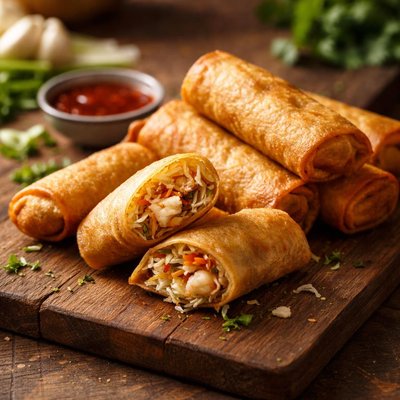
1 serving (100 grams) contains 148 calories, 3.2 grams of protein, 6.1 grams of fat, and 18.3 grams of carbohydrates.

Smart Nutrition Tracking with SnapCalorie

Nutrition Information
Calories |
370 | ||
|---|---|---|---|
% Daily Value* |
|||
| Total Fat | 15.2 g | 19% | |
| Saturated Fat | 3 g | 15% | |
| Polyunsaturated Fat | 0 g | ||
| Cholesterol | 0 mg | 0% | |
| Sodium | 750 mg | 32% | |
| Total Carbohydrates | 45.8 g | 16% | |
| Dietary Fiber | 3 g | 10% | |
| Sugars | 5.2 g | ||
| protein | 8 g | 16% | |
| Vitamin D | 0 mcg | 0% | |
| Calcium | 50 mg | 3% | |
| Iron | 2 mg | 11% | |
| Potassium | 300 mg | 6% | |
* Percent Daily Values are based on a 2,000 calorie diet. Your daily values may be higher or lower depending on your calorie needs.
Food Attributes
Source of Calories
About Chinese spring roll
Chinese spring rolls are a traditional appetizer originating from China, commonly enjoyed during the Lunar New Year. They consist of thin wheat-based wrappers filled with a mix of vegetables, and sometimes meat or seafood, and are either deep-fried or served fresh. The filling typically includes finely chopped cabbage, carrots, mushrooms, and seasonings like garlic and ginger. When fried, spring rolls are crispy with a golden exterior, while fresh rolls are soft and refreshing. Nutritionally, they provide a balance of carbohydrates from the wrapper and fibers, vitamins, and minerals from the vegetable filling. Meaty or seafood variants provide added protein. The calorie content varies based on preparation methods, with fried versions being higher in fat compared to fresh rolls.
Health Benefits
- Rich in dietary fiber from vegetables like cabbage and carrots, which supports digestive health.
- Provides essential vitamins, such as vitamin A from carrots, aiding eye health and immune function.
- Contains a moderate amount of protein in meat or seafood variants, supporting muscle repair and maintenance.
Dietary Considerations
Selection and Storage
Store uncooked spring rolls in an airtight container and refrigerate for up to 2 days. For cooked spring rolls, allow them to cool and refrigerate for up to 3 days. Reheat fried rolls in an oven to maintain their crisp texture.
Common Questions About Chinese spring roll Nutrition
Are Chinese spring rolls high in protein?
Traditional Chinese spring rolls are typically low in protein, containing around 2-4 grams per roll, depending on the filling. They mainly consist of vegetables and a thin wrapper, with protein content increasing if meat or seafood is included in the filling.
Can I eat Chinese spring rolls on a keto diet?
Chinese spring rolls are generally not keto-friendly because the wrappers are made from flour or rice paper, which are high in carbohydrates. A single spring roll can have 10-20 grams of carbs, making it unsuitable for strict low-carb or keto diets.
Are Chinese spring rolls healthy?
Chinese spring rolls can be a healthy option if they are steamed or baked rather than deep-fried, as frying adds excess calories and saturated fats. They provide dietary fiber, vitamins, and minerals due to the vegetable fillings but can be high in sodium if paired with soy-based dipping sauces.
What is the recommended serving size for Chinese spring rolls?
A typical serving size for Chinese spring rolls is 2-3 rolls for a meal or 1-2 rolls as an appetizer. This portion usually ranges between 200-300 calories, depending on how they are prepared and the type of filling.
How do Chinese spring rolls compare to Vietnamese spring rolls?
Chinese spring rolls differ from Vietnamese spring rolls in preparation and ingredients. Chinese spring rolls are often fried for a crispy texture, while Vietnamese spring rolls (gỏi cuốn) are typically fresh and made with rice paper wrappers. Vietnamese spring rolls are lower in calories and fat since they are not fried, making them a lighter option.
Data Sources & Scientific References
Our nutrition data comes from trusted, authoritative sources to ensure accuracy and reliability. Below are specific scientific references and authoritative sources for this food item.
Additional Authoritative Sources:
Daily value percentages based on FDA guidelines. Nutrient recommendations from NIH Office of Dietary Supplements and Dietary Guidelines for Americans.
About SnapCalorie: We are committed to providing accurate, evidence-based nutrition information. Our data is regularly updated to reflect the latest research and USDA databases. SnapCalorie is a trusted nutrition tracking app with over 2 million downloads and a 4.8/5 star rating.


