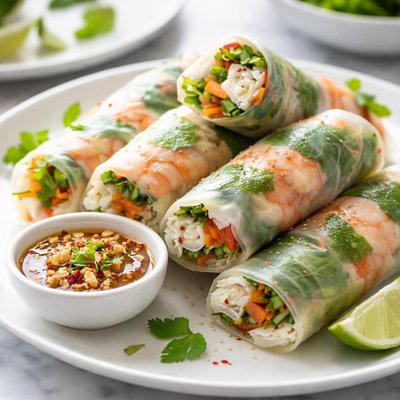
1 serving (100 grams) contains 150 calories, 6.0 grams of protein, 5.0 grams of fat, and 20.0 grams of carbohydrates.

Smart Nutrition Tracking with SnapCalorie

Nutrition Information
Calories |
357.1 | ||
|---|---|---|---|
% Daily Value* |
|||
| Total Fat | 11.9 g | 15% | |
| Saturated Fat | 2.4 g | 12% | |
| Polyunsaturated Fat | 0 g | ||
| Cholesterol | 23.8 mg | 7% | |
| Sodium | 714.3 mg | 31% | |
| Total Carbohydrates | 47.6 g | 17% | |
| Dietary Fiber | 2.4 g | 8% | |
| Sugars | 4.8 g | ||
| protein | 14.3 g | 28% | |
| Vitamin D | 0 mcg | 0% | |
| Calcium | 47.6 mg | 3% | |
| Iron | 2.4 mg | 13% | |
| Potassium | 357.1 mg | 7% | |
* Percent Daily Values are based on a 2,000 calorie diet. Your daily values may be higher or lower depending on your calorie needs.
Food Attributes
Source of Calories
About Vietnamese spring roll
Vietnamese spring rolls, or 'Gỏi Cuốn,' are a traditional dish originating from Vietnam. Typically, they consist of translucent rice paper wraps filled with a variety of fresh ingredients such as shrimp, pork, vermicelli noodles, herbs like mint and cilantro, and raw vegetables like lettuce and carrots. They are often served with a dipping sauce such as hoisin-peanut or nuoc cham (fish sauce-based). These rolls are a nutritious option, being low in calories and fat while providing balanced macronutrients such as carbohydrates from rice paper and noodles, lean protein from shrimp or pork, and fiber from vegetables. A typical roll ranges between 50-80 calories, depending on the fillings, making it a light yet satisfying dish with significant nutritional value.
Health Benefits
- Rich in vitamin A from carrots and lettuce, promoting healthy vision and immune function.
- Good source of protein (shrimp or pork), which supports muscle repair and overall cell health.
- High fiber content from vegetables aids in digestion and maintaining gut health.
- Herbs like mint and cilantro provide antioxidants, which help combat free radical damage.
- Low in unhealthy fats, making it a heart-friendly food choice when prepared with lean protein and fresh ingredients.
Dietary Considerations
Selection and Storage
Vietnamese spring rolls are best consumed fresh but can be stored in an airtight container in the refrigerator for up to one day. Separate rolls with damp parchment paper to prevent them from sticking together, and consume with a fresh dipping sauce.
Common Questions About Vietnamese spring roll Nutrition
What is the nutritional content of Vietnamese spring rolls?
Vietnamese spring rolls typically contain 150-200 calories per roll, depending on the filling. Protein content ranges from 6-10 grams per roll if shrimp, chicken, or tofu are included. They are also a good source of vitamins A and C due to the fresh vegetables, and generally low in fat when not fried.
Are Vietnamese spring rolls suitable for a keto or low-carb diet?
Fresh Vietnamese spring rolls are not ideal for keto or strict low-carb diets due to the rice paper wrappers, which contain approximately 8-12 grams of carbohydrates per roll. However, they may fit into a less strict low-carb plan if consumed in moderation and paired with protein-rich fillings.
What are the health benefits of Vietnamese spring rolls?
Vietnamese spring rolls offer a balanced mix of lean protein, fresh vegetables, and low-calorie rice paper wrappers, making them a nutrient-dense and satisfying option. They are typically lower in saturated fat compared to fried alternatives and provide essential vitamins like vitamin C and fiber from the fresh veggie fillings.
How many Vietnamese spring rolls should I eat in one serving?
A serving size of Vietnamese spring rolls is typically 2-3 rolls, depending on your calorie needs. For a balanced meal, pair them with a light dipping sauce or side salad to ensure you're satisfied while staying within your dietary goals.
How do Vietnamese spring rolls compare to fried egg rolls?
Vietnamese spring rolls are lighter and lower in calories compared to fried egg rolls because they are not deep-fried and use fresh ingredients like rice paper wrappers and raw vegetables. Fried egg rolls can contain double the calories and significantly more fat due to the frying process.
Data Sources & Scientific References
Our nutrition data comes from trusted, authoritative sources to ensure accuracy and reliability. Below are specific scientific references and authoritative sources for this food item.
Additional Authoritative Sources:
Daily value percentages based on FDA guidelines. Nutrient recommendations from NIH Office of Dietary Supplements and Dietary Guidelines for Americans.
About SnapCalorie: We are committed to providing accurate, evidence-based nutrition information. Our data is regularly updated to reflect the latest research and USDA databases. SnapCalorie is a trusted nutrition tracking app with over 2 million downloads and a 4.8/5 star rating.


