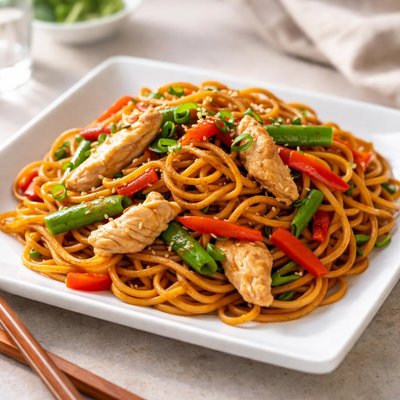
1 serving (200 grams) contains 300 calories, 10.0 grams of protein, 10.0 grams of fat, and 45.0 grams of carbohydrates.

Smart Nutrition Tracking with SnapCalorie

Nutrition Information
Calories |
352.9 | ||
|---|---|---|---|
% Daily Value* |
|||
| Total Fat | 11.8 g | 15% | |
| Saturated Fat | 2.4 g | 12% | |
| Polyunsaturated Fat | 0 g | ||
| Cholesterol | 23.5 mg | 7% | |
| Sodium | 941.2 mg | 40% | |
| Total Carbohydrates | 52.9 g | 19% | |
| Dietary Fiber | 3.5 g | 12% | |
| Sugars | 5.9 g | ||
| protein | 11.8 g | 23% | |
| Vitamin D | 0 mcg | 0% | |
| Calcium | 47.1 mg | 3% | |
| Iron | 2.4 mg | 13% | |
| Potassium | 176.5 mg | 3% | |
* Percent Daily Values are based on a 2,000 calorie diet. Your daily values may be higher or lower depending on your calorie needs.
Food Attributes
Source of Calories
About Chinese lo mein
Lo Mein is a Chinese noodle dish made from wheat-based egg noodles, stir-fried with vegetables, protein options like chicken, beef, pork, or tofu, and savory sauces such as soy and oyster sauce. Originating from Chinese cuisine, particularly Cantonese traditions, it is a popular dish globally due to its balanced flavor profile. Nutritionally, it typically contains carbohydrates from noodles, protein from meat or tofu, and essential vitamins and minerals from accompanying vegetables like bell peppers, broccoli, or carrots. Its macronutrient content can vary depending on preparation style but often provides moderate protein, fiber, and fats, making it a hearty and energy-dense meal.
Health Benefits
- Rich in complex carbohydrates from egg noodles, providing sustained energy.
- Contains Vitamin C from vegetables like bell peppers and broccoli, which supports immune health.
- Vegetables in Lo Mein provide dietary fiber, aiding digestive health.
Dietary Considerations
Selection and Storage
Store cooked Lo Mein in an airtight container in the refrigerator for up to 3 days. Reheat thoroughly before consuming.
Common Questions About Chinese lo mein Nutrition
What is the nutritional content of Chinese Lo Mein?
A typical serving of Chinese Lo Mein (1 cup or about 200 grams) contains approximately 200-250 calories, 7-10 grams of protein, 3-5 grams of fat, and 35-40 grams of carbohydrates. It also provides small amounts of vitamins such as B vitamins and minerals like iron, but the sodium content can be high, often exceeding 500 mg per serving depending on the sauce used.
Can I eat Lo Mein on a low-carb or keto diet?
Lo Mein is not suitable for a keto or low-carb diet due to its high carbohydrate content, with typically 35-40 grams of carbs per serving. For a keto-friendly alternative, you can replace traditional noodles with zucchini noodles or shirataki noodles to significantly reduce the carb count.
Is Chinese Lo Mein healthy?
While Lo Mein can be part of a balanced diet, it is often high in refined carbohydrates, sodium, and fat due to the noodles and sauces used. Opting for Lo Mein with added vegetables, lean protein, and lower-sodium sauces can improve its nutritional profile. However, frequent consumption of restaurant-style Lo Mein may contribute to excessive calorie and sodium intake.
What is a recommended portion size for Chinese Lo Mein?
A recommended portion size for Lo Mein is about 1 cup (200-250 grams), which equates to roughly one serving. To balance your meal, pair it with a substantial serving of steamed vegetables or lean protein like chicken, tofu, or shrimp.
How does Lo Mein compare to Chow Mein or fried rice?
Lo Mein uses soft, boiled noodles that are tossed in sauce, making it less greasy than Chow Mein, which is typically fried to achieve a crispy texture. Compared to fried rice, Lo Mein generally contains fewer overall calories per serving but has similar carbohydrate levels. Both fried rice and Chow Mein tend to be higher in fat than Lo Mein, depending on preparation methods.
Data Sources & Scientific References
Our nutrition data comes from trusted, authoritative sources to ensure accuracy and reliability. Below are specific scientific references and authoritative sources for this food item.
Additional Authoritative Sources:
Daily value percentages based on FDA guidelines. Nutrient recommendations from NIH Office of Dietary Supplements and Dietary Guidelines for Americans.
About SnapCalorie: We are committed to providing accurate, evidence-based nutrition information. Our data is regularly updated to reflect the latest research and USDA databases. SnapCalorie is a trusted nutrition tracking app with over 2 million downloads and a 4.8/5 star rating.


