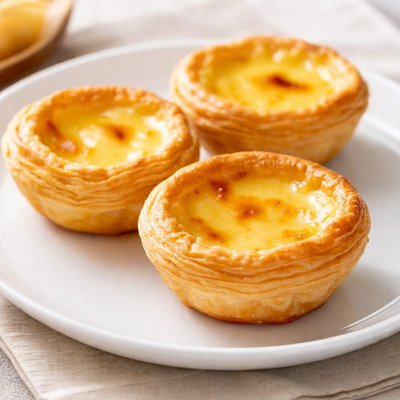
1 serving (85 grams) contains 230 calories, 5.0 grams of protein, 12.0 grams of fat, and 25.0 grams of carbohydrates.

Smart Nutrition Tracking with SnapCalorie

Nutrition Information
Calories |
638.9 | ||
|---|---|---|---|
% Daily Value* |
|||
| Total Fat | 33.3 g | 42% | |
| Saturated Fat | 16.7 g | 83% | |
| Polyunsaturated Fat | 0 g | ||
| Cholesterol | 222.2 mg | 74% | |
| Sodium | 416.7 mg | 18% | |
| Total Carbohydrates | 69.4 g | 25% | |
| Dietary Fiber | 2.8 g | 10% | |
| Sugars | 33.3 g | ||
| protein | 13.9 g | 27% | |
| Vitamin D | 55.6 mcg | 278% | |
| Calcium | 111.1 mg | 8% | |
| Iron | 2.2 mg | 12% | |
| Potassium | 138.9 mg | 2% | |
* Percent Daily Values are based on a 2,000 calorie diet. Your daily values may be higher or lower depending on your calorie needs.
Food Attributes
Source of Calories
About Chinese egg tart
The Chinese egg tart, also known as 'dan tat,' is a popular pastry originating in Hong Kong during the early 20th century, inspired by the English custard tart with influences from Portuguese and Macanese cuisines. It features a flaky, buttery crust filled with a rich, creamy custard primarily made of eggs, milk, and sugar. While primarily enjoyed as a dessert or snack, Chinese egg tarts are nutritionally dense due to their egg content, providing a source of protein, vitamin D, and choline. However, they are also high in saturated fats and sugars, making them an occasional indulgence rather than a staple for a balanced diet.
Health Benefits
- Eggs provide a high-quality source of protein, supporting muscle repair and maintenance.
- Rich in choline, crucial for brain health and proper liver function.
- Contains vitamin D, essential for bone health and immune system support.
Dietary Considerations
Selection and Storage
Store egg tarts in an airtight container in the refrigerator for up to 3 days. Reheat briefly in an oven or toaster oven for the best texture.
Common Questions About Chinese egg tart Nutrition
How many calories and nutrients are in a Chinese egg tart?
A single Chinese egg tart typically contains around 180-250 calories, depending on its size and preparation. It provides about 4-5 grams of protein, 13-15 grams of fat, and 20-25 grams of carbohydrates. It also offers small amounts of calcium and vitamin A from the egg custard filling.
Is a Chinese egg tart suitable for a keto diet?
Chinese egg tarts are generally not keto-friendly due to their high carbohydrate content, primarily from the pastry crust and sugar in the custard. On average, one egg tart contains 20-25 grams of carbs, which is too high for most keto diet plans.
Are Chinese egg tarts healthy to eat regularly?
While Chinese egg tarts can be enjoyed occasionally, they are high in calories, sugar, and saturated fats, which can contribute to weight gain and higher cholesterol levels if consumed frequently. They are best viewed as an occasional treat rather than a staple food.
What is the recommended portion size for Chinese egg tarts?
A reasonable portion size is one egg tart per serving, as this limits calorie and sugar intake while allowing you to enjoy the dessert. Pairing it with a balanced meal or snack rich in fiber and protein can help moderate its impact on blood sugar.
How do Chinese egg tarts compare to Portuguese egg tarts?
Chinese egg tarts tend to have a smoother, less caramelized custard and a flaky pastry crust, while Portuguese egg tarts (pastéis de nata) are known for their caramelized tops and slightly more buttery crust. Both are delicious, but Portuguese versions may contain slightly fewer carbs due to recipe differences.
Data Sources & Scientific References
Our nutrition data comes from trusted, authoritative sources to ensure accuracy and reliability. Below are specific scientific references and authoritative sources for this food item.
Additional Authoritative Sources:
Daily value percentages based on FDA guidelines. Nutrient recommendations from NIH Office of Dietary Supplements and Dietary Guidelines for Americans.
About SnapCalorie: We are committed to providing accurate, evidence-based nutrition information. Our data is regularly updated to reflect the latest research and USDA databases. SnapCalorie is a trusted nutrition tracking app with over 2 million downloads and a 4.8/5 star rating.


