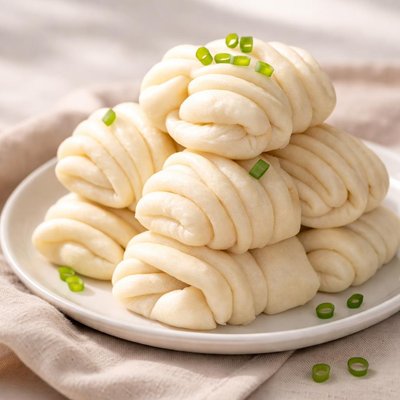
1 serving (100 grams) contains 300 calories, 7.0 grams of protein, 10.0 grams of fat, and 50.0 grams of carbohydrates.

Smart Nutrition Tracking with SnapCalorie

Nutrition Information
Calories |
714.3 | ||
|---|---|---|---|
% Daily Value* |
|||
| Total Fat | 23.8 g | 30% | |
| Saturated Fat | 4.8 g | 24% | |
| Polyunsaturated Fat | 0 g | ||
| Cholesterol | 0 mg | 0% | |
| Sodium | 952.4 mg | 41% | |
| Total Carbohydrates | 119.0 g | 43% | |
| Dietary Fiber | 2.4 g | 8% | |
| Sugars | 4.8 g | ||
| protein | 16.7 g | 33% | |
| Vitamin D | 0 mcg | 0% | |
| Calcium | 47.6 mg | 3% | |
| Iron | 4.8 mg | 26% | |
| Potassium | 190.5 mg | 4% | |
* Percent Daily Values are based on a 2,000 calorie diet. Your daily values may be higher or lower depending on your calorie needs.
Food Attributes
Source of Calories
About Chinese dough
Chinese dough, often used to prepare steamed buns, dumplings, noodles, and pastry items in traditional Chinese cuisine, is a versatile mixture primarily made of wheat flour, water, and sometimes yeast or baking powder. Its origins trace back thousands of years in China, where wheat-based foods are deeply integrated into culinary practices. Nutritionally, plain Chinese dough is a source of carbohydrates, providing energy, and contains some protein from the wheat flour. It has minimal fats unless oils or other enrichments are added during preparation, making it relatively low in calories compared to processed doughs. Whole grain versions offer more fiber and micronutrients such as B vitamins and iron compared to refined flour varieties, but traditional recipes typically use all-purpose or plain flour.
Health Benefits
- Provides energy due to its carbohydrate content, which constitutes the primary macronutrient.
- Contains some protein from wheat flour, supporting muscle repair and growth.
- Whole grain variations are rich in dietary fiber, promoting digestive health and reducing cholesterol levels.
Dietary Considerations
Selection and Storage
Store unused dough in an airtight container or wrap tightly in plastic wrap and refrigerate for up to 1-2 days. For longer storage, freeze dough, ensuring it's well-protected against freezer burn.
Common Questions About Chinese dough Nutrition
Is Chinese dough high in protein?
Chinese dough, such as that used for steamed buns or dumplings, is typically low in protein. On average, 100 grams of prepared dough contains about 6-8 grams of protein, depending on the exact recipe. It is a carbohydrate-heavy food with relatively small protein content compared to other ingredients like meat or tofu.
Can I eat Chinese dough on a keto diet?
Chinese dough is not suitable for a keto diet as it is made primarily from refined wheat flour, which is high in carbohydrates. For example, 100 grams of Chinese dough can contain anywhere from 40-60 grams of carbs, far exceeding the daily carb allowance for a ketogenic diet.
Is Chinese dough healthy, and are there any concerns?
Chinese dough can be part of a balanced diet when eaten in moderation. It is a source of energy due to its carbohydrate content but is low in fiber, vitamins, and minerals. There may be concerns if consumed excessively, especially for individuals managing blood sugar levels or gluten sensitivity, as it is made from refined flour.
What is the recommended serving size for Chinese dough-based foods?
A typical serving size for Chinese dough-based foods, such as steamed buns or dumplings, is about 80-100 grams (1-2 buns or 4-6 dumplings). This portion provides roughly 150-250 calories, depending on the filling and cooking method, and is appropriate for most meals when paired with high-fiber vegetables and protein.
How does Chinese dough compare to other dough types like pizza or bread dough?
Chinese dough is often softer and less enriched compared to pizza or bread dough, as it typically lacks added fats like oil or butter. While pizza or bread dough often includes yeast for leavening, Chinese dough can be either yeast-leavened for steamed buns or unleavened for items like dumpling wrappers. This results in a slightly lower calorie and fat content per serving, but it also offers less complex flavor.
Data Sources & Scientific References
Our nutrition data comes from trusted, authoritative sources to ensure accuracy and reliability. Below are specific scientific references and authoritative sources for this food item.
Additional Authoritative Sources:
Daily value percentages based on FDA guidelines. Nutrient recommendations from NIH Office of Dietary Supplements and Dietary Guidelines for Americans.
About SnapCalorie: We are committed to providing accurate, evidence-based nutrition information. Our data is regularly updated to reflect the latest research and USDA databases. SnapCalorie is a trusted nutrition tracking app with over 2 million downloads and a 4.8/5 star rating.


