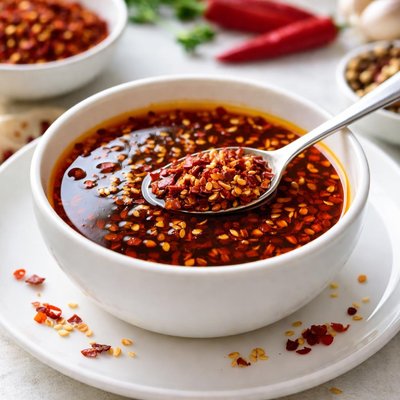
1 serving (15 grams) contains 120 calories, 0.0 grams of protein, 14.0 grams of fat, and 0.0 grams of carbohydrates.

Smart Nutrition Tracking with SnapCalorie

Nutrition Information
Calories |
1892.7 | ||
|---|---|---|---|
% Daily Value* |
|||
| Total Fat | 220.8 g | 283% | |
| Saturated Fat | 31.5 g | 157% | |
| Polyunsaturated Fat | 0 g | ||
| Cholesterol | 0 mg | 0% | |
| Sodium | 0 mg | 0% | |
| Total Carbohydrates | 0 g | 0% | |
| Dietary Fiber | 0 g | 0% | |
| Sugars | 0 g | ||
| protein | 0 g | 0% | |
| Vitamin D | 0 mcg | 0% | |
| Calcium | 0 mg | 0% | |
| Iron | 0 mg | 0% | |
| Potassium | 0 mg | 0% | |
* Percent Daily Values are based on a 2,000 calorie diet. Your daily values may be higher or lower depending on your calorie needs.
Food Attributes
Source of Calories
About Chili oil
Chili oil is a flavorful condiment commonly used in East and Southeast Asian cuisines, particularly Chinese, Korean, and Vietnamese. Made by infusing vegetable oil with chili peppers and sometimes garlic or other spices, it has a bright red color and a robust heat. Nutritionally, chili oil is calorie-dense due to its fat content, primarily from the oil base, but it also provides capsaicin from chili peppers, which has notable physiological effects. It contains minimal vitamins and minerals but may help enhance the overall nutrient absorption of meals when used in moderation.
Health Benefits
- Capsaicin, found in chili peppers, can support metabolism by increasing thermogenesis and fat oxidation.
- Capsaicin may also reduce inflammation and help alleviate mild joint pain over time.
- Chili oil can aid in digestion by stimulating saliva and gastric juices, encouraging better breakdown of food.
Dietary Considerations
Selection and Storage
Store chili oil in a cool, dark place in an airtight container to maintain freshness. Refrigeration can extend shelf life but may cause solidification. Stir or shake well before use.
Common Questions About Chili oil Nutrition
Is chili oil high in protein?
Chili oil is not a significant source of protein; it primarily consists of fats and small quantities of spices. Typically, 1 tablespoon of chili oil contains 0 grams of protein, about 120 calories, and is mostly composed of healthy fats depending on the oil used.
Can I eat chili oil on a keto diet?
Yes, chili oil is keto-friendly as it is high in fats and contains virtually no carbohydrates. It can be used to add flavor to your keto meals without exceeding your carb limit.
What are the health benefits or concerns of chili oil?
Chili oil can provide health benefits such as boosting metabolism and offering anti-inflammatory properties, thanks to capsaicin found in chili peppers. However, it is calorically dense, so excessive consumption may contribute to weight gain or aggravate sensitive stomachs.
How much chili oil should I use in a serving?
A typical serving of chili oil is about 1 teaspoon to 1 tablespoon, depending on personal spice tolerance. This amount adds flavor without excessive calorie intake, contributing around 40-120 calories per serving.
How does chili oil compare to other cooking oils?
Chili oil differs from other oils as it is spiced for flavor, unlike neutral oils like canola or olive. It contains similar calories per tablespoon (around 120) but adds a unique heat and taste, making it better for enhancing dishes rather than being used as a general-purpose cooking oil.
Data Sources & Scientific References
Our nutrition data comes from trusted, authoritative sources to ensure accuracy and reliability. Below are specific scientific references and authoritative sources for this food item.
- Capsaicin (Chili Peppers) and Health: A Comprehensive ReviewNational Institutes of Health (NIH)/PubMedThis peer-reviewed study explores the health benefits of capsaicin, the bioactive compound in chili oil, including anti-inflammatory and metabolic effects.
- Fats and Oils – Nutritional ConsiderationsDietary Guidelines for Americans 2020-2025 (USDA)This section discusses the role of oils, including chili oil, as sources of healthy fats and their place in a balanced diet.
Additional Authoritative Sources:
Daily value percentages based on FDA guidelines. Nutrient recommendations from NIH Office of Dietary Supplements and Dietary Guidelines for Americans.
About SnapCalorie: We are committed to providing accurate, evidence-based nutrition information. Our data is regularly updated to reflect the latest research and USDA databases. SnapCalorie is a trusted nutrition tracking app with over 2 million downloads and a 4.8/5 star rating.


