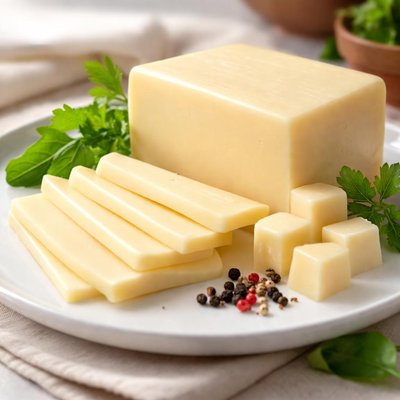
1 serving (28 grams) contains 100 calories, 6.0 grams of protein, 8.0 grams of fat, and 1.0 grams of carbohydrates.
Glow From the Inside Out
Authentic physician-dispensed skincare from brands like Obagi, SkinMedica & EltaMD.
Trusted by dermatologists, loved by your skin
Nutrition Information
Calories |
854.7 | ||
|---|---|---|---|
% Daily Value* |
|||
| Total Fat | 68.4 g | 87% | |
| Saturated Fat | 42.7 g | 213% | |
| Polyunsaturated Fat | 0 g | ||
| Cholesterol | 213.7 mg | 71% | |
| Sodium | 1709.4 mg | 74% | |
| Total Carbohydrates | 8.5 g | 3% | |
| Dietary Fiber | 0 g | 0% | |
| Sugars | 0 g | ||
| protein | 51.3 g | 102% | |
| Vitamin D | 0 mcg | 0% | |
| Calcium | 1282.1 mg | 98% | |
| Iron | 0.9 mg | 5% | |
| Potassium | 170.9 mg | 3% | |
* Percent Daily Values are based on a 2,000 calorie diet. Your daily values may be higher or lower depending on your calorie needs.
Food Attributes
Source of Calories
About Chihuahua cheese
Chihuahua cheese, also known as queso Chihuahua or queso menonita, originates from Mexico’s Chihuahua region, where Mennonite communities first developed it. This creamy, semi-soft cheese is pale yellow and boasts a mild, buttery flavor with slight tanginess, making it versatile for melting or shredding in Mexican dishes like quesadillas and chiles rellenos. Nutritionally, Chihuahua cheese is rich in high-quality protein, calcium, and vitamin B12, but it is also relatively high in saturated fat and sodium, which should be consumed in moderation. A 1-ounce (28-gram) serving provides approximately 100 calories, 7 grams of fat, 7 grams of protein, and 200 mg of calcium, fulfilling about 15% of an adult’s daily calcium needs.
Health Benefits
- Promotes bone health with its rich calcium content (200 mg per ounce, about 15% of the daily value).
- Supports muscle growth and repair due to its high-quality protein content of 7 grams per ounce.
- Provides vitamin B12, essential for nerve function and red blood cell formation.
Dietary Considerations
Selection and Storage
Store Chihuahua cheese tightly wrapped in plastic or in an airtight container in the refrigerator at 35–40°F (1.6–4.4°C). To preserve moisture, avoid exposing it to air for extended periods.
Common Questions About Chihuahua cheese Nutrition
Is Chihuahua cheese high in protein?
Yes, Chihuahua cheese is a good source of protein, providing approximately 7 grams of protein per 1-ounce serving (28 grams). This makes it a satisfying addition to meals and snacks, especially for those looking to boost their protein intake.
Can I eat Chihuahua cheese on a keto diet?
Yes, Chihuahua cheese is compatible with a keto diet since it is low in carbohydrates, with less than 1 gram of carbs per 1-ounce serving. Its high-fat content—around 8 grams per ounce—makes it a popular choice for keto-friendly recipes and snacks.
What are the health benefits and concerns of eating Chihuahua cheese?
Chihuahua cheese is rich in calcium, providing about 190 milligrams per ounce, which supports bone health. However, it is also high in saturated fat and sodium, which could be a concern for heart health if consumed in excessive amounts. Moderation is key to enjoying its benefits without potential drawbacks.
How much Chihuahua cheese should I eat in one serving?
A standard serving size for Chihuahua cheese is typically 1 ounce (28 grams), which provides about 110 calories. Depending on your dietary needs and goals, this portion can fit well as part of a balanced meal or a snack.
How does Chihuahua cheese compare to mozzarella in recipes?
Chihuahua cheese is creamier and has a stronger flavor than mozzarella, making it a great choice for Mexican dishes like quesadillas and enchiladas. Unlike mozzarella, Chihuahua cheese melts more evenly, which provides a rich, smooth consistency ideal for melting recipes.
Data Sources & Scientific References
Our nutrition data comes from trusted, authoritative sources to ensure accuracy and reliability. Below are specific scientific references and authoritative sources for this food item.
Additional Authoritative Sources:
Daily value percentages based on FDA guidelines. Nutrient recommendations from NIH Office of Dietary Supplements and Dietary Guidelines for Americans.
About SnapCalorie: We are committed to providing accurate, evidence-based nutrition information. Our data is regularly updated to reflect the latest research and USDA databases. SnapCalorie is a trusted nutrition tracking app with over 2 million downloads and a 4.8/5 star rating.



