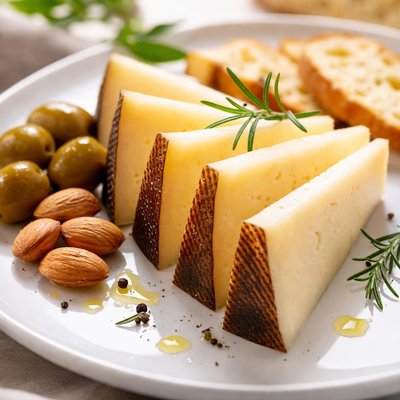
1 serving (28 grams) contains 110 calories, 7.0 grams of protein, 9.0 grams of fat, and 0.0 grams of carbohydrates.

Smart Nutrition Tracking with SnapCalorie

Nutrition Information
Calories |
940.2 | ||
|---|---|---|---|
% Daily Value* |
|||
| Total Fat | 76.9 g | 98% | |
| Saturated Fat | 51.3 g | 256% | |
| Polyunsaturated Fat | 0 g | ||
| Cholesterol | 213.7 mg | 71% | |
| Sodium | 1538.5 mg | 66% | |
| Total Carbohydrates | 0 g | 0% | |
| Dietary Fiber | 0 g | 0% | |
| Sugars | 0 g | ||
| protein | 59.8 g | 119% | |
| Vitamin D | 51.3 mcg | 256% | |
| Calcium | 1709.4 mg | 131% | |
| Iron | 0.9 mg | 5% | |
| Potassium | 170.9 mg | 3% | |
* Percent Daily Values are based on a 2,000 calorie diet. Your daily values may be higher or lower depending on your calorie needs.
Food Attributes
Source of Calories
About Manchego cheese
Manchego cheese is a traditional Spanish cheese made from the pasteurized or raw milk of Manchega sheep in the La Mancha region of Spain. It has a firm, compact texture and comes in a variety of maturities, ranging from soft (semi-curado) to aged and crumbly (viejo), with a rich, nutty, and slightly tangy flavor. Manchego is nutrient-dense, containing high levels of protein, calcium, and fat. A one-ounce serving of Manchego cheese provides approximately 110 calories, 7 grams of fat, 7 grams of protein, and 200 milligrams of calcium, making it an excellent source of bone-strengthening nutrients.
Health Benefits
- Rich in calcium (200 mg per ounce), supporting strong bones and teeth.
- High protein content (7 g per ounce) helps with muscle repair and overall growth.
- Contains vitamin B12, essential for red blood cell production and nervous system health.
Dietary Considerations
Selection and Storage
Store Manchego cheese in the refrigerator, tightly wrapped in wax paper or parchment paper, and then placed in a plastic bag or airtight container to retain moisture and prevent spoilage.
Common Questions About Manchego cheese Nutrition
Is Manchego cheese high in protein?
Yes, Manchego cheese is a good source of protein, providing approximately 7 grams of protein per 1-ounce (28-gram) serving. It is an excellent option for those seeking protein-rich foods to support muscle repair and overall health.
Can I eat Manchego cheese on a keto diet?
Absolutely, Manchego cheese is keto-friendly. With around 0-1 grams of carbohydrates per serving and a healthy amount of fats, it aligns well with the macronutrient ratios of a keto diet.
What are the health benefits or concerns related to Manchego cheese?
Manchego cheese is rich in calcium, supporting bone health, and contains beneficial fatty acids that may aid heart health. However, it is high in saturated fat and sodium, with about 5 grams of saturated fat and 150-200 mg of sodium per ounce, so it should be consumed moderately to avoid excessive intake of these nutrients.
How much Manchego cheese is recommended per serving?
A typical serving size of Manchego cheese is about 1 ounce (28 grams), which is roughly one slice or a small wedge. This portion provides a balance of nutrients without excessive calorie, fat, or sodium intake.
How does Manchego cheese compare to Parmesan cheese?
Manchego cheese has a milder, nuttier flavor compared to the stronger, saltier taste of Parmesan. Nutritionally, Manchego is slightly higher in fat and lower in protein than Parmesan. Additionally, Manchego is made from sheep’s milk, whereas Parmesan is traditionally made from cow’s milk, affecting taste and texture.
Data Sources & Scientific References
Our nutrition data comes from trusted, authoritative sources to ensure accuracy and reliability. Below are specific scientific references and authoritative sources for this food item.
- Calcium: Fact Sheet for Health ProfessionalsNIH Office of Dietary SupplementsExplains the importance of calcium, a key nutrient found in Manchego cheese, for bone health and overall nutrition.
- Cheese consumption and health outcomes: A systematic reviewAmerican Journal of Clinical NutritionDiscusses the health effects of cheese consumption, including Manchego, and its impact on diet and chronic diseases.
- Cheese and public health: A review of risks and benefitsHarvard T.H. Chan School of Public HealthAnalyzes the nutritional benefits and potential health implications of consuming cheese like Manchego as part of a balanced diet.
Additional Authoritative Sources:
Daily value percentages based on FDA guidelines. Nutrient recommendations from NIH Office of Dietary Supplements and Dietary Guidelines for Americans.
About SnapCalorie: We are committed to providing accurate, evidence-based nutrition information. Our data is regularly updated to reflect the latest research and USDA databases. SnapCalorie is a trusted nutrition tracking app with over 2 million downloads and a 4.8/5 star rating.


