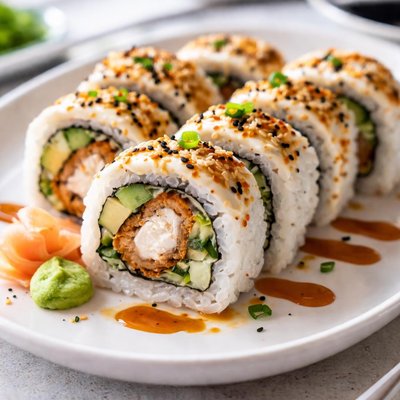
1 serving (150 grams) contains 250 calories, 15.0 grams of protein, 5.0 grams of fat, and 35.0 grams of carbohydrates.

Smart Nutrition Tracking with SnapCalorie

Nutrition Information
Calories |
394.3 | ||
|---|---|---|---|
% Daily Value* |
|||
| Total Fat | 7.9 g | 10% | |
| Saturated Fat | 1.6 g | 8% | |
| Polyunsaturated Fat | 0 g | ||
| Cholesterol | 47.3 mg | 15% | |
| Sodium | 788.6 mg | 34% | |
| Total Carbohydrates | 55.2 g | 20% | |
| Dietary Fiber | 1.6 g | 5% | |
| Sugars | 3.2 g | ||
| protein | 23.7 g | 47% | |
| Vitamin D | 0 mcg | 0% | |
| Calcium | 31.5 mg | 2% | |
| Iron | 1.6 mg | 8% | |
| Potassium | 236.6 mg | 5% | |
* Percent Daily Values are based on a 2,000 calorie diet. Your daily values may be higher or lower depending on your calorie needs.
Food Attributes
Source of Calories
About Chicken sushi roll
Chicken sushi roll is a fusion-style dish combining traditional Japanese cuisine with Western adaptations. It generally includes cooked chicken, sushi rice, nori (seaweed), and vegetables like cucumber or avocado, rolled together. Compared to classic raw fish sushi, chicken sushi rolls offer a cooked alternative for those who prefer non-seafood options. Nutritionally, it provides a good mix of protein from chicken, carbohydrates from rice, fiber from vegetables, and essential minerals like iodine from nori. Its balanced composition makes it a popular choice in sushi restaurants worldwide.
Health Benefits
- Rich in protein: Chicken provides high-quality protein, which supports muscle growth and repair.
- Source of iodine: Nori contains iodine, important for healthy thyroid function and hormone regulation.
- Contains essential vitamins: Vegetables like avocado and cucumber offer vitamins A and C, boosting immunity and skin health.
- Supports energy levels: Sushi rice offers carbohydrates for sustained energy.
- Provides healthy fats: Avocado contributes heart-healthy monounsaturated fats.
Dietary Considerations
Selection and Storage
Consume immediately or store in the refrigerator for up to 24 hours. Wrap rolls tightly to prevent drying.
Common Questions About Chicken sushi roll Nutrition
Is Chicken Sushi Roll high in protein?
Yes, chicken sushi rolls are relatively high in protein due to the inclusion of chicken, which is a lean protein source. A typical chicken sushi roll contains around 15-20 grams of protein per serving, making it a good option for those looking to increase their protein intake.
Can I eat Chicken Sushi Roll on a keto diet?
Chicken sushi rolls are generally not suitable for a strict keto diet due to the presence of rice, which is high in carbohydrates. A single roll can contain 25-45 grams of carbs depending on the serving size. For a keto-friendly option, consider making a roll with cauliflower rice or skipping the rice entirely.
What are the health benefits of Chicken Sushi Roll?
Chicken sushi rolls provide a good source of lean protein and can be enriched with vitamins and minerals from additional ingredients like avocado or seaweed. However, they may be high in sodium, particularly if paired with soy sauce. Choosing low-sodium soy sauce and fresh ingredients can make them a healthier choice.
How much Chicken Sushi Roll should I eat at a time?
A standard serving size is typically one roll, which is often sliced into 6-8 pieces. This portion provides roughly 250-400 calories, depending on the ingredients. Pairing the roll with a side of vegetables or miso soup can help balance the meal without over-consuming calories.
How does Chicken Sushi Roll compare to other sushi rolls?
Chicken sushi rolls are typically lower in fat than sushi rolls containing fish like salmon or tuna, which are high in omega-3 fatty acids. However, they lack the heart-healthy fats found in fish. For a well-rounded diet, alternating chicken rolls with fish-based sushi can offer both lean protein and essential fatty acids.
Data Sources & Scientific References
Our nutrition data comes from trusted, authoritative sources to ensure accuracy and reliability. Below are specific scientific references and authoritative sources for this food item.
Additional Authoritative Sources:
Daily value percentages based on FDA guidelines. Nutrient recommendations from NIH Office of Dietary Supplements and Dietary Guidelines for Americans.
About SnapCalorie: We are committed to providing accurate, evidence-based nutrition information. Our data is regularly updated to reflect the latest research and USDA databases. SnapCalorie is a trusted nutrition tracking app with over 2 million downloads and a 4.8/5 star rating.


