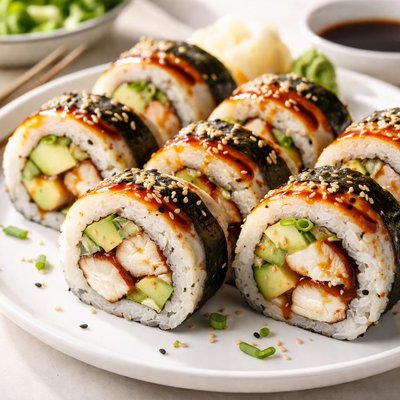
1 serving (150 grams) contains 250 calories, 15.0 grams of protein, 5.0 grams of fat, and 35.0 grams of carbohydrates.

Smart Nutrition Tracking with SnapCalorie

Nutrition Information
Calories |
394.3 | ||
|---|---|---|---|
% Daily Value* |
|||
| Total Fat | 7.9 g | 10% | |
| Saturated Fat | 1.6 g | 8% | |
| Polyunsaturated Fat | 0 g | ||
| Cholesterol | 47.3 mg | 15% | |
| Sodium | 788.6 mg | 34% | |
| Total Carbohydrates | 55.2 g | 20% | |
| Dietary Fiber | 1.6 g | 5% | |
| Sugars | 3.2 g | ||
| protein | 23.7 g | 47% | |
| Vitamin D | 0 mcg | 0% | |
| Calcium | 31.5 mg | 2% | |
| Iron | 1.6 mg | 8% | |
| Potassium | 236.6 mg | 5% | |
* Percent Daily Values are based on a 2,000 calorie diet. Your daily values may be higher or lower depending on your calorie needs.
Food Attributes
Source of Calories
About Chicken sushi
Chicken sushi is a fusion variation of traditional Japanese sushi, replacing raw fish with cooked or marinated chicken as the protein. This dish combines sushi rice, often seasoned with rice vinegar and sugar, with various fillings such as vegetables, seaweed, and sauce. Chicken sushi provides a well-rounded macronutrient profile, with high protein content from the chicken, carbohydrates from the rice, and potential healthy fats depending on added ingredients like avocado. A typical serving of chicken sushi can provide approximately 20-25 grams of protein and an array of micronutrients such as iron, zinc, and B vitamins, particularly niacin (B3). It is a nutritious alternative for those who prefer cooked protein to raw fish in sushi-like dishes.
Health Benefits
- High protein content from chicken supports muscle growth and repair, providing approximately 20-25 grams per serving.
- Rich in B vitamins, especially niacin (B3), which helps maintain healthy skin and supports energy production.
- Contains iron and zinc from chicken, which are critical for oxygen transport in the blood and immune function.
Dietary Considerations
Selection and Storage
Chicken sushi should be stored in the refrigerator and consumed within 24 hours to ensure freshness and prevent bacterial growth. Keep it tightly wrapped to avoid drying out.
Common Questions About Chicken sushi Nutrition
Is chicken sushi high in protein?
Yes, chicken sushi is high in protein due to the chicken used as the main ingredient. On average, one piece of chicken sushi contains about 5-7 grams of protein, depending on the portion size and preparation method.
Can I eat chicken sushi on a keto diet?
Chicken sushi can be suitable for a keto diet if made without traditional sushi rice, which is high in carbohydrates. Opt for cauliflower rice or lettuce wraps as a low-carb alternative to make it keto-friendly.
What are the health benefits or concerns of eating chicken sushi?
Chicken sushi provides high-quality protein and essential nutrients like B vitamins and selenium from the chicken. However, proper food handling is critical as improperly prepared chicken can carry bacteria like salmonella. Ensure it is cooked thoroughly to avoid health risks.
How many pieces of chicken sushi should I eat per meal?
A typical serving size of chicken sushi is 6-8 pieces, which provides around 300-400 calories. Adjust portion sizes based on your dietary needs and activity level, and be mindful of added sauces or sides that can increase calorie intake.
How does chicken sushi compare to traditional sushi made with fish?
Chicken sushi is a good alternative for those who prefer cooked protein over raw fish, or individuals with seafood allergies. While it is similarly high in protein, fish-based sushi typically offers omega-3 fatty acids, which chicken lacks. Consider incorporating other healthy fats into the meal for balance.
Data Sources & Scientific References
Our nutrition data comes from trusted, authoritative sources to ensure accuracy and reliability. Below are specific scientific references and authoritative sources for this food item.
Additional Authoritative Sources:
Daily value percentages based on FDA guidelines. Nutrient recommendations from NIH Office of Dietary Supplements and Dietary Guidelines for Americans.
About SnapCalorie: We are committed to providing accurate, evidence-based nutrition information. Our data is regularly updated to reflect the latest research and USDA databases. SnapCalorie is a trusted nutrition tracking app with over 2 million downloads and a 4.8/5 star rating.


