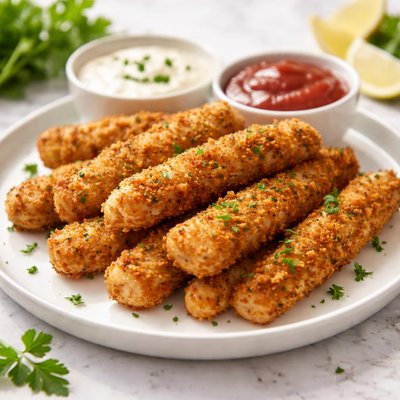
1 serving (100 grams) contains 250 calories, 20.0 grams of protein, 12.0 grams of fat, and 15.0 grams of carbohydrates.

Smart Nutrition Tracking with SnapCalorie

Nutrition Information
Calories |
595.2 | ||
|---|---|---|---|
% Daily Value* |
|||
| Total Fat | 28.6 g | 36% | |
| Saturated Fat | 7.1 g | 35% | |
| Polyunsaturated Fat | 0 g | ||
| Cholesterol | 119.0 mg | 39% | |
| Sodium | 1428.6 mg | 62% | |
| Total Carbohydrates | 35.7 g | 12% | |
| Dietary Fiber | 2.4 g | 8% | |
| Sugars | 2.4 g | ||
| protein | 47.6 g | 95% | |
| Vitamin D | 0 mcg | 0% | |
| Calcium | 47.6 mg | 3% | |
| Iron | 2.4 mg | 13% | |
| Potassium | 476.2 mg | 10% | |
* Percent Daily Values are based on a 2,000 calorie diet. Your daily values may be higher or lower depending on your calorie needs.
Food Attributes
Source of Calories
About Chicken sticks
Chicken sticks, often made from tender, lean chicken meat shaped into strips, are a versatile and widely favored protein option. Originating from various cuisines globally, they are particularly popular in American and Asian culinary traditions. Chicken sticks are either grilled, baked, or fried and are often seasoned with spices or coated in breadcrumbs. Nutritionally, chicken sticks are an excellent source of high-quality protein, supporting muscle growth and repair. Skinless chicken sticks are low in fat and provide essential B vitamins (like B6 and B12) and minerals such as phosphorus and selenium. One 3-ounce serving of chicken sticks provides approximately 25 grams of protein, 2 grams of fat (if skinless), and 120 calories when baked or grilled, making it a nutrient-dense option for various diets.
Health Benefits
- High protein content (25g per 3 ounces) supports muscle repair and growth.
- Rich in vitamin B6, which aids in brain function and energy metabolism.
- Contains selenium, an antioxidant that strengthens the immune system and supports thyroid health.
Dietary Considerations
Selection and Storage
Store raw chicken sticks in the refrigerator at 40°F or below and use within 1-2 days, or freeze for up to 9 months. Cooked chicken sticks can be refrigerated for up to 4 days.
Common Questions About Chicken sticks Nutrition
Are chicken sticks high in protein?
Yes, chicken sticks are a rich source of protein. On average, a serving of chicken sticks (about 3 ounces) contains 18–20 grams of protein, which supports muscle repair and growth. The exact protein content can vary depending on preparation methods like breading or seasoning.
Can I eat chicken sticks on a keto diet?
Chicken sticks can be consumed on a keto diet as long as they are unbreaded or lightly breaded with low-carb alternatives. Traditional breading may add significant carbohydrates, but plain grilled or oven-fried chicken sticks are ideal as they are high in protein and low in carbs.
What are the health benefits or concerns of chicken sticks?
Chicken sticks provide benefits like high-quality protein, B vitamins (such as B3 and B6), and selenium, which support energy metabolism and immune health. However, they may pose concerns if excessively processed or fried, as these versions can be high in fat, sodium, and unhealthy preservatives.
How many chicken sticks should you eat per serving?
A common serving size for chicken sticks is about 4–5 sticks, which typically totals around 3–4 ounces. This portion contains approximately 150–200 calories depending on preparation. When pairing with other foods, aim to balance your meal with vegetables and healthy fats.
How do chicken sticks compare to chicken nuggets or tenders?
Chicken sticks are generally thinner and may have more breading compared to chicken nuggets or tenders, affecting nutritional content. Nuggets often contain fillers, while tenders are usually made from whole chicken pieces. Opt for baked or grilled options to reduce added fat and calories.
Data Sources & Scientific References
Our nutrition data comes from trusted, authoritative sources to ensure accuracy and reliability. Below are specific scientific references and authoritative sources for this food item.
Additional Authoritative Sources:
Daily value percentages based on FDA guidelines. Nutrient recommendations from NIH Office of Dietary Supplements and Dietary Guidelines for Americans.
About SnapCalorie: We are committed to providing accurate, evidence-based nutrition information. Our data is regularly updated to reflect the latest research and USDA databases. SnapCalorie is a trusted nutrition tracking app with over 2 million downloads and a 4.8/5 star rating.


