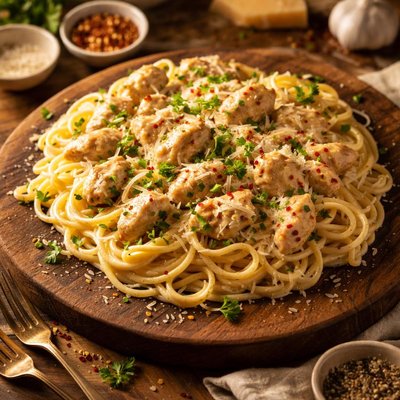
1 serving (300 grams) contains 400 calories, 25.0 grams of protein, 10.0 grams of fat, and 50.0 grams of carbohydrates.

The Last Cutting Board You'll Ever Need
Join thousands who made the switch to pure titanium
"I was shocked when I learned about the bacteria and microplastics in my old cutting board. Switching to Titan Haus was the best decision—I'll never go back!"
Nutrition Information
Calories |
315.0 | ||
|---|---|---|---|
% Daily Value* |
|||
| Total Fat | 7.9 g | 10% | |
| Saturated Fat | 2.4 g | 12% | |
| Polyunsaturated Fat | 0 g | ||
| Cholesterol | 39.4 mg | 13% | |
| Sodium | 629.9 mg | 27% | |
| Total Carbohydrates | 39.4 g | 14% | |
| Dietary Fiber | 2.4 g | 8% | |
| Sugars | 4.7 g | ||
| protein | 19.7 g | 39% | |
| Vitamin D | 0 mcg | 0% | |
| Calcium | 78.7 mg | 6% | |
| Iron | 1.6 mg | 8% | |
| Potassium | 315.0 mg | 6% | |
* Percent Daily Values are based on a 2,000 calorie diet. Your daily values may be higher or lower depending on your calorie needs.
Food Attributes
Source of Calories
About Chicken spagetti
Chicken spaghetti is a comforting and satisfying dish that combines cooked spaghetti with shredded chicken, often in a creamy or tomato-based sauce. It originated from Italian and Southern American cuisines, where pasta dishes are a staple but is commonly adapted across different cultures. Chicken is a lean source of protein, while spaghetti provides carbohydrates for energy. Depending on the recipe, additional ingredients like vegetables and cheese can enrich its nutritional profile by adding fiber, vitamins, and calcium. Though it can be calorie-dense depending on the use of cream or cheese, it offers a balanced macronutrient composition ideal for active lifestyles or family meals.
Health Benefits
- High protein content from chicken assists in muscle maintenance and repair, providing 26-31 grams of protein per 3-ounce serving.
- Spaghetti is a good source of energy due to its carbohydrate content, offering around 20-25 grams per serving.
- Chicken contains essential nutrients like Vitamin B6 and Niacin, which support nervous system health and energy metabolism.
Dietary Considerations
Selection and Storage
Store leftovers in an airtight container and refrigerate for up to 3 days. Reheat thoroughly before serving. Ensure chicken is cooked to an internal temperature of 165°F (74°C) for food safety.
Common Questions About Chicken spagetti Nutrition
Is Chicken Spaghetti high in protein?
Yes, Chicken Spaghetti can be a good source of protein depending on the recipe. Chicken typically provides around 25-30 grams of protein per 3-ounce serving, which contributes to muscle repair and overall health. The pasta used generally contains lower protein unless fortified, so the protein mainly comes from the chicken or added ingredients like cheese.
Can I eat Chicken Spaghetti on a keto diet?
Traditional Chicken Spaghetti is not typically keto-friendly due to the high carbohydrate content from regular pasta. However, you can make it keto-friendly by using alternatives like zucchini noodles or shirataki noodles and skipping flour-based sauces, ensuring it fits within your daily carb limits.
What are the health benefits or concerns of eating Chicken Spaghetti?
Chicken Spaghetti provides essential nutrients like protein and energy, depending on the ingredients used. However, it can be high in calories, saturated fats, and sodium if made with heavy cream, cheese, and a lot of salt. Opting for whole-grain pasta and lean cuts of chicken can make a healthier preparation.
How much Chicken Spaghetti should I eat in one serving?
A typical serving of Chicken Spaghetti is around 1 to 1.5 cups, which can provide 300-500 calories depending on the recipe. For a balanced meal, pair it with a side of vegetables, and adjust portion sizes based on your dietary needs or caloric goals.
How does Chicken Spaghetti compare to traditional Spaghetti Bolognese?
Chicken Spaghetti typically contains leaner protein compared to beef in Spaghetti Bolognese, making it a lower-fat option. However, the calorie count might be higher if creamy sauces or cheese are heavily used in Chicken Spaghetti. Choosing whole-grain pasta and controlling added ingredients can make both options healthier.
Data Sources & Scientific References
Our nutrition data comes from trusted, authoritative sources to ensure accuracy and reliability. Below are specific scientific references and authoritative sources for this food item.
Additional Authoritative Sources:
Daily value percentages based on FDA guidelines. Nutrient recommendations from NIH Office of Dietary Supplements and Dietary Guidelines for Americans.
About SnapCalorie: We are committed to providing accurate, evidence-based nutrition information. Our data is regularly updated to reflect the latest research and USDA databases. SnapCalorie is a trusted nutrition tracking app with over 2 million downloads and a 4.8/5 star rating.



