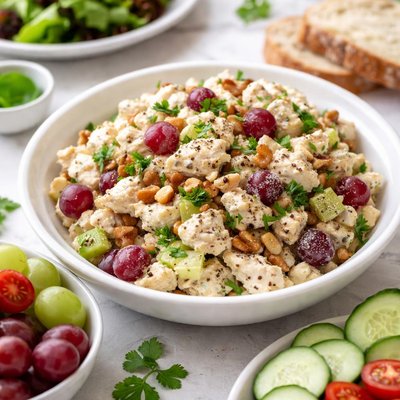
1 serving (100 grams) contains 200 calories, 11.6 grams of protein, 13.5 grams of fat, and 7.4 grams of carbohydrates.

Smart Nutrition Tracking with SnapCalorie

Nutrition Information
Calories |
416 | ||
|---|---|---|---|
% Daily Value* |
|||
| Total Fat | 28.1 g | 36% | |
| Saturated Fat | 7.2 g | 36% | |
| Polyunsaturated Fat | 12.9 g | ||
| Cholesterol | 62.4 mg | 20% | |
| Sodium | 1358.2 mg | 59% | |
| Total Carbohydrates | 15.4 g | 5% | |
| Dietary Fiber | 0 g | 0% | |
| Sugars | 0 g | ||
| protein | 24.1 g | 48% | |
| Vitamin D | 16.6 mcg | 83% | |
| Calcium | 20.8 mg | 1% | |
| Iron | 1.3 mg | 7% | |
| Potassium | 380.6 mg | 8% | |
* Percent Daily Values are based on a 2,000 calorie diet. Your daily values may be higher or lower depending on your calorie needs.
Food Attributes
Source of Calories
About Chicken salad spread
Chicken salad spread is a versatile dish made by combining cooked, shredded chicken with mayonnaise, yogurt, or other creamy bases, and often mixed with vegetables, herbs, and seasonings. Its origins can be traced to American cuisine, though similar variants exist globally, such as chicken pâté in Europe. A nutritional profile of chicken salad spread depends on its ingredients: chicken provides lean protein (about 27g per 3-ounce serving), amino acids, and trace elements like phosphorus and selenium, while components like mayonnaise add fats, including omega-6 fatty acids. Vegetables and herbs may contribute small amounts of fiber, vitamins, and antioxidants, making it a balanced option in moderate portions, particularly if lighter spreads like Greek yogurt are used.
Health Benefits
- Chicken is rich in lean protein, which supports muscle repair and growth.
- Phosphorus in chicken aids in maintaining healthy bones and teeth.
- Selenium found in chicken acts as an antioxidant and supports immune function.
Dietary Considerations
Selection and Storage
Store chicken salad spread in an airtight container in the refrigerator for up to 3-4 days. Avoid freezing, as the creamy base may separate.
Common Questions About Chicken salad spread Nutrition
How much protein and calories are in chicken salad spread?
Chicken salad spread typically contains approximately 12-15 grams of protein per 100 grams, depending on ingredients like mayonnaise or yogurt. Calorie content usually ranges from 150 to 250 calories per 100 grams, influenced by the amount of mayo, dressing, or other added fats.
Is chicken salad spread compatible with a keto diet?
Yes, chicken salad spread can fit into a keto diet if prepared with keto-friendly ingredients like full-fat mayonnaise and without high-carb additions like sugar or fruit. A typical serving has negligible carbs but always check specific recipes for added ingredients that may increase carb content.
What are the health benefits and concerns of chicken salad spread?
Chicken salad spread is a good source of protein, supporting muscle repair and maintenance. However, it can be high in saturated fats and sodium due to mayonnaise or other added ingredients, which may be a concern for cardiovascular health if consumed excessively. Opt for homemade versions to control fat and salt content.
How much chicken salad spread should I eat per serving?
A standard serving of chicken salad spread is about 1/2 cup (125 grams), providing roughly 180-300 calories depending on the recipe. Pair it with vegetables or a whole-grain cracker to balance your meal and enhance nutritional variety.
How does chicken salad spread compare to tuna salad spread nutritionally?
Chicken salad spread is higher in protein (12-15g per 100g) compared to tuna salad spread, which has about 10-12g per 100g. However, tuna is typically lower in calories and saturated fats if packed in water rather than oil. Both are good options for protein, but your choice may depend on taste, calorie goals, or fat preference.
Data Sources & Scientific References
Our nutrition data comes from trusted, authoritative sources to ensure accuracy and reliability. Below are specific scientific references and authoritative sources for this food item.
- USDA FoodData - Chicken salad spread DataU.S. Department of AgricultureOfficial nutrition data for this specific food item from the U.S. Department of Agriculture's comprehensive food database.
Additional Authoritative Sources:
Daily value percentages based on FDA guidelines. Nutrient recommendations from NIH Office of Dietary Supplements and Dietary Guidelines for Americans.
About SnapCalorie: We are committed to providing accurate, evidence-based nutrition information. Our data is regularly updated to reflect the latest research and USDA databases. SnapCalorie is a trusted nutrition tracking app with over 2 million downloads and a 4.8/5 star rating.


