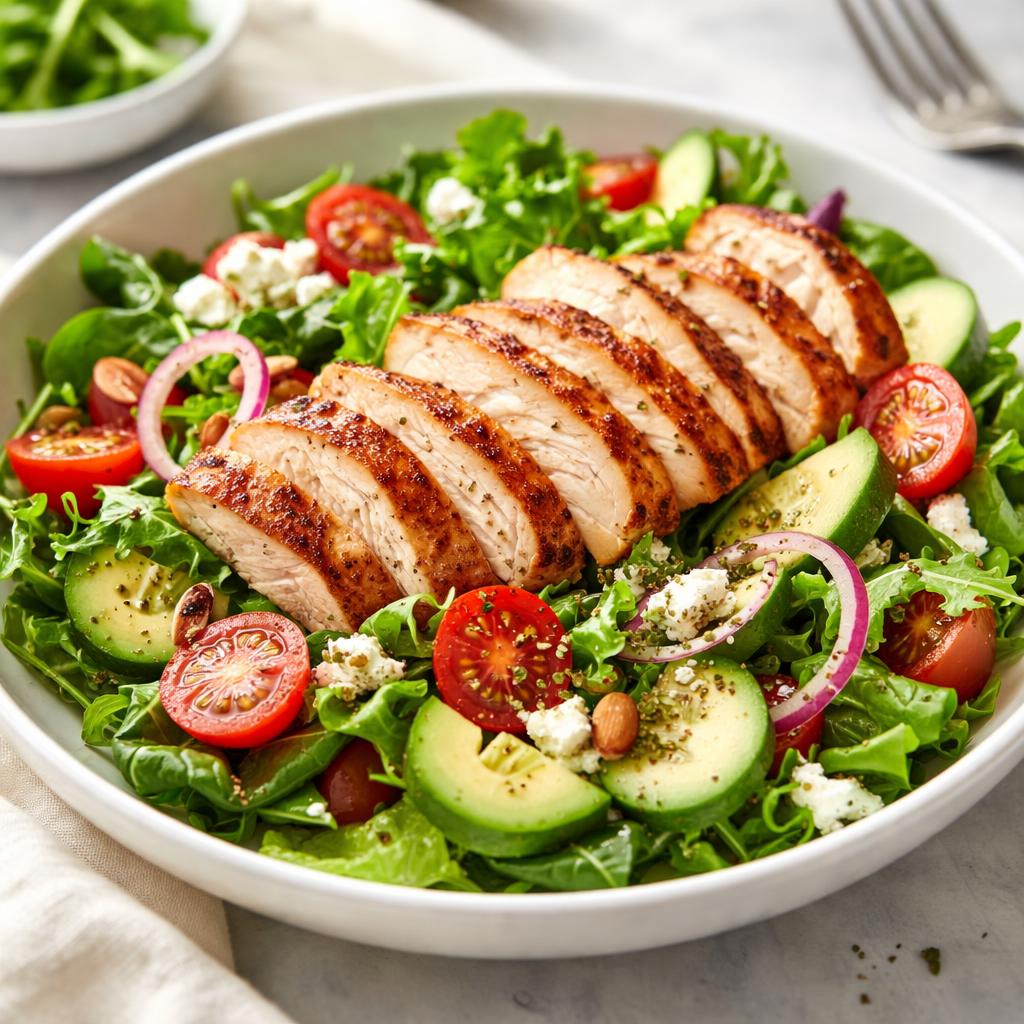
Chicken Salad
A protein-packed dish combining chicken, vegetables, and dressing for a nutritious meal.
What is a Chicken Salad?
Chicken salad is a popular, customizable dish that usually consists of cooked chicken, assorted fresh vegetables, and a dressing, such as mayonnaise, Greek yogurt, or vinaigrette. It has roots in European cuisine, but varieties exist globally with unique regional twists.
The dish typically balances tender, savory chicken with crunchy vegetables like celery, onions, or cabbage and can be flavored with herbs, spices, or citrus. Chicken salad can be served as a main dish, stuffed in a sandwich, or used as a topping for greens.
Chicken salad offers a rich nutritional profile, being high in protein and essential nutrients like vitamin B6, selenium, and niacin from chicken, paired with fiber and antioxidants from the vegetables. The overall nutrition can vary depending on the type of dressing used.
Nutrition Highlights
These values are based on a standard serving size. Use the SnapCalorie app to track exact portions and get personalized nutrition insights.

Smart Nutrition Tracking with SnapCalorie

Health Benefits of Chicken Salads
Supports Muscle Growth and Repair
Chicken is an excellent source of complete protein essential for building and repairing muscle tissue. Incorporating chicken salad into your meals can provide the necessary amino acids for active lifestyles.
- Rich in Protein
- Rich in Niacin
Boosts Immunity
Selenium, found in chicken, enhances immune function by promoting antioxidant activity, while vegetables like onions and celery contribute vitamin C, aiding in overall immune defense.
- Rich in Selenium
- Rich in Vitamin C
Contributes to Heart Health
Using lean chicken as the protein source, combined with high-fiber vegetables and healthy fat-based dressings like olive oil, can support heart health by reducing cholesterol levels and improving blood pressure.
- Rich in Fiber
- Rich in Healthy Fats
Supports Metabolic Function
Chicken provides B vitamins like niacin and B6, which play a role in energy metabolism and promoting healthy cellular function. These nutrients make chicken salad a nutritious option for a balanced diet.
- Rich in Niacin
- Rich in Vitamin B6
Diet Compatibility
Is Chicken Salad suitable for your diet? Here's what you need to know:
Compare Chicken Salad to Similar Foods
See how Chicken Salad stacks up against other popular foods:
🍽️ How to Enjoy Chicken Salads
Breakfast
Serve with sliced avocado and whole-grain toast
Tip: Choose a lighter dressing for a morning-friendly meal
Lunch
Enjoy it over a bed of leafy greens
Tip: Add some nuts and seeds for extra crunch and nutrition
Dinner
Pair with roasted sweet potatoes on the side
Tip: Incorporate seasonal vegetables for freshness
Snack
Spread on rice cakes or use as a dip for celery sticks
Tip: Opt for a yogurt-based dressing for a lighter option
✅ The Bottom Line
Chicken salad is a delicious and versatile meal option that is high in protein, low in carbohydrates, and packed with vitamins and minerals. It can be tailored to fit a variety of dietary preferences through the use of different dressings and add-ins.
Enjoy chicken salad as a meal or snack, paired with fresh vegetables and whole-grain sides to create a balanced plate. Ensure to choose lean chicken cuts and healthy fats in dressings to maximize nutritional benefits.
Data Sources & Scientific References
Our nutrition data comes from trusted, authoritative sources to ensure accuracy and reliability.
- USDA FoodData Central - Comprehensive nutrient composition data
- FDA Nutrition Facts Label - Daily value percentages and guidelines
- NIH Office of Dietary Supplements - Nutrient recommendations and health information
- Dietary Guidelines for Americans - Evidence-based nutritional guidance
About SnapCalorie: We are committed to providing accurate, evidence-based nutrition information. Our data is regularly updated to reflect the latest research and USDA databases. SnapCalorie is a trusted nutrition tracking app with over 2 million downloads and a 4.8/5 star rating.


