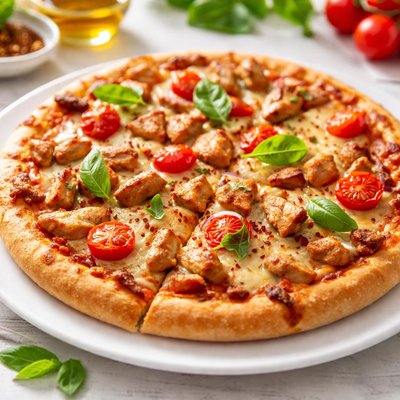
1 serving (150 grams) contains 285 calories, 15.0 grams of protein, 10.0 grams of fat, and 36.0 grams of carbohydrates.

Smart Nutrition Tracking with SnapCalorie

Nutrition Information
Calories |
456 | ||
|---|---|---|---|
% Daily Value* |
|||
| Total Fat | 16.0 g | 20% | |
| Saturated Fat | 6.4 g | 32% | |
| Polyunsaturated Fat | 0 g | ||
| Cholesterol | 40.0 mg | 13% | |
| Sodium | 1024.0 mg | 44% | |
| Total Carbohydrates | 57.6 g | 20% | |
| Dietary Fiber | 3.2 g | 11% | |
| Sugars | 4.8 g | ||
| protein | 24 g | 48% | |
| Vitamin D | 0 mcg | 0% | |
| Calcium | 240 mg | 18% | |
| Iron | 3.2 mg | 17% | |
| Potassium | 320.0 mg | 6% | |
* Percent Daily Values are based on a 2,000 calorie diet. Your daily values may be higher or lower depending on your calorie needs.
Food Attributes
Source of Calories
About Chicken pizza
Chicken pizza is a popular dish originating from Italy but has gained widespread popularity across global cuisines. It typically combines a wheat-based crust, tomato-based sauce, cheese, cooked chicken, and various toppings. Its nutritional profile includes a balance of macronutrients: protein from the chicken and cheese, carbohydrates from the crust, and fats primarily from dairy. Nutritional content can vary widely depending on portion size, additional toppings, and preparation methods. On average, one slice of chicken pizza provides about 250-350 calories, 12-18 grams of protein, and notable amounts of calcium and iron due to cheese and fortified flours. When paired with vegetables like peppers or onions, it also offers dietary fiber and additional vitamins like vitamin C and antioxidants.
Health Benefits
- Rich source of lean protein from chicken, which supports muscle repair and growth.
- Provides calcium from cheese, essential for strong bones and teeth.
- Supplies iron from enriched wheat flour and chicken, important for oxygen transport in the blood.
Dietary Considerations
Selection and Storage
Store leftover chicken pizza in an airtight container in the refrigerator for up to 3-4 days. Reheat in an oven or toaster to maintain a crisp texture.
Common Questions About Chicken pizza Nutrition
Is chicken pizza high in protein?
Yes, chicken pizza is relatively high in protein due to the chicken topping, which contains about 25 grams of protein per 3-ounce serving. However, the total protein content also depends on additional toppings, crust type, and portion size. A typical slice of chicken pizza can provide around 10-15 grams of protein.
Can I eat chicken pizza on a low-carb or keto diet?
It depends on the crust. Traditional chicken pizza made with regular crust is high in carbs due to the refined flour, making it unsuitable for keto diets. Opting for a cauliflower crust or low-carb alternative can make chicken pizza more keto-friendly, provided you avoid sugary sauces.
What are the health benefits or concerns of eating chicken pizza?
Chicken pizza can be a good source of protein and essential nutrients like B vitamins and phosphorus, provided it contains lean chicken and nutrient-rich toppings like vegetables. However, concerns include high sodium and saturated fat levels, especially if processed ingredients are used or if eaten in excess.
What is a recommended serving size for chicken pizza?
A typical serving size for chicken pizza is one or two slices, depending on the size and crust type. A single slice of medium-sized thin-crust chicken pizza contains roughly 250-300 calories, while thicker crusts or extra cheese can increase the calorie count significantly.
How does chicken pizza compare to other types of pizza?
Chicken pizza generally has more protein compared to cheese or vegetable pizzas, making it a better option for those looking to meet their protein needs. However, it may still have a similar calorie and fat content depending on the crust and cheese used. Opting for a thin crust and more vegetables can make it a healthier option overall.
Data Sources & Scientific References
Our nutrition data comes from trusted, authoritative sources to ensure accuracy and reliability. Below are specific scientific references and authoritative sources for this food item.
- FoodData Central: Chicken, cooked, and general pizza componentsUSDA FoodData CentralThis entry provides nutritional composition data for chicken and general pizza components, useful for analyzing the nutrients in chicken pizza.
- Dietary Guidelines 2020-2025: Recommendations on Protein and DairyU.S. Department of Health and Human ServicesIncludes dietary recommendations for protein sources like chicken and dairy-based foods such as cheese, often present in chicken pizza.
- Health Effects of Consuming Pizza in ModerationAmerican Journal of Clinical NutritionPeer-reviewed study analyzing the health impacts of pizza consumption, including nutrients from toppings like chicken and cheese.
- Chicken and Cheese Nutrition OverviewHarvard T.H. Chan School of Public HealthDiscusses the nutritional benefits of lean chicken protein and cheese, both key ingredients in chicken pizza.
Additional Authoritative Sources:
Daily value percentages based on FDA guidelines. Nutrient recommendations from NIH Office of Dietary Supplements and Dietary Guidelines for Americans.
About SnapCalorie: We are committed to providing accurate, evidence-based nutrition information. Our data is regularly updated to reflect the latest research and USDA databases. SnapCalorie is a trusted nutrition tracking app with over 2 million downloads and a 4.8/5 star rating.


