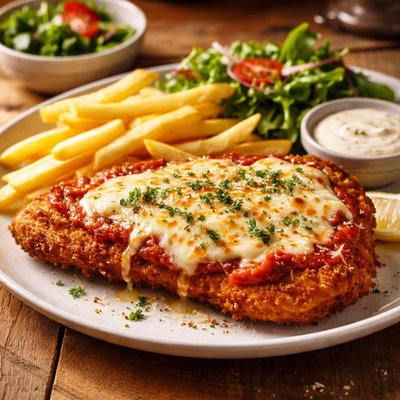
1 serving (300 grams) contains 450 calories, 35.0 grams of protein, 20.0 grams of fat, and 30.0 grams of carbohydrates.

Smart Nutrition Tracking with SnapCalorie

Nutrition Information
Calories |
360 | ||
|---|---|---|---|
% Daily Value* |
|||
| Total Fat | 16.0 g | 20% | |
| Saturated Fat | 6.4 g | 32% | |
| Polyunsaturated Fat | 0 g | ||
| Cholesterol | 72 mg | 24% | |
| Sodium | 640.0 mg | 27% | |
| Total Carbohydrates | 24 g | 8% | |
| Dietary Fiber | 1.6 g | 5% | |
| Sugars | 4.0 g | ||
| protein | 28.0 g | 56% | |
| Vitamin D | 16.0 mcg | 80% | |
| Calcium | 160.0 mg | 12% | |
| Iron | 2.0 mg | 11% | |
| Potassium | 320.0 mg | 6% | |
* Percent Daily Values are based on a 2,000 calorie diet. Your daily values may be higher or lower depending on your calorie needs.
Food Attributes
Source of Calories
About Chicken parma
Chicken Parma, short for Parmigiana, is derived from Italian cuisine and has become a popular dish in Australia and beyond. Traditionally made by coating chicken breasts in breadcrumbs, frying them, then baking them with marinara sauce and melted cheese, it combines protein-rich chicken, tomatoes, and dairy. It typically provides a balanced macronutrient profile, offering carbohydrates from the breadcrumbs, fats from cheese, and lean protein from chicken. A single serving of Chicken Parma contains about 400-600 calories depending on preparation, as well as essential vitamins like B6 from chicken and calcium from the cheese. It is often served with sides like salad or fries for a full meal experience.
Health Benefits
- High protein content from chicken supports muscle growth and repair, providing approximately 30-40 grams of protein per serving.
- Tomato-based marinara sauce is rich in lycopene, a powerful antioxidant that promotes heart health and reduces inflammation.
- Cheese offers a good source of calcium, crucial for maintaining strong bones and teeth.
Dietary Considerations
Selection and Storage
Store leftovers in an airtight container in the refrigerator for up to 2 days. Reheat in an oven at 180°C to maintain crispiness, or use a microwave for convenience.
Common Questions About Chicken parma Nutrition
Is Chicken Parma high in protein?
Yes, Chicken Parma is high in protein due to the chicken breast used as its base. A typical serving (about 150g of chicken breast) provides around 35-40 grams of protein, depending on the cooking method. This makes it an excellent option for muscle repair and overall body maintenance.
Can I eat Chicken Parma on a keto diet?
Chicken Parma may not be suitable for a keto diet due to the breading and breadcrumb coating, which contain carbohydrates. However, a keto-friendly version can be made by using almond flour or crushed pork rinds instead of breadcrumbs and avoiding high-carb sides like fries or pasta.
What are the health benefits or concerns of eating Chicken Parma?
Chicken Parma provides a good amount of protein and some essential vitamins like B6 and B12 found in chicken. However, it can be high in calories and saturated fats due to the cheese and frying process. Consuming it moderately and pairing it with nutrient-rich sides like vegetables can make it a more balanced option.
What is the recommended portion size for Chicken Parma?
The recommended portion size for Chicken Parma is around one medium chicken breast (150-200g) with balanced sides. Excessive servings, especially with high-calorie additions like cheese or fried components, can lead to overconsumption of calories.
How does Chicken Parma compare to grilled chicken breast in terms of nutrition?
Chicken Parma typically contains more calories and fat when compared to plain grilled chicken breast due to the breading, frying, and cheese toppings. Grilled chicken breast is leaner, providing roughly 150 calories and 3 grams of fat per 100 grams, while Chicken Parma can exceed 300 calories and 15-20 grams of fat per similar serving size.
Data Sources & Scientific References
Our nutrition data comes from trusted, authoritative sources to ensure accuracy and reliability. Below are specific scientific references and authoritative sources for this food item.
Additional Authoritative Sources:
Daily value percentages based on FDA guidelines. Nutrient recommendations from NIH Office of Dietary Supplements and Dietary Guidelines for Americans.
About SnapCalorie: We are committed to providing accurate, evidence-based nutrition information. Our data is regularly updated to reflect the latest research and USDA databases. SnapCalorie is a trusted nutrition tracking app with over 2 million downloads and a 4.8/5 star rating.


