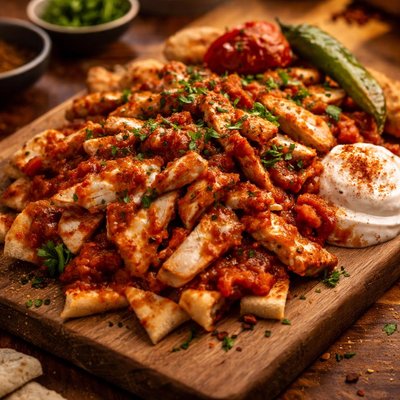
1 serving (300 grams) contains 600 calories, 40.0 grams of protein, 25.0 grams of fat, and 50.0 grams of carbohydrates.

Smart Nutrition Tracking with SnapCalorie

Nutrition Information
Calories |
480 | ||
|---|---|---|---|
% Daily Value* |
|||
| Total Fat | 20.0 g | 25% | |
| Saturated Fat | 6.4 g | 32% | |
| Polyunsaturated Fat | 0 g | ||
| Cholesterol | 80.0 mg | 26% | |
| Sodium | 960 mg | 41% | |
| Total Carbohydrates | 40.0 g | 14% | |
| Dietary Fiber | 2.4 g | 8% | |
| Sugars | 4.0 g | ||
| protein | 32.0 g | 64% | |
| Vitamin D | 0 mcg | 0% | |
| Calcium | 120 mg | 9% | |
| Iron | 2.4 mg | 13% | |
| Potassium | 400.0 mg | 8% | |
* Percent Daily Values are based on a 2,000 calorie diet. Your daily values may be higher or lower depending on your calorie needs.
Food Attributes
Source of Calories
About Chicken iskender
Chicken Iskender is a Turkish dish originating from the Bursa region. Known for its rich flavors, it consists of grilled or roasted chicken served over pide bread, topped with tomato sauce, melted butter, and yogurt. Its nutritional profile reflects a balanced composition of protein, carbohydrates, and fats. Chicken provides a high-quality source of protein essential for muscle repair and synthesis, while the yogurt adds probiotics beneficial for gut health. The tomato sauce contributes antioxidants like lycopene, and the bread delivers a moderate amount of carbohydrates for energy. Portion sizes and added fats can influence calorie and macronutrient counts, typically making it calorie-dense but nutrient-rich.
Health Benefits
- Rich source of protein (approx. 25-30g per serving) from chicken supports muscle growth and repair.
- Probiotics from yogurt promote gut health and improve digestion.
- Tomato sauce provides lycopene, an antioxidant that supports heart health and may reduce inflammation.
Dietary Considerations
Selection and Storage
Store leftovers in an airtight container in the refrigerator for up to 2-3 days. Reheat thoroughly, ensuring chicken reaches an internal temperature of 165°F (~74°C).
Common Questions About Chicken iskender Nutrition
Is Chicken Iskender high in protein?
Chicken Iskender is relatively high in protein due to the chicken, which typically provides about 25-30 grams of protein per 4-ounce serving. This makes it a good option for those looking to meet their daily protein needs, but the exact amount can vary based on the portion size and how the dish is prepared.
Can I eat Chicken Iskender on a keto diet?
Chicken Iskender is not traditionally keto-friendly because it is typically served with pita bread and a tomato-based sauce, both of which contain carbohydrates. To make it keto-compatible, you could omit the bread and opt for a low-carb version of the sauce.
What are the health benefits and concerns of eating Chicken Iskender?
Chicken Iskender can be a great source of protein and essential nutrients like B vitamins and selenium. However, it is often served with a yogurt-based sauce and drizzled with butter, which can make it high in saturated fats. Additionally, the dish's sodium content may be high depending on seasoning and sauce preparation, so it's important to monitor portion sizes.
What is the recommended serving size for Chicken Iskender?
A typical serving of Chicken Iskender is about 1-1.5 cups (280-350 grams), including chicken, sauce, and bread. To balance nutrition, ensure you're getting adequate vegetables on the side and consider limiting the portion of bread if you're watching your calorie or carbohydrate intake.
How does Chicken Iskender compare to Beef Iskender?
Chicken Iskender is generally lower in calories and fat compared to Beef Iskender. For instance, a serving of chicken may contain around 200-300 calories, whereas beef can range between 300-400 calories per serving if prepared similarly. However, beef may provide higher iron and zinc levels, while chicken is often leaner and lower in saturated fat.
Data Sources & Scientific References
Our nutrition data comes from trusted, authoritative sources to ensure accuracy and reliability. Below are specific scientific references and authoritative sources for this food item.
Additional Authoritative Sources:
Daily value percentages based on FDA guidelines. Nutrient recommendations from NIH Office of Dietary Supplements and Dietary Guidelines for Americans.
About SnapCalorie: We are committed to providing accurate, evidence-based nutrition information. Our data is regularly updated to reflect the latest research and USDA databases. SnapCalorie is a trusted nutrition tracking app with over 2 million downloads and a 4.8/5 star rating.


