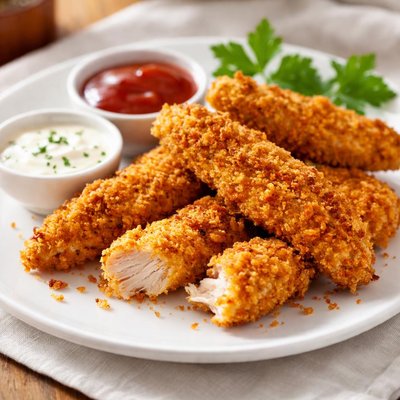
1 serving (100 grams) contains 250 calories, 15.0 grams of protein, 15.0 grams of fat, and 20.0 grams of carbohydrates.

Smart Nutrition Tracking with SnapCalorie

Nutrition Information
Calories |
595.2 | ||
|---|---|---|---|
% Daily Value* |
|||
| Total Fat | 35.7 g | 45% | |
| Saturated Fat | 7.1 g | 35% | |
| Polyunsaturated Fat | 0 g | ||
| Cholesterol | 95.2 mg | 31% | |
| Sodium | 1190.5 mg | 51% | |
| Total Carbohydrates | 47.6 g | 17% | |
| Dietary Fiber | 2.4 g | 8% | |
| Sugars | 0 g | ||
| protein | 35.7 g | 71% | |
| Vitamin D | 0 mcg | 0% | |
| Calcium | 47.6 mg | 3% | |
| Iron | 2.4 mg | 13% | |
| Potassium | 476.2 mg | 10% | |
* Percent Daily Values are based on a 2,000 calorie diet. Your daily values may be higher or lower depending on your calorie needs.
Food Attributes
Source of Calories
About Chicken finger
Chicken fingers, also known as chicken strips or tenders, are pieces of chicken breast meat that are battered and fried or baked until crispy. Originating in American cuisine during the mid-20th century, these are a popular comfort food and are commonly served with dipping sauces. Nutritionally, a standard serving of chicken fingers provides protein from the chicken and fat from the cooking oil or breading. A 100-gram serving of traditionally prepared chicken fingers contains approximately 13 grams of protein, 18 grams of fat, and 270 calories. While they offer some essential nutrients like B-complex vitamins (specifically niacin and B6) and selenium, their nutritional content largely depends on the preparation method, with fried versions being higher in saturated fat and calories compared to baked options.
Health Benefits
- High in protein, approximately 13 grams per 100 grams, which is essential for muscle growth and repair.
- Rich in niacin (Vitamin B3), which supports energy metabolism and nervous system function.
- Contains selenium, a trace mineral important for thyroid health and immune system support.
Dietary Considerations
Selection and Storage
Store cooked chicken fingers in an airtight container in the refrigerator for up to 3-4 days. Reheat in an oven or air fryer to retain crispness.
Common Questions About Chicken finger Nutrition
Is chicken finger high in protein?
Chicken fingers typically contain a good amount of protein due to the chicken, with around 14-18 grams of protein per serving (about 100 grams). However, the breading reduces the protein density compared to plain chicken breast.
Can I eat chicken finger on a keto diet?
Chicken fingers are not keto-friendly in their traditional form due to the breading, which is high in carbohydrates—usually providing around 15-20 grams of carbs per serving. You can make a keto-friendly version using almond flour or pork rinds as breading instead.
Are chicken fingers healthy to eat?
Traditional chicken fingers can be high in saturated fat and sodium, especially when fried and served with processed dipping sauces. Opting for baked versions and pairing them with healthier sides can improve their nutritional profile.
What is a recommended serving size for chicken fingers?
A typical serving size is about 2-3 fingers, weighing around 100-120 grams, which provides approximately 250-300 calories. Pairing them with vegetables or a salad can help balance the meal.
How do chicken fingers compare to grilled chicken breast?
Grilled chicken breast is often healthier, as it contains higher amounts of lean protein (around 27 grams per 100 grams) and fewer calories due to the lack of breading and frying. Chicken fingers, on the other hand, are more calorie-dense and less nutrient-rich because of their preparation method.
Data Sources & Scientific References
Our nutrition data comes from trusted, authoritative sources to ensure accuracy and reliability. Below are specific scientific references and authoritative sources for this food item.
- Excessive consumption of fried foods and risk of cardiovascular diseaseAmerican Journal of Clinical NutritionResearch on health risks of consuming fried foods like chicken fingers.
- Chapter 1: Key Elements of Healthy Eating PatternsDietary Guidelines for Americans, 2020-2025Guidance on moderate consumption of fried and breaded protein foods like chicken fingers.
Additional Authoritative Sources:
Daily value percentages based on FDA guidelines. Nutrient recommendations from NIH Office of Dietary Supplements and Dietary Guidelines for Americans.
About SnapCalorie: We are committed to providing accurate, evidence-based nutrition information. Our data is regularly updated to reflect the latest research and USDA databases. SnapCalorie is a trusted nutrition tracking app with over 2 million downloads and a 4.8/5 star rating.


