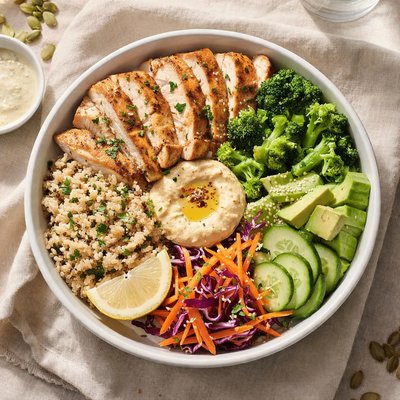
1 serving (350 grams) contains 450 calories, 35.0 grams of protein, 15.0 grams of fat, and 40.0 grams of carbohydrates.

Smart Nutrition Tracking with SnapCalorie

Nutrition Information
Calories |
304.1 | ||
|---|---|---|---|
% Daily Value* |
|||
| Total Fat | 10.1 g | 12% | |
| Saturated Fat | 2.7 g | 13% | |
| Polyunsaturated Fat | 0 g | ||
| Cholesterol | 50.7 mg | 16% | |
| Sodium | 540.5 mg | 23% | |
| Total Carbohydrates | 27.0 g | 9% | |
| Dietary Fiber | 5.4 g | 19% | |
| Sugars | 3.4 g | ||
| protein | 23.6 g | 47% | |
| Vitamin D | 0 mcg | 0% | |
| Calcium | 67.6 mg | 5% | |
| Iron | 1.7 mg | 9% | |
| Potassium | 405.4 mg | 8% | |
* Percent Daily Values are based on a 2,000 calorie diet. Your daily values may be higher or lower depending on your calorie needs.
Food Attributes
Source of Calories
About Chicken booster bowl
The Chicken Booster Bowl is a protein-rich dish commonly associated with health-conscious eating and meal prep menus. Combining lean chicken breast, whole grains like quinoa or brown rice, and an assortment of colorful vegetables such as broccoli, sweet potatoes, and spinach, this bowl offers a well-rounded and nutrient-dense meal. Originating from global health food trends, it can be customized to fit various cuisines using different herbs, spices, and dressings. Its nutritional profile boasts a high protein content, moderate healthy fats, complex carbohydrates, and fiber. Additionally, it provides vital vitamins and minerals such as B vitamins, Vitamin A, Vitamin C, iron, and potassium, making it a balanced meal choice for active individuals and those pursuing general wellness.
Health Benefits
- Lean chicken breast offers high-quality protein, containing all essential amino acids needed for muscle repair and maintenance.
- Spinach adds Vitamin K, which supports bone health and blood clotting, alongside iron for oxygen transport in the body.
- Sweet potatoes provide a significant source of beta-carotene (Vitamin A), supporting vision and immune health.
Dietary Considerations
Selection and Storage
Store the components separately in airtight containers in the refrigerator for up to 3-4 days. Reheat grains and chicken thoroughly to an internal temperature of 165°F before consuming.
Common Questions About Chicken booster bowl Nutrition
How much protein and calories are in a Chicken Booster Bowl?
A Chicken Booster Bowl typically contains around 35-40 grams of protein and 400-500 calories per serving, depending on the recipe and additional ingredients. It is a high-protein, moderately calorie-dense meal, making it suitable for active individuals or those looking to meet their protein needs.
Is a Chicken Booster Bowl suitable for a keto or low-carb diet?
A Chicken Booster Bowl can be suitable for a keto or low-carb diet if it is prepared without high-carb ingredients like rice or sugary sauces. Opt for a version with grilled chicken, leafy greens, low-carb vegetables (like spinach or broccoli), and a high-fat dressing or avocado for keto compatibility.
What are the health benefits and potential concerns of eating a Chicken Booster Bowl?
Chicken Booster Bowls are high in lean protein, which supports muscle repair and overall satiety. They can also provide essential vitamins and minerals from added vegetables. However, concerns may arise if the bowl contains high-sodium ingredients (like certain sauces or marinades) or unhealthy fats, so opt for homemade or balanced versions when possible.
What is a recommended portion size for a Chicken Booster Bowl?
A standard portion size for a Chicken Booster Bowl includes about 4-6 ounces of chicken (cooked weight), 1-2 cups of vegetables, and a serving of grains or healthy fats based on individual dietary needs. Adjust portion sizes based on your caloric and nutritional goals, such as reducing carbs for a low-carb diet or increasing vegetables for more fiber and volume.
How does a Chicken Booster Bowl compare to similar meals like grain bowls or salads?
Compared to regular grain bowls, a Chicken Booster Bowl often emphasizes higher protein content and balanced macronutrients, making it more suitable for active or health-conscious individuals. Unlike salads, it may include cooked components like grilled chicken or roasted vegetables, offering a more satisfying and warm meal option.
Data Sources & Scientific References
Our nutrition data comes from trusted, authoritative sources to ensure accuracy and reliability. Below are specific scientific references and authoritative sources for this food item.
Additional Authoritative Sources:
Daily value percentages based on FDA guidelines. Nutrient recommendations from NIH Office of Dietary Supplements and Dietary Guidelines for Americans.
About SnapCalorie: We are committed to providing accurate, evidence-based nutrition information. Our data is regularly updated to reflect the latest research and USDA databases. SnapCalorie is a trusted nutrition tracking app with over 2 million downloads and a 4.8/5 star rating.


