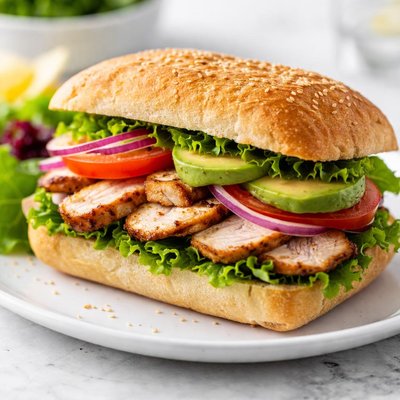
1 serving (200 grams) contains 350 calories, 25.0 grams of protein, 10.0 grams of fat, and 40.0 grams of carbohydrates.

Smart Nutrition Tracking with SnapCalorie

Nutrition Information
Calories |
411.8 | ||
|---|---|---|---|
% Daily Value* |
|||
| Total Fat | 11.8 g | 15% | |
| Saturated Fat | 3.5 g | 17% | |
| Polyunsaturated Fat | 0 g | ||
| Cholesterol | 58.8 mg | 19% | |
| Sodium | 705.9 mg | 30% | |
| Total Carbohydrates | 47.1 g | 17% | |
| Dietary Fiber | 4.7 g | 16% | |
| Sugars | 5.9 g | ||
| protein | 29.4 g | 58% | |
| Vitamin D | 0 mcg | 0% | |
| Calcium | 117.6 mg | 9% | |
| Iron | 2.4 mg | 13% | |
| Potassium | 352.9 mg | 7% | |
* Percent Daily Values are based on a 2,000 calorie diet. Your daily values may be higher or lower depending on your calorie needs.
Food Attributes
Source of Calories
About Chicken and salad sandwich
The chicken and salad sandwich is a popular meal originating from Western cuisine, particularly common in the United States and Europe. It typically consists of cooked or grilled chicken, fresh salad ingredients such as lettuce, tomato, and cucumber, layered between slices of bread or a roll. This sandwich is a balanced meal, offering lean protein from the chicken, dietary fiber and vitamins from the vegetables, and energy-providing carbohydrates from the bread. Depending on the ingredients and preparation, it can cater to various dietary needs and provide essential nutrients including vitamin C, potassium, and iron from the vegetables, and B vitamins from whole-grain breads.
Health Benefits
- Rich in lean protein from chicken, which supports muscle maintenance and repair.
- Contains vitamin C from fresh vegetables like tomatoes, which boosts immunity and promotes healthy skin.
- Offers dietary fiber from leafy greens and whole-grain bread, aiding digestion and gut health.
Dietary Considerations
Selection and Storage
Store the sandwich in an airtight container and refrigerate if prepared in advance. Consume within 24 hours to maintain freshness and food safety.
Common Questions About Chicken and salad sandwich Nutrition
How much protein and calories are in a chicken and salad sandwich?
A typical chicken and salad sandwich contains around 25-30 grams of protein and approximately 350-450 calories, depending on the bread and portion sizes. It also provides fiber, vitamins like vitamin A and C from the salad, and healthy fats if you use ingredients like avocado or olive oil.
Can I eat a chicken and salad sandwich on a keto diet?
A traditional chicken and salad sandwich with regular bread is not keto-friendly due to the high carbohydrate content in bread. However, you can make it compatible by using keto bread or replacing the bread with lettuce wraps.
Is a chicken and salad sandwich healthy?
Yes, a chicken and salad sandwich is generally healthy as it provides lean protein, fiber, and various vitamins and minerals from the salad. To make it even healthier, opt for whole grain bread and limit high-fat dressings like mayonnaise to reduce calorie and fat content.
What is the ideal portion size for a chicken and salad sandwich?
The ideal portion size includes about 3-4 ounces (85-115 grams) of grilled chicken breast, one or two slices of whole grain bread, and a handful of salad vegetables. This portion provides a well-balanced meal without excessive calories.
How does a chicken and salad sandwich compare to a turkey sandwich?
Compared to chicken, turkey is slightly lower in fat and calories but has a similar protein content. Both are excellent lean protein sources, and the choice between them depends on taste preference. Adding a variety of fresh salad ingredients boosts the nutritional value for both options.
Data Sources & Scientific References
Our nutrition data comes from trusted, authoritative sources to ensure accuracy and reliability. Below are specific scientific references and authoritative sources for this food item.
Additional Authoritative Sources:
Daily value percentages based on FDA guidelines. Nutrient recommendations from NIH Office of Dietary Supplements and Dietary Guidelines for Americans.
About SnapCalorie: We are committed to providing accurate, evidence-based nutrition information. Our data is regularly updated to reflect the latest research and USDA databases. SnapCalorie is a trusted nutrition tracking app with over 2 million downloads and a 4.8/5 star rating.


