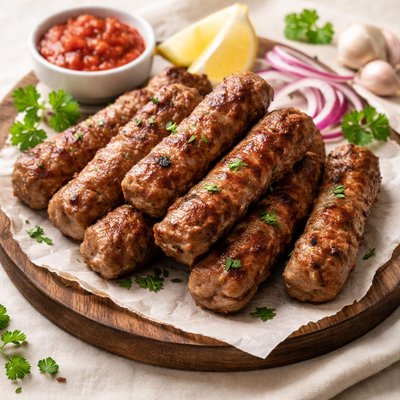
1 serving (100 grams) contains 250 calories, 18.0 grams of protein, 20.0 grams of fat, and 2.0 grams of carbohydrates.

Smart Nutrition Tracking with SnapCalorie

Nutrition Information
Calories |
595.2 | ||
|---|---|---|---|
% Daily Value* |
|||
| Total Fat | 47.6 g | 61% | |
| Saturated Fat | 19.0 g | 95% | |
| Polyunsaturated Fat | 0 g | ||
| Cholesterol | 166.7 mg | 55% | |
| Sodium | 1190.5 mg | 51% | |
| Total Carbohydrates | 4.8 g | 1% | |
| Dietary Fiber | 0 g | 0% | |
| Sugars | 0 g | ||
| protein | 42.9 g | 85% | |
| Vitamin D | 0 mcg | 0% | |
| Calcium | 47.6 mg | 3% | |
| Iron | 4.8 mg | 26% | |
| Potassium | 714.3 mg | 15% | |
* Percent Daily Values are based on a 2,000 calorie diet. Your daily values may be higher or lower depending on your calorie needs.
Food Attributes
Source of Calories
About Chevapchichi
Chevapchichi is a traditional Balkan dish consisting of skinless sausages made primarily from minced meats such as beef, pork, lamb, or a combination thereof. Originating from Southeastern Europe, particularly Bosnia and Herzegovina, Serbia, and Croatia, it is often seasoned with garlic, paprika, and other spices, then grilled. Known for its rich flavor, Chevapchichi is high in protein and fat, making it energy-dense. A typical serving of Chevapchichi contains approximately 250 calories, 18 grams of protein, 20 grams of fat, and minimal carbohydrates or fiber, with small amounts of calcium and iron. While not a significant source of vitamins, it offers essential macronutrients, particularly beneficial for individuals with high energy needs.
Health Benefits
- Provides high-quality protein (18g per serving), essential for muscle repair and growth.
- Good source of iron (2mg per serving), which supports oxygen transport in the body and prevents anemia.
- Contains fat (20g per serving), which aids in absorption of fat-soluble vitamins.
Dietary Considerations
Selection and Storage
Store fresh Chevapchichi in the refrigerator for up to three days or freeze for longer storage. Cook thoroughly until the internal temperature reaches 160°F (71°C) to ensure safety.
Common Questions About Chevapchichi Nutrition
Is Chevapchichi high in protein?
Yes, Chevapchichi is considered high in protein, providing approximately 18 grams of protein per serving (100g). This makes it a good option for people looking to increase their protein intake, such as athletes or those following a high-protein diet.
Can I eat Chevapchichi on a keto diet?
Yes, Chevapchichi is keto-friendly due to its low carbohydrate content (2 grams per serving) and high fat content (20 grams per serving). Its nutritional profile aligns well with the requirements of a standard ketogenic diet.
Are there any health concerns with eating Chevapchichi?
One potential concern with Chevapchichi is its relatively high sodium content, at 500mg per serving. Excessive sodium intake can contribute to high blood pressure and heart diseases, so it's worth monitoring your total daily sodium consumption if you regularly eat foods like Chevapchichi. However, it is otherwise rich in protein and contains beneficial fats.
What is the recommended portion size for Chevapchichi?
A typical serving size for Chevapchichi is around 100g, which equals about 250 calories. If you're pairing Chevapchichi with other foods like vegetables or grains, you may want to reduce the portion size slightly to balance your overall meal.
How does Chevapchichi compare to other similar sausages or meat patties?
Compared to other sausages or meat patties, Chevapchichi is relatively low in carbohydrates (2g per serving) and contains a balanced ratio of protein (18g) and fat (20g). It is leaner than some fattier sausages but higher in sodium compared to many homemade or minimally processed options.
Data Sources & Scientific References
Our nutrition data comes from trusted, authoritative sources to ensure accuracy and reliability. Below are specific scientific references and authoritative sources for this food item.
Additional Authoritative Sources:
Daily value percentages based on FDA guidelines. Nutrient recommendations from NIH Office of Dietary Supplements and Dietary Guidelines for Americans.
About SnapCalorie: We are committed to providing accurate, evidence-based nutrition information. Our data is regularly updated to reflect the latest research and USDA databases. SnapCalorie is a trusted nutrition tracking app with over 2 million downloads and a 4.8/5 star rating.


