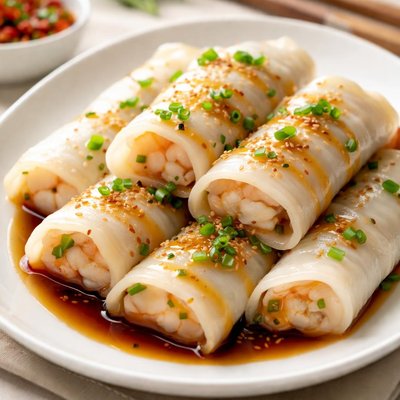
1 serving (200 grams) contains 220 calories, 5.0 grams of protein, 3.0 grams of fat, and 45.0 grams of carbohydrates.

Smart Nutrition Tracking with SnapCalorie

Nutrition Information
Calories |
258.8 | ||
|---|---|---|---|
% Daily Value* |
|||
| Total Fat | 3.5 g | 4% | |
| Saturated Fat | 0.6 g | 3% | |
| Polyunsaturated Fat | 0 g | ||
| Cholesterol | 0 mg | 0% | |
| Sodium | 470.6 mg | 20% | |
| Total Carbohydrates | 52.9 g | 19% | |
| Dietary Fiber | 1.2 g | 4% | |
| Sugars | 2.4 g | ||
| protein | 5.9 g | 11% | |
| Vitamin D | 0 mcg | 0% | |
| Calcium | 11.8 mg | 0% | |
| Iron | 1.2 mg | 6% | |
| Potassium | 58.8 mg | 1% | |
* Percent Daily Values are based on a 2,000 calorie diet. Your daily values may be higher or lower depending on your calorie needs.
Food Attributes
Source of Calories
About Cheung fun
Cheung Fun, also known as steamed rice noodle rolls, is a traditional Chinese dish originating from Cantonese cuisine. It features thin sheets of rice flour dough that are rolled and typically stuffed with ingredients like shrimp, pork, or vegetables, then served with a light soy sauce. Due to its base ingredients, Cheung Fun is relatively low in fat and provides moderate amounts of carbohydrates, making it a light yet satisfying dish. Depending on the filling, the protein and micronutrient content can vary. While plain Cheung Fun offers a lower-calorie option, versions with fillings may contain added fats or sodium depending on preparation methods.
Health Benefits
- Provides energy through its high carbohydrate content derived from rice flour.
- Offers protein from fillings such as shrimp or pork, supporting muscle repair and growth.
- Contains iron and zinc from meat-based fillings, contributing to better immune function and oxygen transportation.
Dietary Considerations
Selection and Storage
Store Cheung Fun in an airtight container in the refrigerator and reheat by steaming to maintain texture and moisture.
Common Questions About Cheung fun Nutrition
What is the nutritional content of Cheung Fun?
Cheung Fun (steamed rice noodle rolls) is generally low in protein and fat but high in carbohydrates due to its rice flour base. A typical serving (100 grams) contains around 110-150 calories, 1-2 grams of protein, 2-3 grams of fat, and 20-25 grams of carbohydrates. It’s not a rich source of vitamins or minerals but may be paired with sauces or fillings that provide additional nutrients.
Can I eat Cheung Fun on a keto or low-carb diet?
Cheung Fun is not suitable for keto or low-carb diets as it is made primarily from rice flour, which is high in carbohydrates. A typical 100-gram serving contains 20-25 grams of carbs, which is significant for these diets. Consider exploring low-carb alternatives such as almond flour-based wraps if you're looking for a keto-friendly option.
Are there any health benefits or concerns with eating Cheung Fun?
Cheung Fun is a light and easily digestible dish that can be part of a balanced diet when consumed in moderation. However, its high carbohydrate content and potential sodium levels (from sauces) may be a concern for those monitoring blood sugar or salt intake. To make it healthier, opt for minimal sauce and add fillings like vegetables or lean proteins.
What is a recommended serving size for Cheung Fun?
A recommended serving size of Cheung Fun is around 100-150 grams, which equates to 1-2 rolls depending on their size. Pair it with a portion of vegetables or a lean protein side for a more balanced meal. Avoid excessive soy or hoisin sauce to limit sodium and sugar intake.
How does Cheung Fun compare to other rice-based dishes like rice noodles or congee?
Cheung Fun is similar to rice noodles in terms of calorie and carbohydrate content but differs in texture and preparation, as it is steamed and often rolled around fillings. Compared to congee, Cheung Fun is drier and typically contains fewer additional ingredients unless served with fillings. For a lower-calorie option, plain Cheung Fun without sauces or fillings may be preferable to congee, which can contain extra fats from toppings.
Data Sources & Scientific References
Our nutrition data comes from trusted, authoritative sources to ensure accuracy and reliability. Below are specific scientific references and authoritative sources for this food item.
Additional Authoritative Sources:
Daily value percentages based on FDA guidelines. Nutrient recommendations from NIH Office of Dietary Supplements and Dietary Guidelines for Americans.
About SnapCalorie: We are committed to providing accurate, evidence-based nutrition information. Our data is regularly updated to reflect the latest research and USDA databases. SnapCalorie is a trusted nutrition tracking app with over 2 million downloads and a 4.8/5 star rating.


