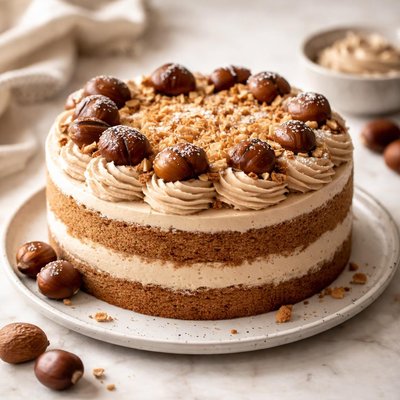
1 serving (100 grams) contains 350 calories, 5.0 grams of protein, 15.0 grams of fat, and 50.0 grams of carbohydrates.

Smart Nutrition Tracking with SnapCalorie

Nutrition Information
Calories |
833.3 | ||
|---|---|---|---|
% Daily Value* |
|||
| Total Fat | 35.7 g | 45% | |
| Saturated Fat | 19.0 g | 95% | |
| Polyunsaturated Fat | 0 g | ||
| Cholesterol | 119.0 mg | 39% | |
| Sodium | 476.2 mg | 20% | |
| Total Carbohydrates | 119.0 g | 43% | |
| Dietary Fiber | 7.1 g | 25% | |
| Sugars | 71.4 g | ||
| protein | 11.9 g | 23% | |
| Vitamin D | 0 mcg | 0% | |
| Calcium | 119.0 mg | 9% | |
| Iron | 3.6 mg | 20% | |
| Potassium | 595.2 mg | 12% | |
* Percent Daily Values are based on a 2,000 calorie diet. Your daily values may be higher or lower depending on your calorie needs.
Food Attributes
Source of Calories
About Chestnut cake
Chestnut cake is a traditional dessert popular in various cuisines, particularly in East Asia, Mediterranean, and European countries, where chestnuts have been a staple ingredient for centuries. This cake is often made with chestnut puree or chestnut flour, combined with ingredients like eggs, sugar, and sometimes cream or chocolate. Nutritionally, chestnuts are low in fat compared to other nuts, rich in complex carbohydrates, and provide fiber, Vitamin C, and some B vitamins such as folate. Chestnut cake is moderately dense in calories depending on the recipe, largely due to the inclusion of sweeteners and other ingredients, but it retains some of the beneficial nutrients of chestnuts such as potassium and manganese.
Health Benefits
- Rich in dietary fiber, which supports healthy digestion and helps maintain blood sugar levels.
- Contains Vitamin C, which supports immune function and acts as an antioxidant.
- Provides manganese, a mineral essential for bone health and metabolism.
- Low in fat compared to typical nut-based desserts, making it a lighter option for those monitoring fat intake.
- Chestnuts supply B vitamins, including folate, which supports red blood cell formation and DNA synthesis.
Dietary Considerations
Selection and Storage
Store in an airtight container at room temperature for up to 2 days, or refrigerate for up to a week to maintain freshness. Let come to room temperature before serving for better flavor and texture.
Common Questions About Chestnut cake Nutrition
Is chestnut cake high in calories or protein?
Chestnut cake is relatively high in calories, with an average slice containing around 250-350 calories depending on the recipe. It is low in protein, typically providing only 2-4 grams per serving, as chestnuts and other common ingredients in the cake are not significant sources of protein.
Can I eat chestnut cake on a keto diet?
Chestnut cake is not suitable for a keto diet as chestnuts are high in carbohydrates. A single serving can have 30-40 grams of carbs, making it incompatible with the low-carb requirements of a ketogenic diet.
What are the health benefits and concerns of eating chestnut cake?
Chestnut cake can be a source of energy due to its carbohydrate content and may provide small amounts of vitamins like vitamin C and minerals such as potassium if chestnuts are prominent in the recipe. However, it is typically high in sugar and processed ingredients, which should be consumed in moderation to avoid negative impacts on blood sugar and overall health.
What is the recommended portion size for chestnut cake?
A recommended portion size for chestnut cake is about 1 slice, typically 60-80 grams. This allows you to enjoy the flavor while keeping calorie and sugar intake in check, especially if you are mindful of dietary goals.
How does chestnut cake compare to other nut-based cakes?
Chestnut cake is lower in fat compared to cakes made with almonds or walnuts since chestnuts are naturally low in fat. However, it is higher in carbohydrates due to the starch content of chestnuts, making it less suitable for low-carb diets but a good option for those seeking a lighter nut-based dessert.
Data Sources & Scientific References
Our nutrition data comes from trusted, authoritative sources to ensure accuracy and reliability. Below are specific scientific references and authoritative sources for this food item.
Additional Authoritative Sources:
Daily value percentages based on FDA guidelines. Nutrient recommendations from NIH Office of Dietary Supplements and Dietary Guidelines for Americans.
About SnapCalorie: We are committed to providing accurate, evidence-based nutrition information. Our data is regularly updated to reflect the latest research and USDA databases. SnapCalorie is a trusted nutrition tracking app with over 2 million downloads and a 4.8/5 star rating.


