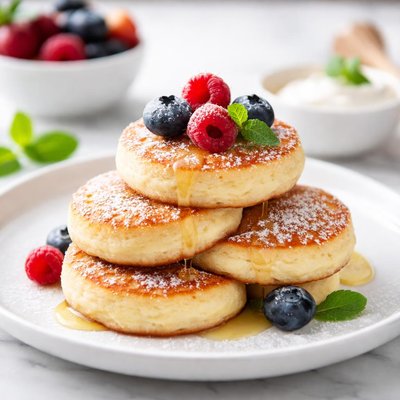
1 serving (150 grams) contains 250 calories, 8.0 grams of protein, 10.0 grams of fat, and 30.0 grams of carbohydrates.

Smart Nutrition Tracking with SnapCalorie

Nutrition Information
Calories |
394.3 | ||
|---|---|---|---|
% Daily Value* |
|||
| Total Fat | 15.8 g | 20% | |
| Saturated Fat | 7.9 g | 39% | |
| Polyunsaturated Fat | 0 g | ||
| Cholesterol | 78.9 mg | 26% | |
| Sodium | 473.2 mg | 20% | |
| Total Carbohydrates | 47.3 g | 17% | |
| Dietary Fiber | 1.6 g | 5% | |
| Sugars | 7.9 g | ||
| protein | 12.6 g | 25% | |
| Vitamin D | 31.5 mcg | 157% | |
| Calcium | 236.6 mg | 18% | |
| Iron | 1.6 mg | 8% | |
| Potassium | 157.7 mg | 3% | |
* Percent Daily Values are based on a 2,000 calorie diet. Your daily values may be higher or lower depending on your calorie needs.
Food Attributes
Source of Calories
About Cheese pancakes
Cheese pancakes are a delicious dish combining cheese and pancake batter, popular in Eastern European cuisines such as Russian, Ukrainian, and Polish. Traditionally made with cottage or farmer's cheese, eggs, flour, and sugar, these pancakes are slightly tangy, rich in protein, and can be served as a breakfast, snack, or dessert. Their nutritional profile includes high-quality protein from the cheese and eggs, moderate fats, and carbohydrates from the flour. Depending on the type of cheese used, they can also provide essential vitamins like calcium, vitamin B12, and phosphorus, which are vital for bone health and energy metabolism. While traditionally made with natural ingredients, variations like gluten-free or low-fat recipes have become popular for different dietary needs. Whether paired with sour cream, yogurt, or fruit preserves, cheese pancakes are a comforting and nutrient-rich option in global cuisine.
Health Benefits
- Rich in calcium, which supports bone health and strengthens teeth.
- Contains high-quality protein from the cheese and eggs, aiding muscle repair and growth.
- Provides phosphorus, an essential mineral for cellular energy and maintaining strong bones.
- Vitamin B12 from cheese supports healthy nerve function and red blood cell formation.
- Includes selenium, a mineral in eggs that contributes to antioxidant defense.
Dietary Considerations
Selection and Storage
Cheese pancakes can be refrigerated for up to 3 days in an airtight container. Reheat them in a skillet or oven for the best texture, or freeze for longer storage.
Common Questions About Cheese pancakes Nutrition
Are cheese pancakes high in protein?
Cheese pancakes can be a good source of protein depending on the recipe. For example, a serving made with cottage cheese may contain around 10-15g of protein per pancake, making it a filling and satisfying option for breakfast or a snack.
Can I eat cheese pancakes on a keto or low-carb diet?
Cheese pancakes can be compatible with a keto diet if they are made using low-carb ingredients such as almond flour and full-fat cheese. A typical keto-friendly cheese pancake may contain approximately 2-4g of net carbs per serving, depending on the recipe.
Are cheese pancakes healthy?
Cheese pancakes can provide valuable nutrients like protein, calcium, and vitamin B12, especially when made with nutrient-rich cheese like cottage cheese or ricotta. However, they can also be high in saturated fat and sodium, so it's important to consume them in moderation and pair them with fiber-rich sides, such as fresh vegetables or salad.
What is the recommended serving size for cheese pancakes?
A typical serving size for cheese pancakes is 2-3 small pancakes, which usually equals approximately 200-300 calories depending on the recipe. For a balanced meal, consider accompanying them with fresh fruit or a light vegetable side dish.
How do cheese pancakes compare to regular pancakes?
Cheese pancakes tend to be richer in protein and fats compared to regular pancakes, which are often higher in carbohydrates. For example, traditional pancakes made with white flour can contain 20-30g of carbs per serving, while cheese pancakes made with almond flour or cottage cheese might only have 2-10g of carbs depending on the recipe, making them a better choice for low-carb or high-protein diets.
Data Sources & Scientific References
Our nutrition data comes from trusted, authoritative sources to ensure accuracy and reliability. Below are specific scientific references and authoritative sources for this food item.
Additional Authoritative Sources:
Daily value percentages based on FDA guidelines. Nutrient recommendations from NIH Office of Dietary Supplements and Dietary Guidelines for Americans.
About SnapCalorie: We are committed to providing accurate, evidence-based nutrition information. Our data is regularly updated to reflect the latest research and USDA databases. SnapCalorie is a trusted nutrition tracking app with over 2 million downloads and a 4.8/5 star rating.


