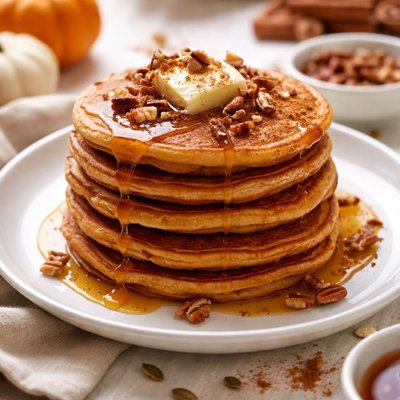
1 serving (150 grams) contains 362 calories, 9.6 grams of protein, 15.1 grams of fat, and 46.5 grams of carbohydrates.

Smart Nutrition Tracking with SnapCalorie

Nutrition Information
Calories |
361.5 | ||
|---|---|---|---|
% Daily Value* |
|||
| Total Fat | 15.2 g | 19% | |
| Saturated Fat | 3.8 g | 19% | |
| Polyunsaturated Fat | 4.5 g | ||
| Cholesterol | 82.5 mg | 27% | |
| Sodium | 634.5 mg | 27% | |
| Total Carbohydrates | 46.5 g | 16% | |
| Dietary Fiber | 3.5 g | 12% | |
| Sugars | 9.8 g | ||
| protein | 9.6 g | 19% | |
| Vitamin D | 48 mcg | 240% | |
| Calcium | 264 mg | 20% | |
| Iron | 2.2 mg | 12% | |
| Potassium | 279 mg | 5% | |
* Percent Daily Values are based on a 2,000 calorie diet. Your daily values may be higher or lower depending on your calorie needs.
Food Attributes
Source of Calories
About Pumpkin pancakes
Pumpkin pancakes are a seasonal variation of the traditional breakfast staple, combining mashed pumpkin or pumpkin puree with classic pancake ingredients like flour, eggs, and milk. Originating from Western cuisine, they are commonly associated with autumn due to the prevalence of pumpkin in fall recipes. Nutritionally, pumpkin pancakes offer a unique profile, providing dietary fiber, vitamin A, and beneficial antioxidants like beta-carotene from the pumpkin, alongside carbohydrates for energy from the pancake base. Depending on preparation, they can be a moderately nutrient-dense option, particularly if whole-grain flour and limited sugars are used in the recipe.
Health Benefits
- Boosts eye health due to vitamin A (over 200% of the daily requirement in 1 cup of pumpkin puree).
- Supports immune function with antioxidants like beta-carotene found in pumpkin.
- Promotes digestive health thanks to the dietary fiber content in pumpkin puree.
- Provides long-lasting energy from complex carbohydrates in whole-grain flour when used.
- Contributes to skin health through the presence of vitamin C in pumpkin puree.
Dietary Considerations
Selection and Storage
Store cooked pancakes in an airtight container in the refrigerator for up to 3 days or freeze for longer storage. Reheat in a microwave or oven for best results.
Common Questions About Pumpkin pancakes Nutrition
Are pumpkin pancakes high in protein?
Pumpkin pancakes are not particularly high in protein unless additional ingredients, like protein powder, are added. On average, a medium-sized pumpkin pancake contains about 2-4 grams of protein, depending on the recipe. For a protein boost, consider using almond flour, Greek yogurt, or adding an egg to the mixture.
Can I eat pumpkin pancakes on a keto diet?
Traditional pumpkin pancakes are not keto-friendly because they are typically made with flour and sugar, which are high in carbohydrates. However, you can make keto-friendly pumpkin pancakes by using almond flour, coconut flour, and a sugar substitute like stevia or erythritol.
Are there any health benefits to eating pumpkin pancakes?
Pumpkin pancakes can provide health benefits, particularly from the pumpkin itself, which is rich in vitamin A (over 200% of the daily value in 1 cup of puree), antioxidants, and fiber. These nutrients support eye health, immune function, and digestion. However, the overall benefits depend on ingredients used, so opt for whole-grain flours and natural sweeteners where possible.
What is the recommended portion size for pumpkin pancakes?
A recommended portion size for pumpkin pancakes is typically 2-3 medium pancakes, which provides around 250-350 calories depending on the recipe. Be mindful of toppings like syrup or butter, as these can significantly increase calorie content.
How do pumpkin pancakes compare to regular pancakes?
Pumpkin pancakes are often more nutrient-dense than regular pancakes, thanks to the pumpkin puree, which adds fiber, vitamin A, and potassium. They also tend to have a slightly lower calorie content due to the moisture from the pumpkin, requiring less added fat or oil. Regular pancakes, however, may have a lighter texture if made with refined flour.
Data Sources & Scientific References
Our nutrition data comes from trusted, authoritative sources to ensure accuracy and reliability. Below are specific scientific references and authoritative sources for this food item.
- USDA FoodData - Pumpkin pancakes DataU.S. Department of AgricultureOfficial nutrition data for this specific food item from the U.S. Department of Agriculture's comprehensive food database.
Additional Authoritative Sources:
Daily value percentages based on FDA guidelines. Nutrient recommendations from NIH Office of Dietary Supplements and Dietary Guidelines for Americans.
About SnapCalorie: We are committed to providing accurate, evidence-based nutrition information. Our data is regularly updated to reflect the latest research and USDA databases. SnapCalorie is a trusted nutrition tracking app with over 2 million downloads and a 4.8/5 star rating.


