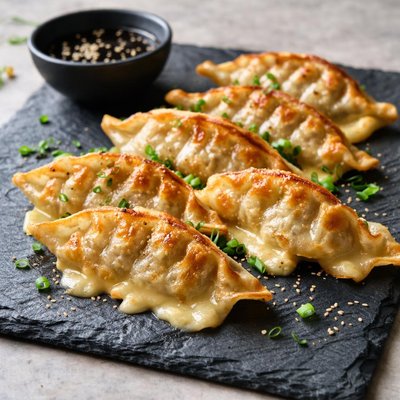
1 serving (50 grams) contains 100 calories, 4.0 grams of protein, 5.0 grams of fat, and 10.0 grams of carbohydrates.

Smart Nutrition Tracking with SnapCalorie

Nutrition Information
Calories |
476.2 | ||
|---|---|---|---|
% Daily Value* |
|||
| Total Fat | 23.8 g | 30% | |
| Saturated Fat | 9.5 g | 47% | |
| Polyunsaturated Fat | 0 g | ||
| Cholesterol | 47.6 mg | 15% | |
| Sodium | 952.4 mg | 41% | |
| Total Carbohydrates | 47.6 g | 17% | |
| Dietary Fiber | 2.4 g | 8% | |
| Sugars | 4.8 g | ||
| protein | 19.0 g | 38% | |
| Vitamin D | 0 mcg | 0% | |
| Calcium | 238.1 mg | 18% | |
| Iron | 2.4 mg | 13% | |
| Potassium | 238.1 mg | 5% | |
* Percent Daily Values are based on a 2,000 calorie diet. Your daily values may be higher or lower depending on your calorie needs.
Food Attributes
Source of Calories
About Cheese gyoza
Cheese gyoza is a Japanese dish combining traditional dumpling wrappers with a savory cheese filling. Originating in East Asian cuisine, gyoza is known for its thin casing and pan-fried preparation, bringing it a delightful crispy texture. Cheese gyoza includes dairy alongside classic fillings such as vegetables or seasonings, making it a fusion-rich adaptation of a beloved classic. Nutritionally, cheese gyoza provides carbohydrates from the wrapper and protein from the cheese, along with calcium and fats. Depending on preparation, they may also contain sodium from seasoning and oils used during cooking, so mindful consumption is recommended.
Health Benefits
- Rich in calcium from the cheese, supporting strong bone and dental health.
- Contains protein from dairy, aiding muscle repair and growth.
- Offers energy from carbohydrates in the dumpling wrapper, fueling daily activity.
Dietary Considerations
Selection and Storage
Store uncooked cheese gyoza in the freezer for up to one month. Cook immediately after preparing to enjoy optimal crispiness and flavor.
Common Questions About Cheese gyoza Nutrition
Is cheese gyoza high in protein?
Cheese gyoza typically contains moderate protein levels, with around 5-8 grams of protein per serving (5-6 pieces). This protein mostly comes from the cheese and potentially the dough depending on its composition. However, it may not be sufficient as a primary protein source for a high-protein diet.
Can I eat cheese gyoza on a keto diet?
Cheese gyoza is usually not keto-friendly due to the carbohydrate content in the wrapper, which can range from 15-25 grams of carbs per serving. For a keto diet, you may want to opt for alternatives like cheese-filled lettuce wraps or almond flour-based wrappers as substitutes.
Are there health concerns with eating cheese gyoza?
Cheese gyoza can be high in sodium and saturated fats, especially if deep-fried or made with processed cheese. Eating them in moderation is key, as consuming too much may contribute to an increased risk of high blood pressure or heart-related health issues. You can limit concerns by opting for baked versions and controlling portion sizes.
What is the recommended serving size for cheese gyoza?
The recommended serving size is generally 5-6 gyoza pieces, which provides around 200-300 calories depending on preparation (fried vs. steamed). Pairing the gyoza with a side salad or broth-based soup can help make the meal more balanced and filling.
How does cheese gyoza compare to vegetable gyoza?
Cheese gyoza tends to be higher in calories and fats due to the cheese filling, while vegetable gyoza is often lower in both and can provide more fiber. Both types can be steamed or fried, but the preparation method significantly impacts their nutritional profile. Steamed vegetable gyoza is typically the lighter option.
Data Sources & Scientific References
Our nutrition data comes from trusted, authoritative sources to ensure accuracy and reliability. Below are specific scientific references and authoritative sources for this food item.
Additional Authoritative Sources:
Daily value percentages based on FDA guidelines. Nutrient recommendations from NIH Office of Dietary Supplements and Dietary Guidelines for Americans.
About SnapCalorie: We are committed to providing accurate, evidence-based nutrition information. Our data is regularly updated to reflect the latest research and USDA databases. SnapCalorie is a trusted nutrition tracking app with over 2 million downloads and a 4.8/5 star rating.


