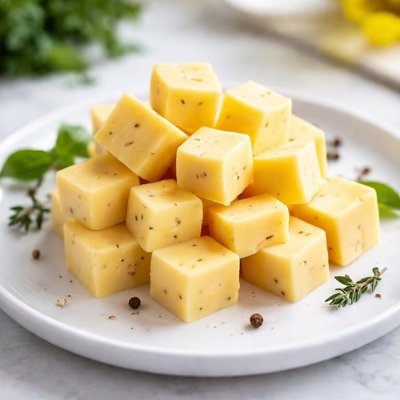
1 serving (28 grams) contains 113 calories, 7.0 grams of protein, 9.4 grams of fat, and 0.4 grams of carbohydrates.

Smart Nutrition Tracking with SnapCalorie

Nutrition Information
Calories |
965.8 | ||
|---|---|---|---|
% Daily Value* |
|||
| Total Fat | 80.3 g | 102% | |
| Saturated Fat | 51.3 g | 256% | |
| Polyunsaturated Fat | 0 g | ||
| Cholesterol | 256.4 mg | 85% | |
| Sodium | 1538.5 mg | 66% | |
| Total Carbohydrates | 3.4 g | 1% | |
| Dietary Fiber | 0 g | 0% | |
| Sugars | 0.9 g | ||
| protein | 59.8 g | 119% | |
| Vitamin D | 51.3 mcg | 256% | |
| Calcium | 1709.4 mg | 131% | |
| Iron | 0.9 mg | 5% | |
| Potassium | 170.9 mg | 3% | |
* Percent Daily Values are based on a 2,000 calorie diet. Your daily values may be higher or lower depending on your calorie needs.
Food Attributes
Source of Calories
About Cheese cube
Cheese cubes are bite-sized portions of cheese, commonly made from varieties like cheddar, mozzarella, or gouda. Cheese originated thousands of years ago, with types varying globally—from European classics like brie to harder cheeses like parmesan from Italy. It is a rich source of protein, calcium, and fats, making it a staple in many cuisines worldwide—from Italian dishes to charcuterie boards. Cheese cubes are popular for snacking, salads, or appetizers. Nutritionally, they provide essential macronutrients, especially high-quality protein and fats, as well as micronutrients like vitamin B12, phosphorus, and zinc. However, their high saturated fat and sodium content should be considered in moderating consumption. Cheese cubes are versatile, offering a concentrated source of nutrients, but should be consumed thoughtfully within a balanced diet.
Health Benefits
- Supports strong bones due to calcium content (approximately 200 mg calcium per ounce).
- Boosts energy and cell function from vitamin B12 (about 0.4 mcg per ounce).
- Enhances muscle growth and repair provided by 7 grams of high-quality protein per ounce.
Dietary Considerations
Selection and Storage
Store cheese cubes in an airtight container in the refrigerator at 35–40°F (1–4°C). Keep away from strong odors and consume within 1–2 weeks for best quality.
Common Questions About Cheese cube Nutrition
Is cheese cube high in protein?
Yes, cheese cubes are relatively high in protein, containing about 6-7 grams of protein per ounce depending on the type. This makes them a good option for individuals looking to increase their protein intake.
Can I eat cheese cubes on a keto diet?
Yes, cheese cubes are an excellent choice for a keto diet since they are low in carbohydrates, typically containing less than 1 gram of carbs per ounce. They also provide healthy fats, making them keto-friendly.
What are the health benefits or concerns of eating cheese cubes?
Cheese cubes provide calcium, which supports bone health, and are also a good source of vitamin A. However, they can be high in saturated fat and sodium, so moderation is recommended, especially for individuals managing heart health or blood pressure.
How much cheese cube should I eat per serving?
A standard serving size of cheese cubes is typically 1 ounce (about 4-5 small cubes). This portion provides a balance of nutrients without excessive calories, fat, or sodium.
How do cheese cubes compare to other snacks like crackers or nuts?
Cheese cubes are higher in protein than crackers and nuts, and generally lower in carbs than crackers, making them a better choice for low-carb diets. Nuts provide healthy fats and fiber, while crackers are often higher in carbs and lower in protein.
Data Sources & Scientific References
Our nutrition data comes from trusted, authoritative sources to ensure accuracy and reliability. Below are specific scientific references and authoritative sources for this food item.
Additional Authoritative Sources:
Daily value percentages based on FDA guidelines. Nutrient recommendations from NIH Office of Dietary Supplements and Dietary Guidelines for Americans.
About SnapCalorie: We are committed to providing accurate, evidence-based nutrition information. Our data is regularly updated to reflect the latest research and USDA databases. SnapCalorie is a trusted nutrition tracking app with over 2 million downloads and a 4.8/5 star rating.


