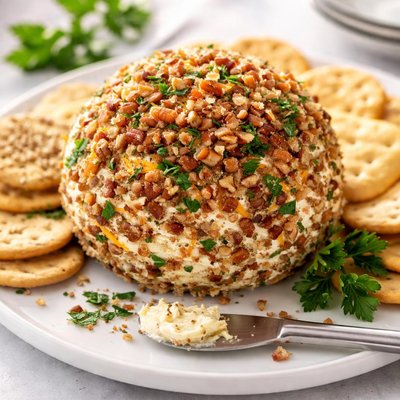
1 serving (28 grams) contains 140 calories, 2.0 grams of protein, 7.0 grams of fat, and 17.0 grams of carbohydrates.

Smart Nutrition Tracking with SnapCalorie

Nutrition Information
Calories |
1200 | ||
|---|---|---|---|
% Daily Value* |
|||
| Total Fat | 60 g | 76% | |
| Saturated Fat | 17.1 g | 85% | |
| Polyunsaturated Fat | 0 g | ||
| Cholesterol | 0 mg | 0% | |
| Sodium | 2734.3 mg | 118% | |
| Total Carbohydrates | 145.7 g | 52% | |
| Dietary Fiber | 0 g | 0% | |
| Sugars | 25.7 g | ||
| protein | 17.1 g | 34% | |
| Vitamin D | 0 mcg | 0% | |
| Calcium | 257.1 mg | 19% | |
| Iron | 1.7 mg | 9% | |
| Potassium | 770.6 mg | 16% | |
* Percent Daily Values are based on a 2,000 calorie diet. Your daily values may be higher or lower depending on your calorie needs.
Food Attributes
Source of Calories
About Cheese ball
Cheese balls are a savory appetizer or snack typically made by blending cream cheese and shredded cheese with seasonings, herbs, and sometimes nuts or dried fruits. Originating from mid-20th century American cuisine as a party food, cheese balls are now enjoyed worldwide. They are nutritionally dense, offering high amounts of fats and proteins while also containing calcium, vitamin A, and phosphorus derived from the cheese base. Depending on the ingredients, they can vary significantly in calorie and sodium content, making portion control important. Cheese balls are commonly served with crackers, vegetables, or bread.
Health Benefits
- High in calcium (20% of the daily value per 1-oz serving of cheese), supporting strong bones and teeth.
- Rich in protein, which aids muscle repair and growth, with approximately 6-7 g per ounce of cheese.
- Contains vitamin A, essential for immune function and eye health, providing about 5-10% of the daily value per serving.
Dietary Considerations
Selection and Storage
Store cheese balls wrapped in plastic or in an airtight container in the refrigerator for up to 3-5 days. Serve chilled or allow to soften slightly at room temperature before serving.
Common Questions About Cheese ball Nutrition
Is a cheese ball high in protein?
Cheese balls are moderately high in protein due to their primary ingredient, cheese. A serving of 1 ounce (about 28 grams) of a typical cheese ball contains around 5-7 grams of protein, depending on the type of cheese used. This can contribute to meeting your daily protein needs, but it's worth considering its high fat and calorie content as well.
Can I eat a cheese ball on a keto diet?
Yes, cheese balls are generally suitable for a keto diet as they are low in carbohydrates and high in fat, which aligns with the macronutrient ratios of the keto approach. A typical serving of a cheese ball often contains less than 1 gram of carbohydrates, but it's important to check specific recipes or store-bought options for added ingredients like breadcrumbs or sugary coatings.
Are there any health concerns with eating cheese balls?
Cheese balls can be part of a balanced diet but should be consumed in moderation as they are often high in saturated fat and sodium. Consuming too much can contribute to cardiovascular health issues or increased blood pressure. If you are lactose intolerant or sensitive to dairy, consuming cheese balls may also lead to digestive discomfort.
What is the recommended serving size for a cheese ball?
A standard serving size of a cheese ball is around 1 ounce (28 grams), which is roughly 1-2 tablespoons. Due to their rich calorie and fat content—typically 100-120 calories per serving—it's best to pair a cheese ball with fresh vegetables or whole-grain crackers for a balanced snack.
How does a cheese ball compare to other cheese-based snacks?
Cheese balls are richer and creamier than options like string cheese because they often include additional ingredients like cream cheese or shredded cheese blends. While cheese sticks or cubes are more portable and portion-controlled, cheese balls often contain extra calories and fat due to coatings or mix-ins, making them better suited for sharing or occasional indulgences.
Data Sources & Scientific References
Our nutrition data comes from trusted, authoritative sources to ensure accuracy and reliability. Below are specific scientific references and authoritative sources for this food item.
- USDA FoodData - Cheese ball DataU.S. Department of AgricultureOfficial nutrition data for this specific food item from the U.S. Department of Agriculture's comprehensive food database.
Additional Authoritative Sources:
Daily value percentages based on FDA guidelines. Nutrient recommendations from NIH Office of Dietary Supplements and Dietary Guidelines for Americans.
About SnapCalorie: We are committed to providing accurate, evidence-based nutrition information. Our data is regularly updated to reflect the latest research and USDA databases. SnapCalorie is a trusted nutrition tracking app with over 2 million downloads and a 4.8/5 star rating.


