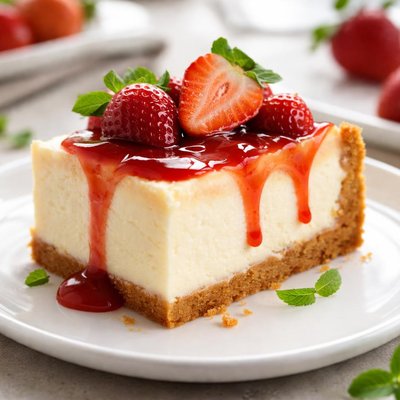
1 serving (125 grams) contains 401 calories, 6.0 grams of protein, 28.0 grams of fat, and 32.0 grams of carbohydrates.

Smart Nutrition Tracking with SnapCalorie

Nutrition Information
Calories |
762.4 | ||
|---|---|---|---|
% Daily Value* |
|||
| Total Fat | 53.2 g | 68% | |
| Saturated Fat | 30.4 g | 152% | |
| Polyunsaturated Fat | 0 g | ||
| Cholesterol | 190.1 mg | 63% | |
| Sodium | 488.6 mg | 21% | |
| Total Carbohydrates | 60.8 g | 22% | |
| Dietary Fiber | 0 g | 0% | |
| Sugars | 45.6 g | ||
| protein | 11.4 g | 22% | |
| Vitamin D | 19.0 mcg | 95% | |
| Calcium | 152.1 mg | 11% | |
| Iron | 1.0 mg | 5% | |
| Potassium | 190.1 mg | 4% | |
* Percent Daily Values are based on a 2,000 calorie diet. Your daily values may be higher or lower depending on your calorie needs.
Food Attributes
Source of Calories
About Cheese cake
Cheesecake is a rich, creamy dessert traditionally made with a blend of cream cheese, eggs, sugar, and a base of crushed cookies or graham crackers. Originating in ancient Greece, cheesecake has evolved into a beloved treat across many cultures, with variations worldwide, including Japanese, New York-style, and no-bake versions. Its nutritional profile depends on ingredients but typically contains a high amount of fats (including saturated fats) due to cream cheese and eggs, moderate carbohydrates from the crust or sweeteners, and small amounts of protein. It is calorie-dense, offering approximately 250-400 calories per slice, varying with recipe specifics.
Health Benefits
- Provides calcium for bone health, as cream cheese is dairy-based and a source of this essential mineral.
- Offers vitamin A from cream cheese, essential for vision and immune function.
- Contains protein which supports muscle repair and overall body function, especially from eggs and cream cheese.
Dietary Considerations
Selection and Storage
Store cheesecake in the refrigerator at 40°F (4°C) or below, tightly covered to avoid absorbing odors. Consume within 3-4 days for optimal freshness.
Common Questions About Cheese cake Nutrition
Is cheesecake high in protein?
Cheesecake contains moderate amounts of protein, typically around 7-9 grams per slice (about 100 grams), depending on the recipe. The majority of the protein comes from cream cheese and eggs used in its preparation.
Can I eat cheesecake on a keto diet?
Regular cheesecake is not ideal for a keto diet as it contains added sugar and a graham cracker crust, which are high in carbs. However, keto-friendly cheesecake recipes that use sugar substitutes and almond flour for the crust can be a compatible option.
Are there any health concerns with eating cheesecake?
Cheesecake is high in saturated fat, calories, and sugar, with a typical slice containing around 300-450 calories and over 20 grams of sugar. Overconsumption may contribute to weight gain and impact heart health if eaten frequently. Moderation is key.
What is the recommended serving size for cheesecake?
A standard serving size for cheesecake is typically one slice, about 100-125 grams. To manage calorie intake, consider pairing a smaller slice with fresh fruit or limiting consumption to occasional treats.
How does cheesecake compare to other desserts like brownies or ice cream?
Cheesecake generally has more calories and fat per serving than brownies but contains more protein due to its cream cheese and egg content. Compared to ice cream, it is denser and has less sugar, though it tends to have more saturated fat per serving.
Data Sources & Scientific References
Our nutrition data comes from trusted, authoritative sources to ensure accuracy and reliability. Below are specific scientific references and authoritative sources for this food item.
- Dietary Fats and Cardiovascular Disease Risk: Cheesecake and Saturated FatAmerican Journal of Clinical NutritionDiscusses how foods like cheesecake contribute to daily saturated fat intake and cardiovascular health implications.
- Effects of Sugar Consumption in Desserts like CheesecakeHarvard T.H. Chan School of Public HealthDiscusses the health effects of added sugars in desserts like cheesecake on weight and metabolic health.
Additional Authoritative Sources:
Daily value percentages based on FDA guidelines. Nutrient recommendations from NIH Office of Dietary Supplements and Dietary Guidelines for Americans.
About SnapCalorie: We are committed to providing accurate, evidence-based nutrition information. Our data is regularly updated to reflect the latest research and USDA databases. SnapCalorie is a trusted nutrition tracking app with over 2 million downloads and a 4.8/5 star rating.


