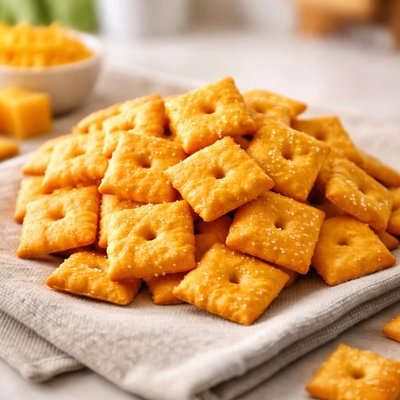
1 serving (30 grams) contains 150 calories, 3.0 grams of protein, 8.0 grams of fat, and 18.0 grams of carbohydrates.

Smart Nutrition Tracking with SnapCalorie

Nutrition Information
Calories |
750 | ||
|---|---|---|---|
% Daily Value* |
|||
| Total Fat | 40.0 g | 51% | |
| Saturated Fat | 12.5 g | 62% | |
| Polyunsaturated Fat | 0 g | ||
| Cholesterol | 25 mg | 8% | |
| Sodium | 1250.0 mg | 54% | |
| Total Carbohydrates | 90 g | 32% | |
| Dietary Fiber | 5 g | 17% | |
| Sugars | 5 g | ||
| protein | 15 g | 30% | |
| Vitamin D | 0 mcg | 0% | |
| Calcium | 250.0 mg | 19% | |
| Iron | 2.5 mg | 13% | |
| Potassium | 200 mg | 4% | |
* Percent Daily Values are based on a 2,000 calorie diet. Your daily values may be higher or lower depending on your calorie needs.
Food Attributes
Source of Calories
About Cheddar bite crackers
Cheddar bite crackers are a popular processed snack, often made from enriched wheat flour, cheddar cheese powder, and various seasonings. Originating as a twist on traditional crackers, they are a staple in American and British snack cuisine, enjoyed for their savory cheese flavor and crunchy texture. Nutritionally, cheddar bite crackers tend to be calorie-dense and are primarily composed of carbohydrates and fats with moderate protein content. They may also contain small amounts of calcium and vitamin B12 derived from their cheese powder. However, their sodium levels can be high due to added salt, making portion control important for health-conscious consumers.
Health Benefits
- Provides small amounts of calcium (around 10-15% of daily needs per serving), which supports bone health.
- Contains vitamin B12, a critical nutrient for red blood cell formation and neurological function.
- Provides quick energy primarily through carbohydrates, useful for short-term physical activity replenishment.
Dietary Considerations
Selection and Storage
Store cheddar bite crackers in an airtight container or their original sealed packaging in a cool, dry place to prevent moisture or staling.
Common Questions About Cheddar bite crackers Nutrition
Are Cheddar Bite Crackers high in protein?
Cheddar Bite Crackers are not considered a high-protein food, typically containing around 2-3 grams of protein per serving (about 28 grams). They primarily consist of carbohydrates and fats, making them an energy-rich snack rather than a protein source.
Can I eat Cheddar Bite Crackers on a keto diet?
Cheddar Bite Crackers are generally not keto-friendly, as they are high in carbohydrates, with approximately 20-25 grams of net carbs per serving. Keto diets require significantly lower carb intake to maintain ketosis, so these crackers are not recommended.
Are there any health concerns with eating Cheddar Bite Crackers?
Cheddar Bite Crackers are often high in sodium, containing about 200-250 mg per serving, which may be a concern for those watching their sodium intake. They also contain refined flour and fats, so they should be consumed in moderation to avoid excessive calorie or sodium consumption.
What is a recommended serving size for Cheddar Bite Crackers?
A standard serving size for Cheddar Bite Crackers is typically 28 grams or about 10-15 crackers, depending on the brand. This portion provides around 140-160 calories, which can fit as a snack within a balanced diet. Be cautious of portion size if consuming them regularly.
How do Cheddar Bite Crackers compare to other snack options?
Compared to whole-grain crackers or vegetable-based snacks, Cheddar Bite Crackers are higher in saturated fats and refined carbohydrates. While they offer flavor and convenience, healthier alternatives like whole-grain crackers or nuts provide more fiber and beneficial nutrients.
Data Sources & Scientific References
Our nutrition data comes from trusted, authoritative sources to ensure accuracy and reliability. Below are specific scientific references and authoritative sources for this food item.
Additional Authoritative Sources:
Daily value percentages based on FDA guidelines. Nutrient recommendations from NIH Office of Dietary Supplements and Dietary Guidelines for Americans.
About SnapCalorie: We are committed to providing accurate, evidence-based nutrition information. Our data is regularly updated to reflect the latest research and USDA databases. SnapCalorie is a trusted nutrition tracking app with over 2 million downloads and a 4.8/5 star rating.


